
Rafah crossing reopened temporarily for limited medical evacuations
 2 Min Read
Rafah crossing reopens after nearly three weeks, allowing a limited number of wounded Palestinians from Gaza to receive medical treatment in Egypt as ceasefire talks continue.
-
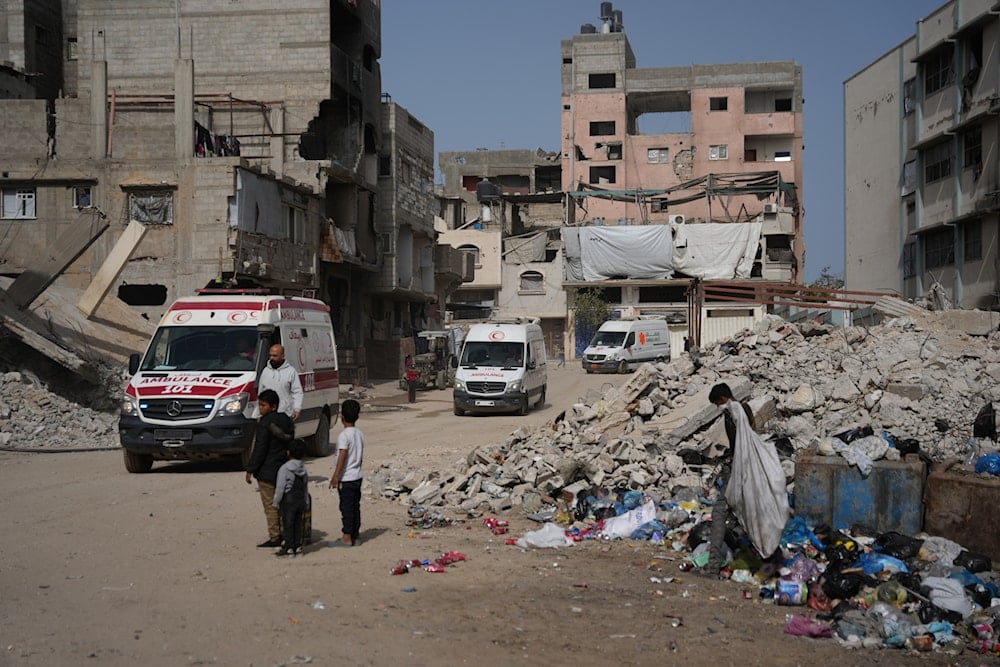
UN vehicles escort ambulances and a bus carrying Palestinian patients in Khan Younis as they travel to the Rafah crossing to leave the Gaza Strip for medical treatment abroad, Thursday, Mar, 19, 2026 (AP)
"Israel" reopened the Rafah crossing with Egypt on Thursday after nearly three weeks, permitting a limited number of wounded Palestinians to leave Gaza for medical treatment.
According to the Palestinian Red Crescent Society, only eight Palestinians injured during Israeli attacks over the two-year war on Gaza, along with 17 of their family members, will be allowed to enter Egypt for care. It remains unclear how many of those who exit Egypt will be allowed to return to Gaza.
Sources told Reuters that the reopening followed talks in Cairo between Hamas officials and envoys from US President Donald Trump’s "Board of Peace," aimed at maintaining the Gaza ceasefire, which has been violated daily by the Israelis.
The Rafah crossing had previously reopened in early February after being largely closed since May 2024, during the early months of the Israeli war on Gaza.
Rafah: How 'Israel' manufactures crises under the guise of security
The Rafah crossing between Gaza and Egypt is legally under Egyptian control, yet "Israel" wields outsized influence over who can pass. While it has no formal authority there, its military presence and policies effectively dictate the crossing’s operation.
"Israel" enforces strict security approvals and screenings, controlling who can leave or return, even during partial reopenings. This de facto oversight turns Rafah into a choke point, where civilians’ movement depends on Israeli discretion.
Since May 2024, "Israel" has repeatedly shut down the crossing as part of its wartime measures. Even after ceasefire agreements, "Israel" continues to coordinate closely with Egypt to maintain control, effectively deciding who can cross and when.
Although international law allows securing borders, it does not grant "Israel" the right to impose control over Egyptian territory. Yet "Israel" has used this influence to block or delay critical humanitarian aid, medical supplies, food, and fuel, leaving Gaza’s civilian population trapped in a worsening crisis.
This de facto domination transforms Rafah from a lifeline into a tool of coercion. "Israel’s" actions, under the guise of security, amount to a deliberate restriction of civilian access to essential goods and services, deepening human suffering and violating the spirit of international humanitarian law.


