
Ramaphosa rejects Trump’s threat to exclude South Africa from G20
 3 Min Read
Ramaphosa affirms South Africa’s founding role amid tensions over the 2026 summit and US claims of discrimination.
-
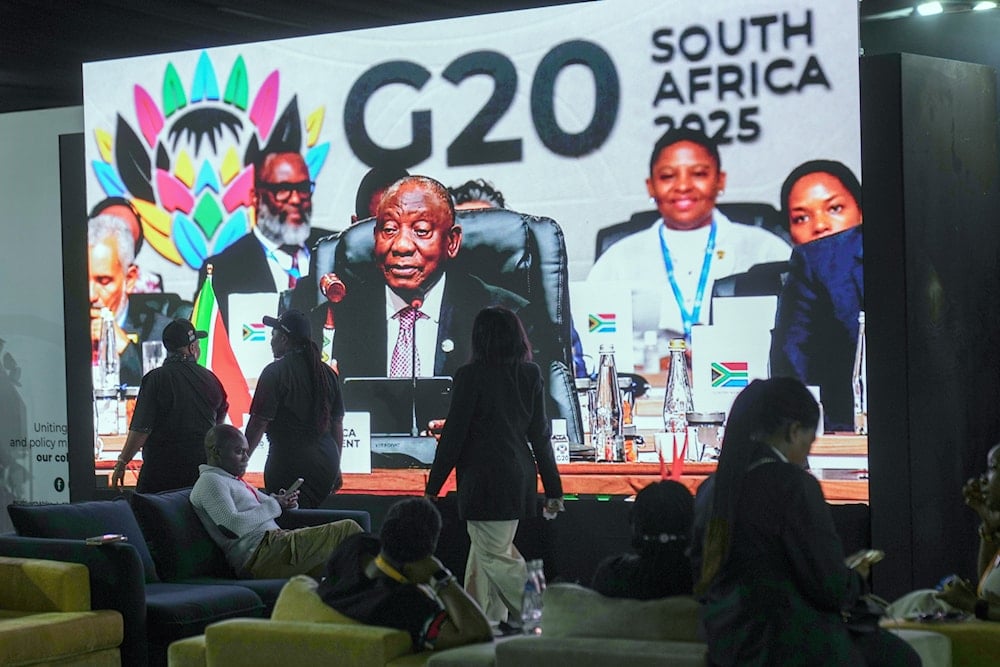
People walk by a large screen TV where South African President Cyril Ramaphosa holds a wooden gavel as he officially closes the G20 leaders' summit, in Johannesburg, South Africa, Sunday, Nov. 23, 2025 (AP)
South African President Cyril Ramaphosa on Sunday dismissed US President Donald Trump’s threat to exclude Pretoria from next year’s G20 summit, reaffirming South Africa’s status as a founding member of the international forum.
Trump had announced last Wednesday that South Africa would not be invited to the 2026 G20 summit in Florida, citing the country’s alleged refusal to hand over the G20 presidency to a US embassy representative at the closing ceremony. Pretoria, however, insists that the rotating presidency was duly transferred to a US official.
The dispute follows Washington’s boycott of the G20 leaders’ summit held in Johannesburg on November 22-23 under South Africa’s presidency. Trump repeated widely discredited claims that the country’s Black-majority government persecutes its white minority.
In his state of the nation address, Ramaphosa called Trump’s allegations of a “genocide against Afrikaners” and land confiscation from white citizens “blatant misinformation", reaffirming that “South Africa is and will remain a full, active and constructive member of the G20.”
Despite the diplomatic tensions, Ramaphosa highlighted the ongoing engagement of US businesses and civil society groups in G20-related events in Johannesburg last month. “We value those constructive ties and will continue to work within the G20 framework,” he said, signaling Pretoria’s commitment to maintain dialogue.
US, South Africa lock horns
Tensions between Washington and Pretoria began escalating early in 2025. On March 14, the US expelled South Africa’s ambassador, Ebrahim Rasool, after he accused US President Donald Trump and his allies of promoting a global white-supremacist agenda. Rasool, speaking during a webinar organized by a South African think-tank, argued that the “MAGA” movement and demographic shifts in the US had fueled efforts to “project white victimhood as a dog whistle.”
The US State Department called Rasool a “race-baiting politician who hates America” and declared him persona non grata. South Africa’s presidency called the expulsion “regrettable”, while insisting Pretoria remained committed to diplomatic engagement. The US also suspended foreign aid and launched a refugee program for white South Africans, citing alleged persecution, claims rejected by South African officials.
A tense Oval Office meeting followed on May 21, when South African President Cyril Ramaphosa visited Washington. The summit quickly became confrontational: Trump confronted Ramaphosa with claims of “white genocide” against Afrikaner farmers in South Africa, presenting aerial images purportedly showing thousands of white crosses along rural roadsides, which Trump claimed represented mass graves.
He also played videos of South African opposition politicians singing anti-apartheid-era songs the US side described as incitement against whites. Ramaphosa and his delegates strongly denied the accusations, describing them as baseless, politically motivated distortions aimed at undermining South Africa’s land-reform policies. They pointed out that violence affects all South Africans and that farm attacks do not amount to systemic racial persecution.


