
Rubio says US expecting Iran reply to proposal today
 3 Min Read
US Secretary of State Marco Rubio said Washington is awaiting Tehran's response to a proposal to end aggression against Iran.
-
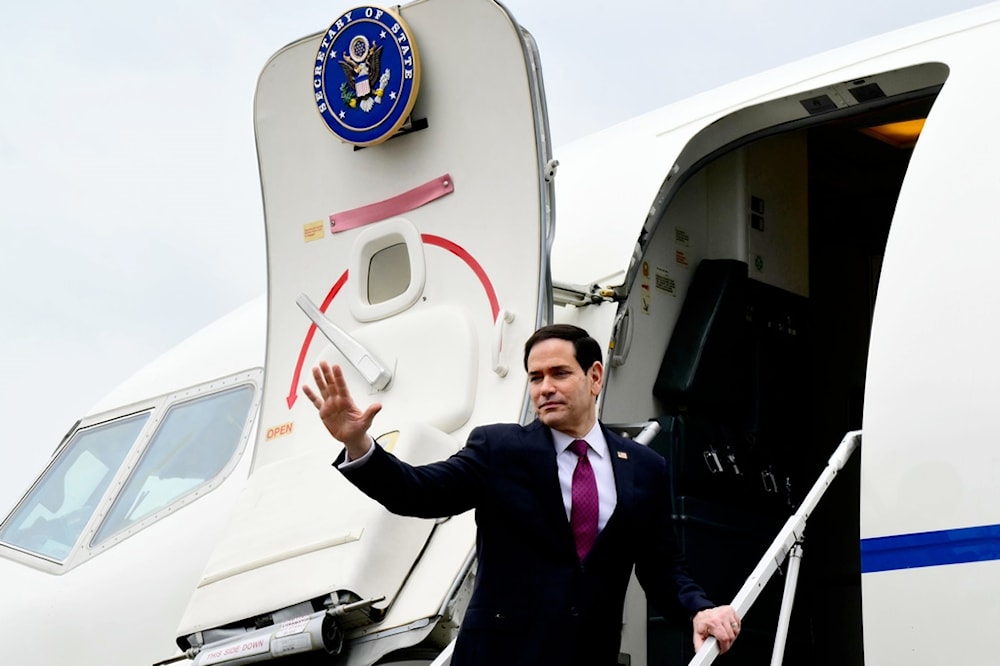
US Secretary of State Marco Rubio waves as he boards a US government aircraft after concluding his two-day visit to Italy and the Vatican, at Ciampino airport in Rome, Friday, May 8, 2026 (AP)
US Secretary of State Marco Rubio said Washington is awaiting Tehran’s response to a proposal aimed at ending the aggression on Iran, expressing hope that the reply could open the way for structured negotiations.
Speaking to reporters in Rome, Rubio indicated that a response from Iran could arrive within hours. “We should know something today,” he said during a press gaggle, noting that no official communication had been received so far. “We have not received that yet, as of the last hour,” he added.
The top US diplomat suggested that alleged internal divisions within Iran may be contributing to the delay. “Their system is still highly fractured, and it’s dysfunctional as well, so that may be serving as an impediment,” Rubio claimed, while stressing that Washington is looking for “something that can put us into a serious process of negotiation.”
Ceasefire under strain
The remarks come amid ongoing US-Israeli aggression on Iran and Lebanon. A ceasefire between the United States, Iran, and “Israel” was initially declared on April 7-8, 2026, following mediation efforts led by Pakistan, but the truce has remained fragile amid repeated violations, continued military escalation around the Strait of Hormuz, and ongoing Israeli attacks in Lebanon.
The current diplomatic track is linked to a draft framework centered on a temporary arrangement to halt hostilities, though key issues remain unresolved. Reports indicate Washington is pushing for an interim memorandum that would pause the war, while Tehran has signaled it is seeking a broader agreement that would end the aggression and address wider regional implications rather than a limited ceasefire.
Iranian officials have repeatedly maintained that core sovereign matters are not subject to negotiation, including uranium enrichment, the full lifting of sanctions, and the release of frozen assets. They have also dismissed US claims regarding Iran’s nuclear material as unfounded, stressing that Washington will not achieve through military pressure what it failed to secure through diplomacy.
Strait tensions escalate
While large-scale strikes inside Iran have declined compared to the early phase of the war, intermittent attacks and military exchanges have continued, particularly around the Strait. In contrast, the situation in Lebanon has remained more volatile, with Israeli attacks and cross-border exchanges with Hezbollah continuing despite the broader ceasefire framework, underscoring the persistence of an active frontline.
Rubio also raised concerns about reported Iranian efforts to establish a mechanism overseeing maritime movement through the Strait. He pointed to overnight reporting that Tehran is “trying to establish some agency that’s going to control traffic in the Strait,” warning that “that would be very problem, that would actually be unacceptable.”
Iran, for its part, has framed such measures as a sovereign response to ongoing aggression and a means of regulating transit in waters adjacent to its territory, particularly after repeated violations of the ceasefire and continued military pressure in the region.
Read more: Iran dismisses reports of new Hormuz Strait transit mechanism: Tasnim


