
Russia’s FSB warns against UK-backed émigré organizations
 4 Min Read
Russia’s FSB says British efforts to use Russian émigré organizations against Moscow’s security are doomed to fail.
-
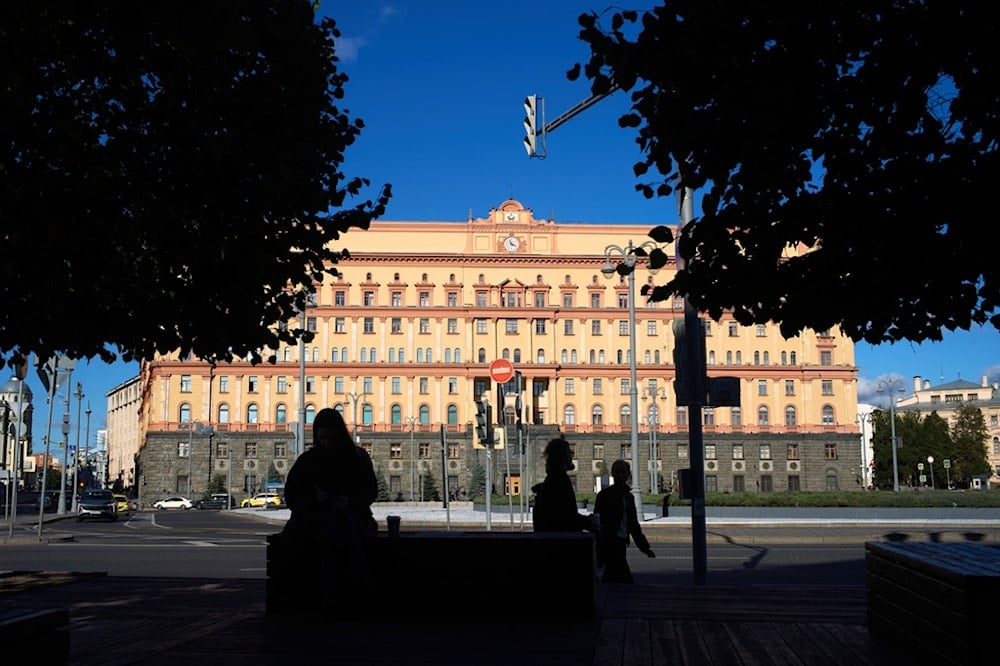
A view of Lubyanskaya Square with the historical Federal Security Service (FSB) building, left, in Moscow, Tuesday, Sept. 8, 2026 (AP)
British efforts to use organizations among the Russian émigré community to undermine Russia’s security are destined to fail, Russia’s Federal Security Service (FSB) said on Monday.
According to RIA Novosti, an FSB operational officer said London is seeking to create the impression that an alternative center of political power is emerging among Russians abroad and could eventually replace the authorities in Moscow.
“The British attempts to form puppet organizations under the guise of a democratic alternative and to use them to the detriment of the country's security are doomed to failure,” the officer said in a video released by the FSB on Monday.
Case opened against Russian Democratic Society UK founder
The officer added that Russian counterintelligence knows the identities of those who, according to the FSB, have chosen to cooperate with the UK and are seeking Russia’s defeat.
The FSB said the efforts are aimed at presenting Russian émigré organizations as an alternative political center capable of challenging the authorities in Moscow.
The remarks came after the FSB announced that it had opened a criminal case against Russian citizen Ksenia Maksimova, founder of the Russian Democratic Society UK (RDS), over alleged participation in a terrorist organization.
According to the FSB, the RDS has become a platform for individuals planning a violent seizure of power and a change to Russia’s constitutional order.
The security service said the case forms part of its efforts to counter activities it considers aimed at destabilizing Russia and threatening its constitutional system.
FSB detains SBU agent linked to UK Embassy security
Earlier this month, the FSB detained a Russian national employed by the organization responsible for security at the UK Embassy in Moscow on charges of high treason. The FSB accused the individual, born in 1981, of working as an agent for Ukraine’s Security Service (SBU), saying it had opened a criminal case and launched a preliminary investigation.
According to the FSB, the detainee gathered personal and operational information about British diplomatic staff in Moscow on instructions from Ukrainian blogger Dmytro Karpenko, also known as Apostle Dmytro. The information included diplomats’ names, photographs, home addresses, vehicles, movements, travel and meetings, as well as details concerning security arrangements at the British mission.
According to the FSB, messages between the detainee and Karpenko showed that Karpenko sought detailed information about the British ambassador, diplomats and other staff, while the detainee allegedly expressed interest in joining Ukrainian forces if he entered a combat zone.
The FSB said that Kiev intended to use the collected information to prepare sabotage or terrorist attacks against UK Ambassador Nigel Casey and other British diplomats in Moscow. According to the Russian security service, such attacks could then have been attributed to Russia in an attempt to draw London into direct military confrontation with Moscow, while also encouraging additional British arms supplies to Ukraine and greater sanctions pressure on Russia.
FSB links case to wider warnings over UK activities
The Russian security service also said it had previously encountered British intelligence “gambits” in which individuals were sacrificed for political objectives.
The FSB said it would continue countering foreign security agencies using all available methods and warned Russian citizens against contacts with pro-Ukrainian bloggers, alleging that such interactions could draw them into criminal activities. The security service urged people who have such contacts to approach Russian state security agencies, saying timely cooperation to prevent harm to the Russian state would not result in punishment.


