
Russian drone campaign exposed NATO air defense gaps across Europe: FT
 4 Min Read
A Financial Times-reported study by IISS says a Russian drone campaign mapped NATO air defense weaknesses across Europe, exploiting legal and operational gaps over 19 months.
-
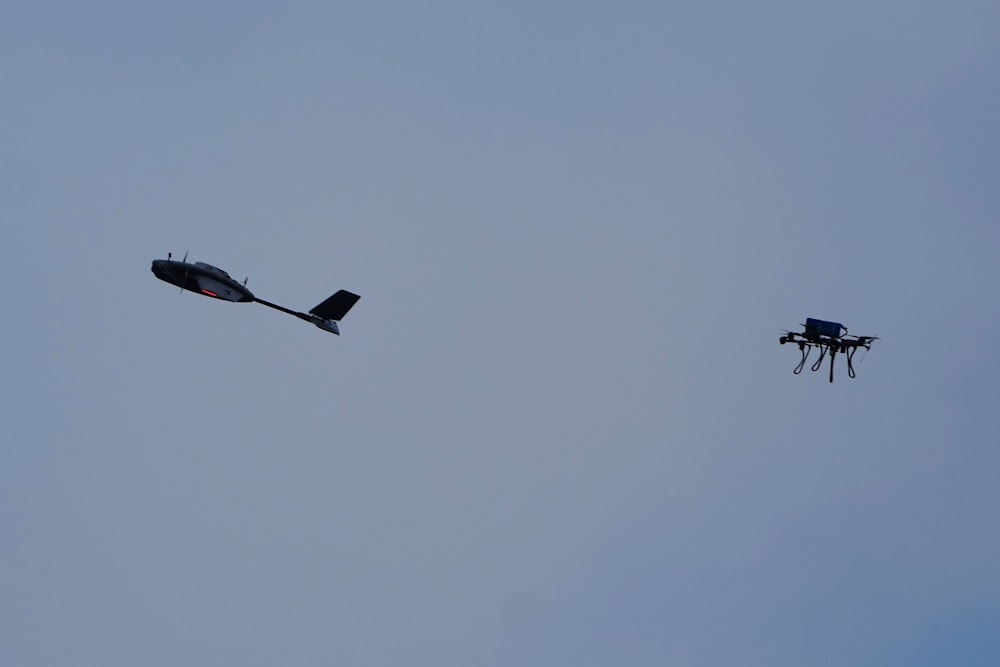
Ukrainian soldiers attempt to take down a target drone, left, using a "drone hunter, at the Yatagan School for Unmanned Aerial Systems in the Kiev region, Ukraine, on March 19, 2026. (AP)
A sustained Russian drone campaign has mapped vulnerabilities in NATO’s air defense architecture over nearly two years, exposing gaps in coordination, legal frameworks, and response capacity across the alliance, according to a new defense study reported by the Financial Times.
The analysis by the London-based International Institute for Strategic Studies (IISS) found that a 19-month campaign involving drone incursions across more than a dozen NATO countries, as well as Ireland, proceeded without a unified allied response.
According to the report, the operation exposed structural weaknesses not only in Europe’s air defense systems, but also in rules of engagement and national legal frameworks governing counter-drone activity.
Researchers said the incidents were often treated in isolation by individual states, with governments reluctant in some cases to directly attribute responsibility, even when patterns suggested coordinated activity.
144 drone sorties and suspected maritime launch platforms
The study documented 144 drone sorties into European airspace over the period examined, with incidents frequently occurring near critical infrastructure such as ports, airports, energy facilities, and military installations.
In several cases, Russian commercial vessels, including so-called shadow fleet tankers, were present in proximity to drone activity. The report suggests these ships may have been used as launch platforms, recovery points, or communications relays.
Researchers noted that attribution remains complex, particularly as no drones believed to have been launched from maritime platforms were recovered intact.
One European intelligence operation reportedly involved the boarding of a tanker suspected of supporting drone launches, though findings were not made public.
Incidents across sensitive military sites
The report highlights multiple high-profile cases, including the temporary closure of Copenhagen Airport after drone activity in September 2025 and the scrambling of Dutch fighter jets over Volkel Air Base in December.
Other sightings were recorded near sensitive military infrastructure, including France’s Ile Longue nuclear submarine base, as well as airbases in the United Kingdom, Germany, Belgium, and the Netherlands.
In some instances, drones were not intercepted due to concerns over civilian safety or legal constraints limiting engagement in populated areas.
Testing NATO response and exploiting weaknesses
According to the study’s author Charlie Edwards, the pattern of incidents suggests a coordinated strategy aimed at testing NATO response times and identifying systemic weaknesses.
He said the broader picture indicates “a co-ordinated effort targeting Europe’s critical national infrastructure,” with the campaign designed to probe air defenses, logistics routes, and surveillance capabilities.
The report outlines four likely objectives behind the operation: monitoring NATO’s nuclear deterrent and dual-capable infrastructure, testing allied response mechanisms, mapping logistical networks, and imposing economic and psychological pressure.
Structural gaps in European air defense
Researchers warned that European air defense systems remain largely designed to counter conventional aircraft and missile threats, making them less effective against low-cost, slow-moving drones that can blend into civilian air traffic.
The study also highlights inconsistencies in national responses, with NATO allies often applying different legal thresholds for engagement and differing interpretations of rules of engagement.
“Resilience alone is insufficient,” Edwards said, urging NATO, the EU, and member states to reassess legal and operational frameworks governing counter-drone responses.
Russian denial and escalating countermeasures
Russia has repeatedly denied involvement in drone incursions. Responding to the report, Kremlin spokesperson Dmitry Peskov said, “What does this have to do with us?”


