
STC integrates Homeland Shield forces into southern Yemen military
 3 Min Read
The UAE-backed Southern Transitional Council says it has begun integrating Homeland Shield forces into southern military duties amid tensions in Hadhramaut and al-Mahra.
-
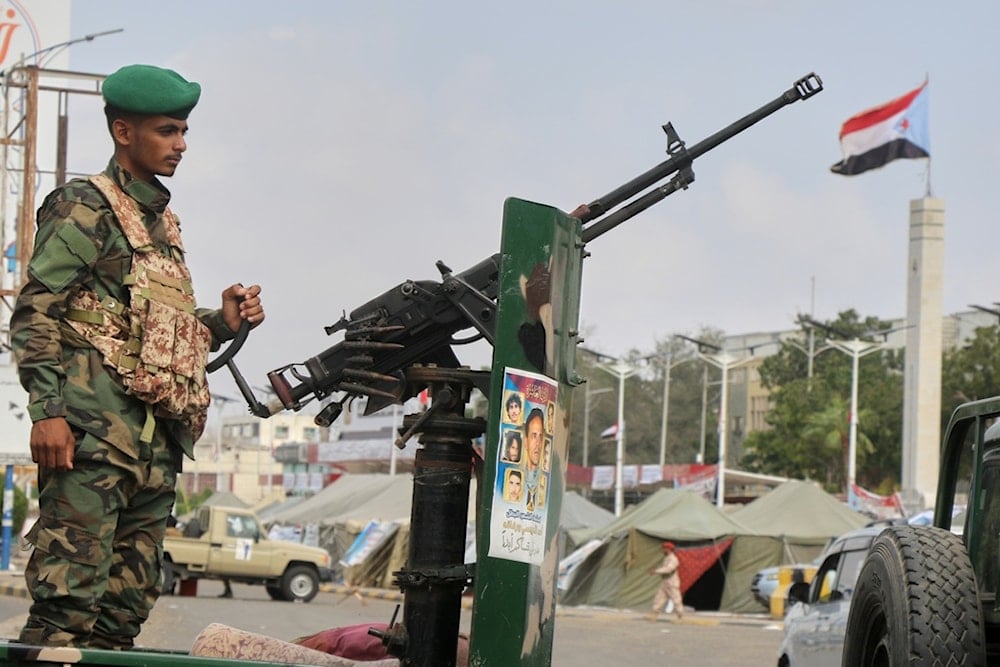
A Southern Yemen soldier of the UAE-backed Southern Transitional Council (STC) stands at a checkpoint in Aden, Yemen, Wednesday, December 31, 2025 (AP)
The UAE-backed Southern Transitional Council (STC) has begun integrating southern personnel from the Homeland Shield forces into official military duties, a spokesperson for the council’s armed forces said late Wednesday.
The spokesperson said the deployment is part of a new organizational structure for the Southern Armed Forces, aimed at securing all southern regions of Yemen.
According to the statement, additional units from the Homeland Shield forces will be redeployed to the Ramah area and other locations across Hadhramaut and al-Mahra. The move is being carried out under directives from the STC’s senior political leadership, headed by Aydarous al-Zubaidi, the spokesperson added.
The official also confirmed that the First Brigade of the Homeland Shield forces completed its redeployment to the Thamud area on Wednesday.
The Homeland Shield forces are the first military formation established by the UAE-backed Yemen’s Presidential Leadership Council, which assumed power in April 2022. The force was formally announced in early 2023 with the stated aim of “bringing peace to Yemen,” and Brigadier Bashir Saif was appointed as its commander.
Southern Yemen has witnessed growing tensions between the UAE-backed STC on one side and the Saudi-backed Presidential Leadership Council, led by Rashad al-Alimi, along with the Hadhramaut Tribal Alliance, on the other. The dispute centers on control over the southern provinces of Hadhramaut and al-Mahra, where STC-affiliated forces have expanded their presence.
Escalation between UAE, Saudi Arabia
The move comes days after a sharp escalation between Abu Dhabi and Saudi Arabia, including Saudi airstrikes on Yemen’s eastern port city of Mukalla. Riyadh claimed the strikes targeted unauthorized military shipments allegedly destined for UAE-backed forces, prompting emergency measures by Saudi-aligned authorities, a temporary blockade of the port, and public demands for Emirati forces to leave Yemeni territory. The confrontation marked one of the most serious ruptures between the two former coalition partners since the war began.
The announcement also follows weeks of rapid advances by the STC, whose expansion across Hadhramaut, Shabwa, and Abyan has triggered armed clashes with Saudi-aligned tribal forces and led Saudi aircraft to strike STC positions in eastern Yemen. These developments have laid bare the collapse of cohesion within the anti-Sanaa camp, as rival foreign agendas increasingly turn their weapons against each other on Yemeni soil.
Officials in Sanaa have consistently described the UAE-constructed militia network in the south as part of a broader foreign encirclement strategy aimed at weakening the resistance, seizing energy assets, and securing permanent footholds along Yemen’s coastline and islands, including Socotra and Mayyun.
From this perspective, Abu Dhabi’s partial withdrawal does not signal de-escalation, but rather a tactical repositioning after its proxy forces became embroiled in open conflict with Saudi-backed factions and exposed the depth of coalition disintegration.


