
Trump claims US is 'semi-negotiating' with Iran
 3 Min Read
Trump says Washington has scaled back negotiations with Tehran while maintaining economic pressure, amid efforts to reach an agreement over the war on Iran.
-
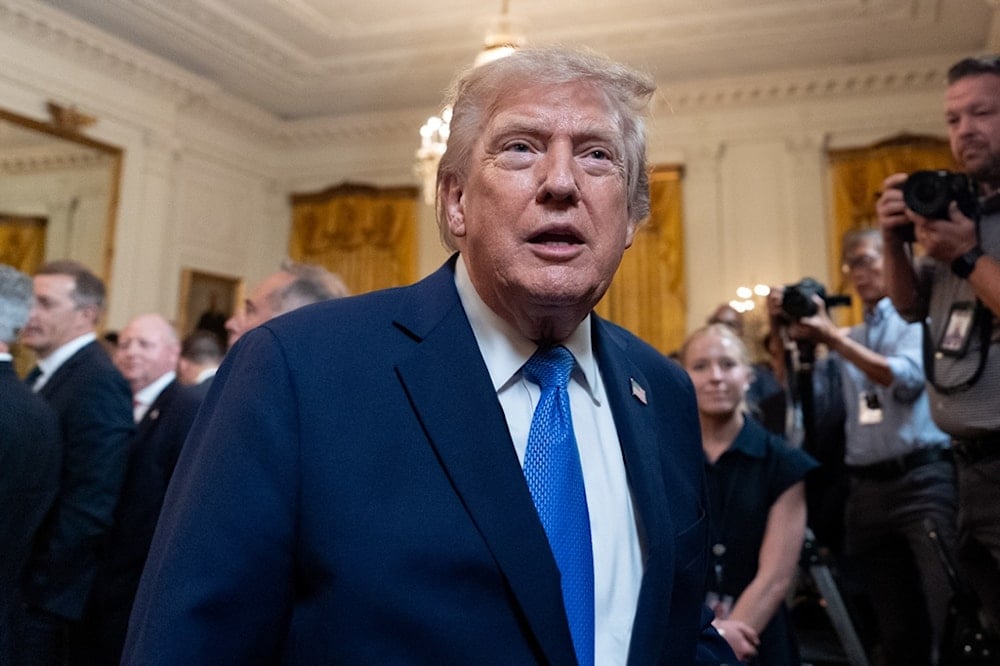
US President Donald Trump speaks with a reporter as he departs after an event for Olympic athletes, coaches, staff, and representatives from Team USA in the East Room of the White House, Thursday, Aug. 6, 2026, in Washington. (AP Photo/Alex Brandon)
US President Donald Trump said Sunday that his administration has scaled back efforts to reach an agreement with Iran, acknowledging that Washington is keeping negotiations at a limited level while relying on economic pressure against Tehran.
“We are only semi-negotiating with them. We are just watching Iran with its huge inflation and the fact they have no money,” Trump was quoted as saying during a brief phone call with Axios.
Trump claimed that Iran was in “very bad shape” economically and indicated that Washington could intensify economic pressure on Tehran.
His remarks did not include any new military threats against Iran.
Trump’s latest remarks are widely portrayed by analysts and media coverage as an attempt to project leverage while under growing pressure over the Iran war. His claims about Iran’s economic collapse appear aimed at masking Washington’s own constraints and limited options.
Read more: Iran's Leader, President discuss war, economy in meeting
US relies on economic pressure as talks continue
Trump's comments suggest that Washington is deliberately keeping negotiations at a lower intensity while waiting for economic pressure to affect Tehran's calculations.
The US has for years relied on sanctions and other economic restrictions as a central instrument of its policy toward Iran. Trump's latest remarks indicate that economic pressure remains an important component of Washington's strategy even as discussions over a possible agreement continue.
Despite the economic pressure by Washington, Iran's inflation rate fell to 3.6% in July from 7.2% in June, almost halving.
Economic analyst Borna Mahmoudi told Al Mayadeen's envoy to Iran that the shift is attributed to tighter liquidity controls, greater stability in the foreign exchange market, ongoing access to essential goods, and alternative trade and payment routes that helped cushion the impact of economic sanctions.
Trump shifts between military escalation and de-escalation
Trump's latest remarks come days after he said he had called off a major attack on Iran, claiming that prospects for a peace agreement were developing and that a deal could reopen the Strait of Hormuz and address Washington's demands regarding Iran's nuclear program.
US officials told Axios that Trump had been inclined to resume major military action against Iran the previous week but had subsequently moved toward de-escalation.
The sequence highlights the volatility of Washington's approach, with military escalation remaining alongside diplomatic efforts and economic pressure.
Trump's latest comments therefore do not indicate that the confrontation has been resolved. Instead, they point to an ongoing effort by Washington to combine negotiations with economic leverage while keeping the possibility of further escalation in reserve.
Read more: US, 'Israel' defeat proves the need to expel foreign powers: Velayati


