
Trump’s jab at UK sparks response over war on Iran stance
 6 Min Read
Britain says it will act in its national interest amid the US-Israeli war on Iran after Trump mocked London’s potential military involvement and criticized Starmer.
-
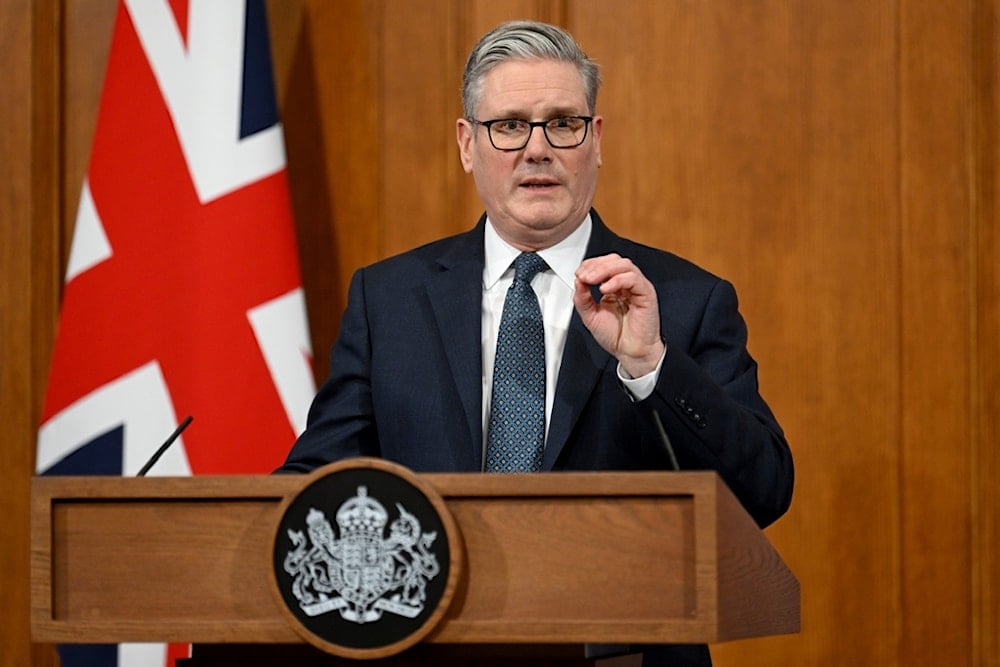
Britain's Prime Minister Keir Starmer gives an update on the situation in the Middle East at Downing Street Briefing Room in London, England, Thursday, March 5, 2026 (AP)
Britain’s Foreign Secretary has defended the government’s position on the US-Israeli war on Iran after US President Donald Trump publicly criticized Prime Minister Keir Starmer’s handling of the war.
In a social media post, Trump dismissed reports that the United Kingdom may deploy military assets to the Middle East, writing that Washington does not need “people that join wars after we've already won.”
The remarks appeared to target London’s deliberations over whether to send additional military forces to the region as tensions continue to escalate between Iran, on one side, and the United States and "Israel", on the other.
Foreign Secretary Yvette Cooper said the British government would determine its response based on its own national interests.
“It’s for the US president to decide what he thinks is in the US national interest,” Cooper said in an interview. “But it is our job as the UK government to decide what’s in the UK national interest, and that doesn’t mean simply agreeing with other countries or outsourcing our foreign policy.”
She added that London does not agree with Washington “on every issue.”
Britain’s role in the war
The United Kingdom did not participate in the initial US-Israeli strikes against Iran. However, it later permitted the United States to use British military bases to conduct what officials described as "defensive operations", the BBC reported.
British fighter jets have also been deployed to the region, where they have reportedly intercepted missiles and drones launched by Iran toward countries allied with the United States.
The UK aircraft carrier HMS Prince of Wales has been placed on advanced readiness, though Cooper declined to confirm whether it would be sent to the Middle East.
Another British warship, HMS Dragon, which has air-defense capabilities, is expected to be deployed to the Mediterranean to strengthen protection around RAF Akrotiri, the UK’s strategic air base in Cyprus.
The deployment plans come after a small drone reportedly struck a runway at RAF Akrotiri earlier this week, causing what the British Ministry of Defense described as minimal damage.
Political divisions in Britain
The war has also triggered political divisions inside the United Kingdom regarding how far the country should be involved in the escalating confrontation.
Former Prime Minister Tony Blair, who led Britain into the US-led invasion of Iraq in 2003, argued that the UK should have supported the strikes on Iran from the beginning.
Speaking at a private event, Blair described the United States as an “indispensable cornerstone” of Britain’s security and said allies should “show up” regardless of who occupies the White House.
Cooper responded by emphasizing that Britain must draw lessons from Blair's war.
“It is important to learn lessons from what went wrong,” she said, adding that decisions should focus on what is right for British citizens.
Opposition figures criticize government’s response
Conservative shadow home secretary Chris Philp accused the government of failing to prepare military deployments in advance despite knowing that the United States was planning military action against Iran weeks earlier.
Meanwhile, Reform UK politician Robert Jenrick said Britain should not take part in offensive bombing raids but argued that the government should have allowed US forces to use British bases from the start.
The Liberal Democrats have urged the government to avoid deeper involvement in what they described as an “illegal and damaging war.”
Iran warns Britain over involvement
Iran’s ambassador to London has warned that any country facilitating attacks on Iran could face consequences.
Seyed Ali Mousavi cautioned the United Kingdom to be “very careful” about expanding its role in the war.
“If facilities or properties or bases are used against the Iranian nation, they will be considered legitimate targets,” he said.
Growing regional escalation
The diplomatic tensions come amid a widening confrontation in West Asia following the US-Israeli aggression on Iran.
Tehran has launched multiple waves of retaliatory drone and missile strikes targeting Israeli-occupied territories and US military installations across the region, part of operations Iranian officials say are aimed at the sources of aggression.
The escalation has heightened fears of a broader regional war and has already begun affecting global energy markets, Gulf security dynamics, and international trade routes, as countries across the region brace for further escalation.
Starmer vs. Trump
The latest exchange between Washington and London comes days after US President Donald Trump sharply criticized British Prime Minister Keir Starmer over the UK’s initial refusal to support the US strikes on Iran.
The dispute began after Britain initially refused to allow US forces to launch strikes on Iran from British military bases. According to Trump, the delay forced US forces to adjust their operational planning.
“It’s taken three or four days to work out where we can land,” Trump said at the time, expressing frustration that Washington had to “fly many extra hours” due to the hesitation from London.
Starmer defended the decision in the British parliament, stressing that the UK would not automatically follow Washington into military action.
No regime change from the skies
“We do not believe in regime change from the skies,” the British prime minister said, questioning the legality of the US strikes while insisting that British policy would be guided by national interests.
Despite the disagreement, the UK later permitted the United States to use certain British facilities, including Diego Garcia and RAF Fairford, for what London described as "defensive" purposes, particularly to protect British personnel and allied assets from potential Iranian retaliation.
The dispute also reflects broader unease among US allies regarding the aggression against Iran. A YouGov poll released at the time showed nearly half of the British public opposed the US strikes, while only 28 percent supported them, highlighting domestic pressure on the Starmer government as the regional conflict deepens.
Read More: 'Not Churchill,' Trump still slamming Starmer over Iran strike refusal


