
Trump says Beirut bombing called off after call with Netanyahu
 4 Min Read
US President Donald Trump said a planned Israeli attack on Beirut was called off following a phone call with Prime Minister Benjamin Netanyahu, stating Israeli troops were turned back and that an agreement had been reached to halt hostilities.
-
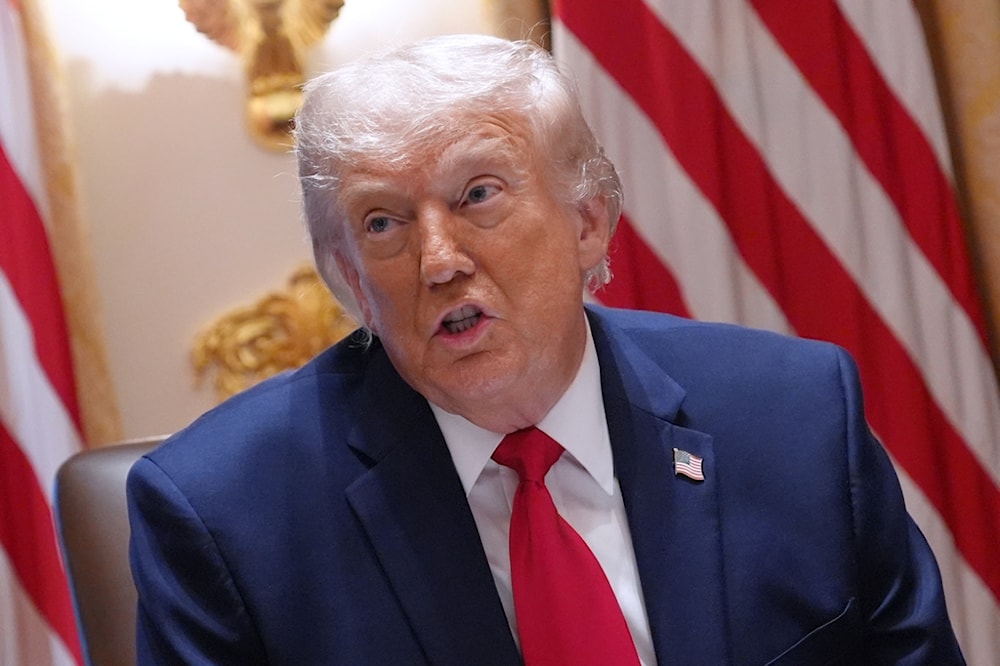
President Donald Trump speaks during a Cabinet meeting at the White House, Wednesday, May 27, 2026, in Washington. (AP Photo/Jacquelyn Martin)
US President Donald Trump announced on Monday that a planned Israeli aggression against Beirut had been called off following what he described as a "very productive" phone call with Israeli Prime Minister Benjamin Netanyahu, amid growing fears of a major escalation against Lebanon.
In a statement published on his Truth Social platform, Trump said there would be "no troops going to Beirut" and claimed that any Israeli forces already heading toward the Lebanese capital had been ordered to turn back.
"I had a very productive call with Prime Minister Bibi Netanyahu, of Israel, and there will be no Troops going to Beirut, and any Troops that are on their way, have already been turned back," Trump wrote.
Trump also said that indirect contacts had taken place with Hezbollah through "highly placed representatives," adding that both sides had agreed to halt hostilities.
The statement came hours after Israeli media reported that a planned Israeli attack on Beirut's Southern Suburb had been delayed following US intervention.
According to "Israel's" Channel 15, Israeli authorities informed Washington of their intention to launch strikes against Beirut's Southern Suburb before receiving US approval. Israeli broadcaster Kan later reported that the aggression was postponed following US pressure, while i24NEWS said the United States had effectively halted the planned attack.
Israeli media also reported intensive consultations between Washington and Tel Aviv throughout the day, including a phone call between Netanyahu and Trump, amid concerns that a large-scale aggression against Beirut could derail ongoing diplomatic efforts and ceasefire discussions.
Iran freezes talks with Washington
The developments unfolded against the backdrop of escalating regional tensions after Iran announced earlier today that it was suspending indirect negotiations and message exchanges with the United States through mediators due to continued Israeli attacks on Lebanon, following Israeli displacement threats targeting Beirut's Southern Suburb.
Tehran considers Lebanon an integral part of the broader ceasefire framework and has warned that continued Israeli violations and aggressions against Lebanese territory threaten the entire agreement.
The suspension of talks came as senior Iranian military officials issued direct warnings over the threatened aggression against Beirut. Earlier on Monday, Commander of Iran's Khatam al-Anbiya General Headquarters Ali Abdollahi warned that any Israeli attack on Beirut or its Southern Suburb would warrant a response from Iran.
Referring to Israeli evacuation threats directed at residents of the Lebanese capital, Abdollahi warned settlers in northern occupied Palestine and military settlements that they could face repercussions should the threatened aggression be carried out.
Iran signals retaliation
Separately, the IRGC's Intelligence Organization warned that Tehran was prepared to open new fronts and take unprecedented retaliatory measures if Israeli attacks on Lebanon and Gaza continued, describing such actions as a direct threat to Iran's national security and the Resistance Axis.
Iranian Foreign Minister Abbas Araghchi stressed that any ceasefire with the United States applies to all fronts, including Lebanon, and warned that violations would carry consequences. Similar warnings were issued by Iranian President Masoud Pezeshkian, Parliament Speaker Mohammad Bagher Ghalibaf, and senior military officials, all of whom accused Washington of enabling or failing to restrain Israeli aggression against Lebanon.
The reported US intervention and Trump's latest statement suggest growing American concern that a major Israeli aggression against Beirut could trigger a broader regional confrontation and further complicate negotiations with Iran. Iranian officials have repeatedly argued that the United States bears responsibility for restraining "Israel", with Foreign Ministry spokesperson Esmaeil Baghaei stating earlier that Washington and Tel Aviv "cannot be viewed as separate parties" in relation to developments in Lebanon.


