
Trump threatens to 'hit Iran hard tonight' with ceasefire deal 'over'
 4 Min Read
Trump's threat of new US strikes on Iran raises fears of renewed war and further disruption around the Strait of Hormuz.
-
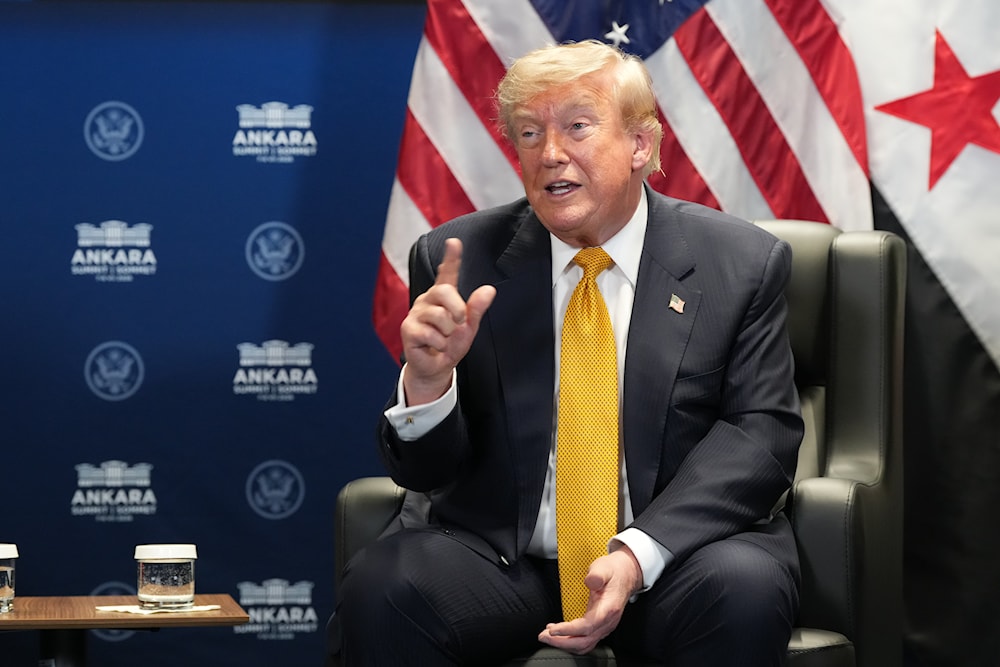
US President Donald Trump meets with Syrian President Ahmad al-Sharaa on the sidelines of the NATO summit in Ankara, Turkey, Wednesday, July 8, 2026 (AP)
US President Donald Trump threatened on Wednesday to launch new attacks on Iran, deepening a renewed confrontation after Washington declared an interim ceasefire framework with the Islamic Republic “over” and moved again toward military escalation.
Speaking on the sidelines of a NATO summit in Ankara, Trump accused Iranian officials of failing to abide by understandings reached with Washington, even as Tehran has repeatedly said that the United States is the side undermining the memorandum of understanding through threats, sanctions pressure, and renewed strikes.
"I'll give a little warning: We're going to hit them hard tonight," Trump told reporters before a meeting with Ukrainian President Volodymyr Zelensky.
Trump threatens civilian infrastructure
“We’ll take them out [electric plants]. I don’t want to do that, but if we have to, we’ll take them out, he said, before directing his threats at desalination plants, saying, “We’ll take them out [desalination plants] if we have to. I hate to do that. That’s probably the one I’d like to do least.”
Iran flare-up to be over 'very quickly'
Furthermore, at the end of the two-day NATO summit in Ankara, the US president said he expected the military flare-up with Iran overnight to end very quickly despite earlier statements saying the ceasefire was "over".
"I think anything that happens is going to be over very quickly and will only make it safer, including for oil... Anything that happens is going to happen very fast. We're not looking for long term," he said
Military exchanges and retaliation claims
Trump’s remarks came after US forces carried out attacks on Iranian targets the previous day, claiming they were responding to incidents involving tankers near the Strait of Hormuz. Iran said it retaliated by targeting US military sites in Bahrain and Kuwait, framing its response as a defensive measure against American aggression.
Earlier in Ankara, Trump said the memorandum of understanding that had served as an initial ceasefire arrangement with Iran was “over", sending oil prices higher as fears grew that Washington could return to open confrontation in the Gulf.
However, the US president did not clearly state whether his administration was abandoning diplomacy altogether or whether indirect negotiations could still continue toward a final agreement.
Dispute over diplomacy and nuclear concerns
Trump again tied the confrontation to Washington’s stated objective of preventing Iran from developing a nuclear weapon, while suggesting that the United States may pursue that aim without a deal.
"They'll never build a nuclear weapon under our deal, but I don't know if we're going to have a deal. We may just do it without a deal, because you know what, it's easier, because these people, what they lie and they cheat," Trump said.
Tehran has rejected Washington’s pressure campaign and insisted that negotiations cannot proceed under threats. Iranian Foreign Minister Abbas Araghchi had earlier pointed to Paragraph 13 of the MoU, stressing that talks on a final agreement would not begin while US threats continued.
“Honor your signature,” Araghchi said, accusing Washington of failing to uphold the commitments it had signed.
The escalation has also raised concerns over security in the Strait of Hormuz, one of the world’s most important energy routes. Shipping data showed that at least four oil and gas tankers had turned back rather than attempting to transit the waterway, as renewed hostilities threatened maritime movement in the Gulf.
NATO response and broader implications
The developments unfolded as NATO allies used the Ankara summit to announce a major investment in fuel infrastructure, a move that further underscored the alliance’s shift toward war readiness.
NATO Secretary-General Mark Rutte said alliance members are investing €27 billion, or $30.8 billion, to strengthen fuel storage and supply systems.
"Allies are taking a historic step to enhance NATO's fuel supply chain, to ensure our forces have the energy supplies they need for warfighting readiness," Rutte told reporters after the summit.
For Tehran, NATO’s endorsement of US military action and its new fuel-readiness push are likely to be seen as part of a broader Western escalation, rather than a genuine effort to preserve diplomacy.
Read more: Iran rejects Qatar's accusations over Hormuz tanker incident


