
Trump weighs chip tariffs that could hit US AI buildout: POLITICO
 4 Min Read
New semiconductor tariffs under consideration in Washington could raise costs for data centers and slow the US race to dominate AI, POLITICO sources say.
-
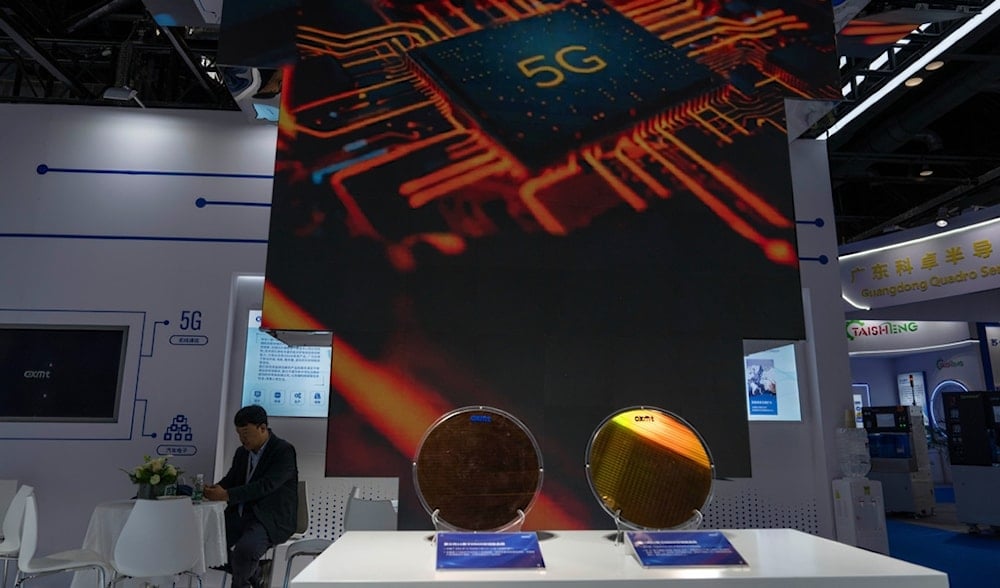
A man rests at the booth for Chinese DRAM producer ChangXin Memory Technologies, also known as CXMT, during the 21st China International Semiconductor Expo in Beijing, Nov. 20, 2024. (AP Photo/Ng Han Guan, File)
The Trump administration is considering a major expansion of tariffs on semiconductors, a move that could end up working against its own push to dominate artificial intelligence, according to a POLITICO report citing eight people familiar with the internal discussions.
Under one option being discussed, the duties would not stop at semiconductors themselves. They could extend to a wide range of products built with chips, including laptops, gaming consoles and the servers that power data centers.
Commerce Secretary Howard Lutnick is said to favor tying any relief from the tariffs to how much foreign firms invest in building chip manufacturing capacity inside the United States, according to four of the sources.
A phase-in period is also reportedly on the table, though those familiar with the talks caution the plan remains fluid and could be reshaped in the weeks ahead.
Industry warns of self-inflicted damage
The prospect of new duties has rattled American tech firms already struggling to secure enough advanced chips to keep up with the AI-driven data center boom.
Industry representatives told POLITICO they do not object to the broader goal of building up domestic chip production, but point out that new semiconductor plants take years, sometimes decades, and cost billions of dollars to bring online.
Until that capacity exists, US companies remain reliant on chips imported largely from Taiwan, South Korea and Malaysia, with Taiwan alone producing over 90 percent of the world's most advanced semiconductors.
One tech official who previously served in the first Trump administration told POLITICO the approach amounted to "the single dumbest way imaginable to pursue American dominance in AI," comparing it to sabotaging the country's own position before the race even begins.
Lobbying activity has picked up since early summer, with tech representatives meeting more frequently with Lutnick and Commerce Undersecretary Jeffrey Kessler. According to the sources, Kessler has shown more openness to industry concerns, but the final call rests with Lutnick.
Exemptions that once softened the blow may disappear
Earlier tariffs rolled out this year carried broad exemptions covering data centers, research and development, startups, and public sector uses. But three of the sources said recent conversations suggest officials may be moving away from those carve-outs altogether, in favor of applying duties more broadly to pressure chipmakers into shifting production to US soil.
Under the framework Lutnick is said to prefer, a set volume of chips would enter the country tariff-free, with that volume scaled to a company's US production commitments, a structure sources warned could widen the shortfall between available tariff-free chips and actual demand. Officials have also floated setting different tariff rates and quotas for individual supplier countries.
Economists say tariffs alone will not solve the problem
Analysts caution that duties cannot substitute for the underlying work of building an industry. Sujai Shivakumar of the Center for Strategic and International Studies noted to POLITICO that tariffs shift prices but do nothing to train skilled technicians, speed up permitting, expand power and water infrastructure, or develop qualified suppliers.
The scale of the mismatch is stark. Taiwan Semiconductor Manufacturing Co has pledged $265 billion toward its Arizona facilities, the largest foreign direct investment in US history, yet even at full capacity the company expects only around 30 percent of its most advanced production to be based there, and that is still years away.
One source estimated a genuine domestic buildout would take more than five years, far longer than any tariff phase-in window under consideration.


