
Two supertankers arrive in Basra to load oil after Hormuz reopening
 3 Min Read
Tanker "Lucia" docked at Berth No. 1 to load a shipment of one million barrels of crude oil, while "Romania" docked at the third offshore mooring to load a cargo of 1.3 million barrels.
-
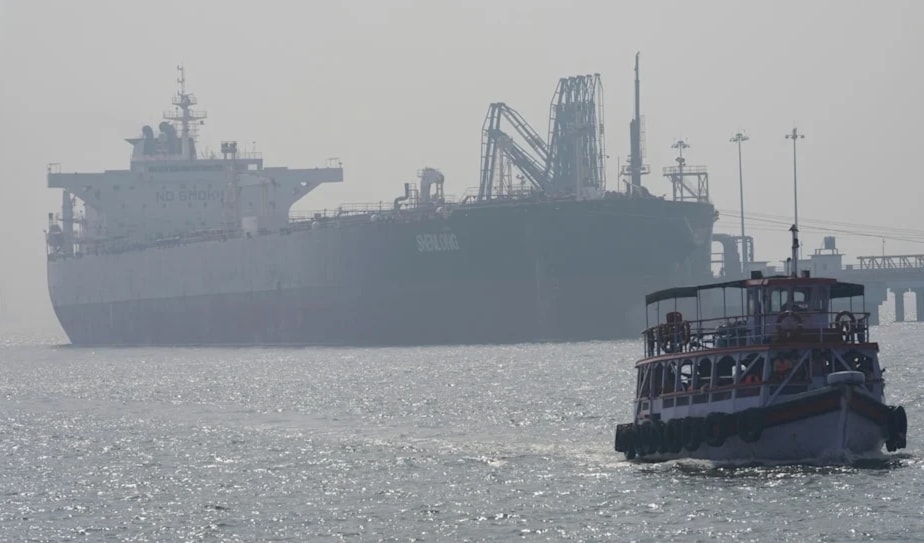
Oil tankers and cargo ships line up in the Strait of Hormuz as seen from Khor Fakkan, United Arab Emirates, March 11, 2026 (AP)
Two giant oil tankers have docked at Basra Oil Port to load large crude oil shipments, Al Mayadeen Plus' correspondent in Basra reported.
Our correspondent added that the tanker "Lucia" docked at berth No. 1 to load a shipment of one million barrels of crude oil, while the tanker "Romania" docked at the third offshore mooring to load a cargo of 1.3 million barrels.
The correspondent also cited a source as confirming that Basra’s ports are expected to receive eight additional supertankers in the near future to load approximately 18 million barrels of crude oil.
This notable surge in oil shipping activity comes after the reopening of the Strait of Hormuz and the resumption of maritime navigation across the Gulf, following the reopening of the strategic waterway under the strategic memorandum of understanding signed between Iran and the United States.
Shipping traffic sees strong rebound
In a related development, data published on Friday by maritime traffic monitoring group AXSMarine showed that vessel transit through the Strait of Hormuz recorded its strongest daily recovery in two months, reaching its highest level since mid-April.
The group reported that 25 commercial vessels crossed the Strait on Thursday, including dry bulk carriers, oil and gas tankers, and container ships.
Iran: Coordination still mandatory for ship passage through Hormuz
Meanwhile, Iran's Persian Gulf Strait Authority (PGSA) stated on Friday that ships passing through the Strait of Hormuz are still required to coordinate navigation through the waterway in advance.
In a statement dated Thursday and published today, the PGSA said ships will not be charged transit fees for the duration of the 60-day negotiation period set out in the memorandum of understanding signed with the United States earlier this week.
In a notice addressed to vessel operators, the PGSA said the waiver covers security, safety, and environmental service charges, along with related insurance costs, all of which will instead be absorbed by the government of the Islamic Republic of Iran for the duration of the interim arrangement.
The authority said vessels intending to pass through the Strait must submit a transit request through its official channels (website or email) no less than 48 hours before reaching the area.
Security coordination required
Citing the presence of mines and other security risks along parts of the route, the PGSA stressed that vessels must coordinate their planned course and transit timing with the authority in advance of entering the strait.
The notice placed responsibility for any consequences of non-compliance on the vessel's owner, underscoring that the requirement is necessary to preserve safe passage and prevent maritime incidents during the sensitive window.
The waiver and procedural framework mark one of the first concrete operational steps to follow the signing of the Islamabad memorandum, which set a 60-day window for continued US-Iran talks following months of war.


