
UAE-backed STC forces take over Yemen's Seiyun
 3 Min Read
UAE-backed Southern Transitional Council forces have taken control of Seiyun, the largest city in Yemen’s Hadhramaut region, after limited confrontations with local Aden government forces, sparking tribal backlash.
-
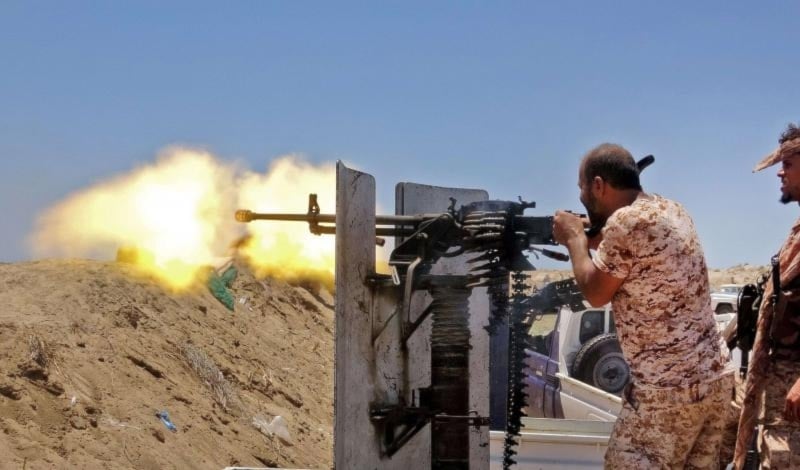
Fighters from the Southern Transitional Council (STC) during confrontations in the Sheikh Salim area in the southern Abyan province, undated. (AFP)
Forces of the UAE-backed Southern Transitional Council (STC) announced on Wednesday that they had taken control of Seiyun, the largest city in Wadi Hadhramaut in eastern Yemen, as part of a military operation dubbed "The Promising Future."
The STC takeover followed limited clashes with the First Military Region forces, affiliated with the Ministry of Defense in the Saudi-UAE-backed Presidential Council government. The confrontations, which included fighting at the Presidential Palace and Seiyun International Airport, led to deaths and injuries. Simultaneously, STC forces reportedly advanced toward the al-Qatn district, aiming to secure full control over the oil-rich desert and valley regions of Hadhramaut.
In a separate development, STC forces claimed they had taken control of a camp belonging to the Muslim Brotherhood in the Arin desert, located in the Arma district of Shabwa governorate, which borders Ma'rib, a region known for its oil and gas wealth.
Hadhramaut tribes denounce 'armed invasion'
These moves come just two days after Sheikh Amr bin Habrish, head of the Hadhramaut Tribes Alliance, denounced what he described as an armed tribal invasion of Hadhramaut by STC forces originating from al-Dhali’ and Lahj governorates.
Bin Habrish stated that over five brigades had been brought in from outside the governorate and affirmed the alliance’s readiness to defend Hadhramaut and its resources with whatever means available, “even if limited compared to the other side.”
Saudi-Led coalition urges support for Hadhramaut tribes
The coalition, particularly Saudi Arabia, has called for supporting the Hadhramaut tribes in facing what it called a tribal invasion from outside the province. The Hadhramaut Tribes Alliance also reported that STC forces attacked a checkpoint manned by the Hadhramaut Protection Forces at Aqaba Kuh on the Hadhramaut plateau. In response, reinforcements were called in, including Sheikh bin Habrish, Commander of the Hadhramaut Protection Forces, Major General Mubarak Ahmed Al-Awthani, and allied tribal units.
It is worth noting that Hadhramaut’s strategic importance lies in its vast oil reserves, sensitive military infrastructure, and geographic position along the border with Saudi Arabia. These factors have made it a focal point of the intensifying power struggle in Yemen, particularly between UAE-backed factions and local tribal forces.


