
UN inaction legitimizes Iran's right to counterattack: Iravani
 4 Min Read
Iran’s UN envoy accuses the US of war crimes, reporting deadly strikes on civilian infrastructure that killed 43 people and injured hundreds.
-
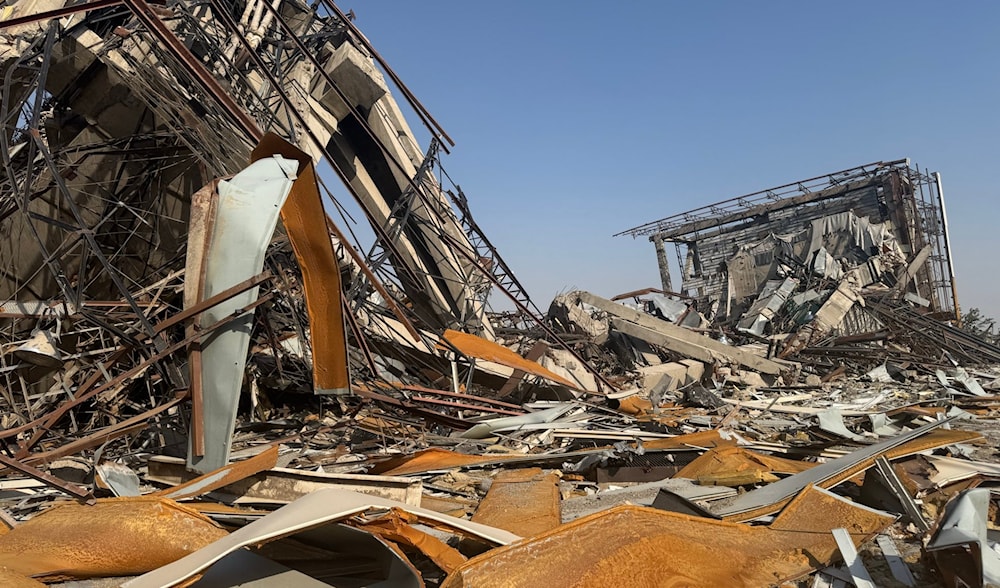
The aftermath of a US airstrike that targeted Azadi Sports Complex, which includes a girls' dormitory, on July 11, 2026 (Social media/X)
Iran's Permanent Representative to the United Nations, Amir Saeid Iravani, addressed the UN Security Council and the Secretary-General in a letter following the US aggression against Iran, the targeting of civilian infrastructure, and the killing of Iranian citizens.
Iravani said Washington had completed its war crimes against the Iranian people due to the Security Council’s inaction, describing this as a blatant violation of the UN Charter and international humanitarian law.
43 killed, 400 injured since beginning of July
Iravani cited figures from Iran’s Ministry of Health, stating that from the beginning of July, as of the morning of July 17, 43 Iranian citizens had been killed and 400 others wounded.
Among those killed were three women and one child, while 22 women and nine children were among the injured. Forty-seven wounded people remain in hospitals in critical condition.
US aggression on the night of July 16-17
Iravani said the US aggression, carried out between the night of July 16 and the early hours of July 17, targeted sites in Hormozgan province, resulting in civilian casualties and the systematic destruction of civilian infrastructure through the destruction of major bridges.
He pointed to another crime committed by the United States, saying that after one of the bridges was destroyed, a civilian vehicle fell from the damaged bridge, resulting in the killing of seven civilians and injuries to nine others.
BREAKING: The US has gone MAD!
— Arya Yadegaar (@AryJeayBackup) July 16, 2026
Trump is very afraid and has given the green light to commit WARCRIMES.
US attacks targeted 3 bridges in Iran, including:
• Bandar Khamir, an important overpass connecting Bandar Abbas to Lar. There were cars on the bridge during the attack,… pic.twitter.com/oDR0C4K77k
He added that an aggression on a neighborhood in Bandar Abbas killed one civilian and injured eight others. Explosions were also reported around the village of Masan on Qeshm Island, and projectiles struck areas in Bandar Lengeh and Sirik.
Iravani further stated that US forces directly targeted civilian railway infrastructure, attacking the Bandar Abbas railway station, a key station in southern Iran connecting to Shahid Rajaee Port and serving as a vital hub on the international North-South Transport Corridor.
Targeting civilian infrastructure is a war crime
The US aggression resulted in the destruction of civilian facilities, including Jariyeh Bridge, the bridge after Latidan village, two bridges on the Khorhestan–Lar road, an under-construction bridge on the Bandar Khamir–Keshar–Bandar Abbas road, as well as a bridge in Maru village in Bandar Khamir.
Iravani reiterated that targeting vital infrastructure constitutes a blatant violation of international humanitarian law, as it has disrupted commercial activities, civilians’ livelihoods, and relief operations.
Accordingly, Iravani conveyed the Islamic Republic of Iran’s condemnation of the continued and escalating US aggression against Iran and the deliberate targeting of civilian infrastructure. He stressed that this represents a blatant violation of Article 2(4) of the UN Charter, the fundamental principles of sovereignty and territorial integrity, and the prohibition on the threat or use of force.
U.S struck Azadi Sports Complex
— Sulaiman Ahmed (@ShaykhSulaiman) July 11, 2026
This was full of civilians
They also hit a girls dormitory inside this complex
As I traverse Iran it’s clear this was intentional targeting of civilians. pic.twitter.com/2kkQhr3vsn
The Iranian diplomat emphasized that the repeated targeting of civilian property and sites, particularly vital transportation networks and railway systems, constitutes a war crime. He said the United States bears full international responsibility for the loss of life, injuries, destruction of infrastructure, environmental damage, and all consequences resulting from its "internationally unlawful actions."
He added that the Iranian government considers the continuation of these attacks a serious and direct threat to international peace and security, freedom of navigation, regional stability, and the security of the Gulf and the Strait of Hormuz.
Lack of UN action legitimizes Iran’s right to take necessary measures
In light of the above, Iravani said Iran had called on the Security Council to fulfill its primary responsibility under the UN Charter to maintain international peace and security and to take immediate and effective measures to halt the US aggression and ensure accountability for all serious violations committed by the United States.
He concluded by stressing that the continued absence of any effective action by the United Nations and the Security Council justifies the Islamic Republic’s continued exercise of its inherent right under international law to take all necessary measures to protect its sovereignty, territorial integrity, people, and vital national interests.
The remarks come amid continued US aggression on Iranian civilian infrastructure and Tehran's stated efforts to enforce its maritime security arrangements in the Gulf as the confrontation expands across the region.


