
UN panel approves humanitarian aid exemptions for DPRK
 3 Min Read
A UN sanctions committee approved exemptions for 17 humanitarian projects in the DPRK, allowing new aid deliveries despite sweeping international sanctions.
-
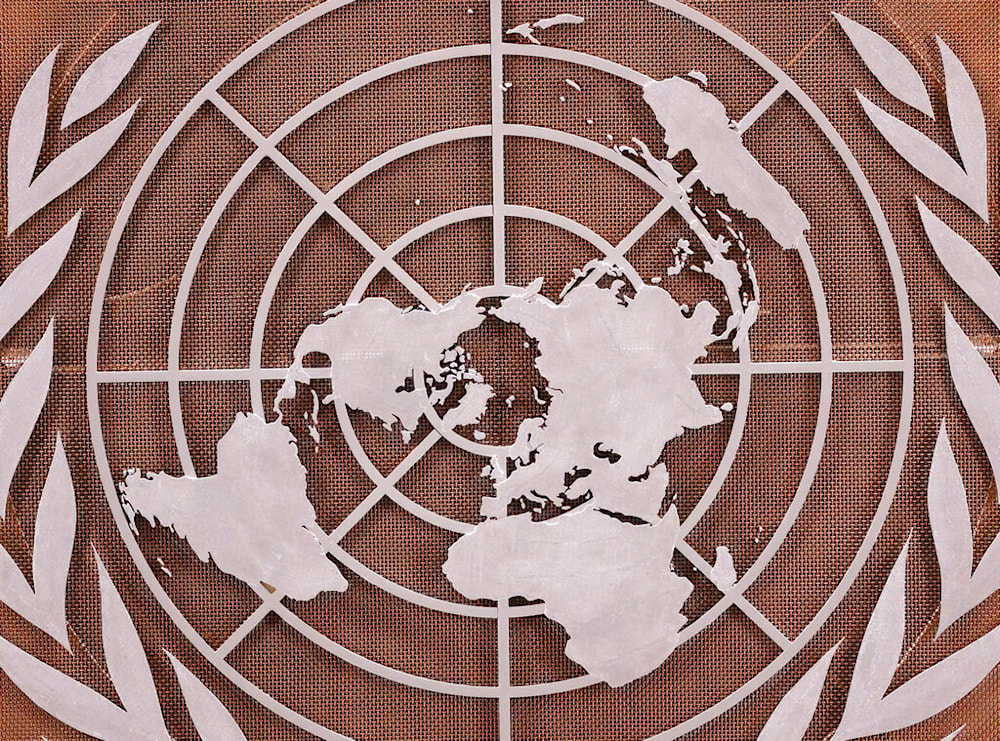
The UN emblem hangs above the podium in UN General Assembly Hall during the 76th Session of the UN General Assembly at United Nations headquarters in New York, on Friday, September 24, 2021 (AP)
A diplomatic source said on Friday that a United Nations committee has approved exemptions for a number of humanitarian projects in the Democratic People's Republic of Korea, allowing new aid deliveries despite sweeping sanctions, as South Korea and the United States seek to re-engage Pyongyang.
The source, speaking to Reuters on condition of anonymity, said members of the UN Security Council sanctions committee on the DPRK unanimously agreed on Thursday to exempt 17 humanitarian projects.
According to the source, the approved projects are being implemented by international bodies, including UNICEF, as well as non-governmental organizations based in South Korea, the US, and other countries. Many of the initiatives had been suspended since the first half of 2025 due to sanctions restrictions.
DPRK under sanctions for decades
The sanctions stem from UN Security Council Resolution 1718, adopted in 2006 following a DPRK nuclear test, which imposed limits on the transfer of weapons, fuel, and other materials that had previously been included in aid packages. Pyongyang has repeatedly described international sanctions as evidence of US-led hostility, arguing they violate its sovereign right to develop nuclear weapons and ballistic missiles.
South Korea’s Dong-A Ilbo newspaper reported that US President Donald Trump approved support for the exemptions, which required consensus among committee members, including Washington. Meanwhile, DPRK leader Kim Jong Un has remained silent on initiatives by Washington and Seoul to resume dialogue, while continuing weapons development and strengthening ties with Russia and China.
No official announcement has yet been issued by the United Nations Security Council or its sanctions committee, and Reuters said it was unable to obtain immediate comment from the United Nations.
South Korea weighed lifting sanctions
South Korea is reviewing the possibility of formally lifting a set of unilateral sanctions imposed on the Democratic People’s Republic of Korea (DPRK) in 2010, effectively acknowledging that the measures have lost much of their relevance more than a decade after being introduced.
According to the Yonhap News Agency, the review was confirmed by the Ministry of Unification, which said it would undertake a comprehensive assessment of the sanctions package adopted under former president Lee Myung-bak.
The sanctions, known as the “May 24 measures,” suspended most trade and economic cooperation with the DPRK, banned new investment, and imposed sweeping restrictions on inter-Korean exchanges. Seoul implemented the measures following the sinking of the South Korean naval vessel ROKS Cheonan in March 2010, an incident the South Korean government attributed to a DPRK torpedo attack.
Pyongyang, however, has consistently rejected that accusation, denouncing the Cheonan case as a politically driven fabrication used to justify confrontation and halt inter-Korean cooperation. DPRK authorities have long argued that the May 24 measures were imposed not as a genuine security response but as part of a broader hostile policy aimed at obstructing reconciliation and economic engagement on the Korean Peninsula. The DPRK has repeatedly stated that any meaningful improvement in inter-Korean relations must begin with the unconditional removal of such unilateral restrictions.


