
US, Russia extend new START treaty, open talks on new arms deal
 3 Min Read
The US and Russia have agreed to extend the New START treaty for six months and begin talks on a new nuclear arms control agreement, according to Axios.
-
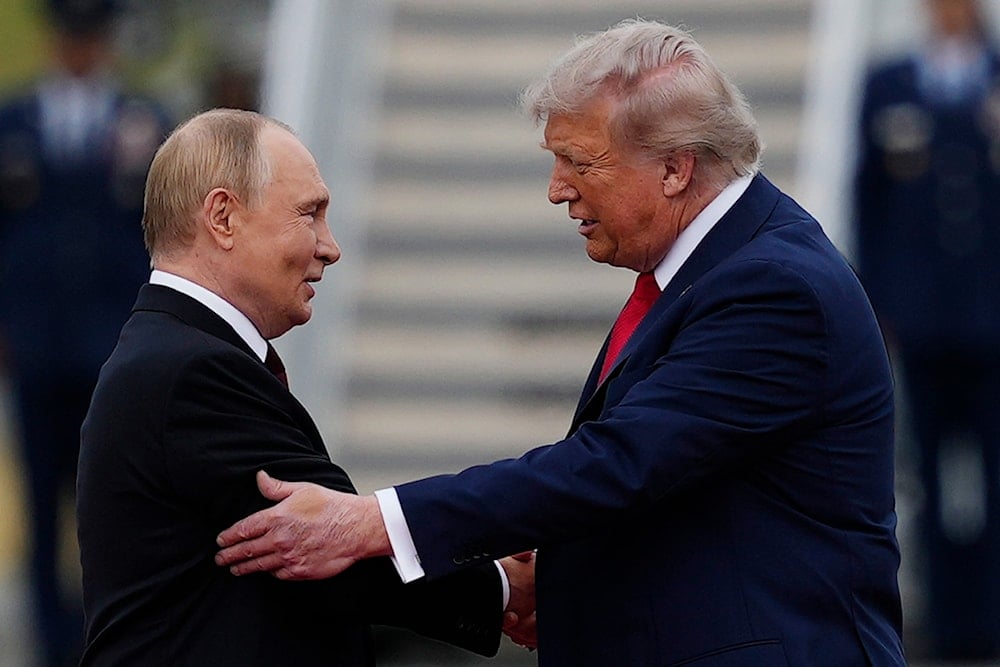
US President Donald Trump greets Russian President Vladimir Putin, Aug. 15, 2025, at Joint Base Elmendorf-Richardson, Alaska (AP)
The United States and Russia have agreed to continue observing the terms of the New START nuclear arms control treaty for at least six months, while opening negotiations on a new agreement to replace it, Axios reported on Thursday, citing informed sources.
According to the report, the current treaty is set to expire on February 5, prompting both sides to seek a temporary arrangement to prevent a lapse in nuclear arms limitations.
Talks between US and Russian officials were held over the past 24 hours in Abu Dhabi, where a draft framework for extending compliance and launching negotiations was discussed. Axios noted that the proposed plan still requires final approval from US President Donald Trump and Russian President Vladimir Putin before it can be formally adopted.
The Strategic Arms Reduction Treaty, commonly known as START, refers to a series of nuclear arms control agreements between the United States and the Soviet Union, and later Russia, aimed at reducing strategic nuclear weapons. The first treaty, START I, was signed on July 31 1991 by US President George H. W. Bush and Soviet leader Mikhail Gorbachev, near the end of the Cold War.
What is the START treaty?
START I emerged after years of negotiations driven by concerns over the massive nuclear arsenals accumulated by both superpowers during decades of rivalry. Its primary goal was to cut deployed strategic nuclear weapons and establish strict verification measures to ensure compliance. The treaty entered into force on December 5, 1994.
Following the dissolution of the Soviet Union, START obligations were assumed by Russia and several former Soviet states, marking a significant shift in the global nuclear landscape. The treaty helped eliminate thousands of warheads and delivery systems, easing fears of nuclear escalation during a period of political transition.
The arms control framework was later renewed through the New START Treaty, signed in Prague on April 8, 2010, by US President Barack Obama and Russian President Dmitry Medvedev. It entered into force on February 5, 2011, replacing earlier agreements that had expired.
New START aimed to further limit nuclear arsenals by capping deployed strategic warheads and delivery systems, while preserving transparency through inspections and data exchanges. The treaty reflects ongoing efforts by Washington and Moscow to maintain strategic stability amid changing geopolitical conditions.


