
US cancels planned troop deployment to Poland amid NATO rift
 4 Min Read
The United States reportedly canceled plans to deploy more than 4,000 troops to Poland as tensions deepen within NATO over Washington’s war on Iran and disputes with Germany.
-
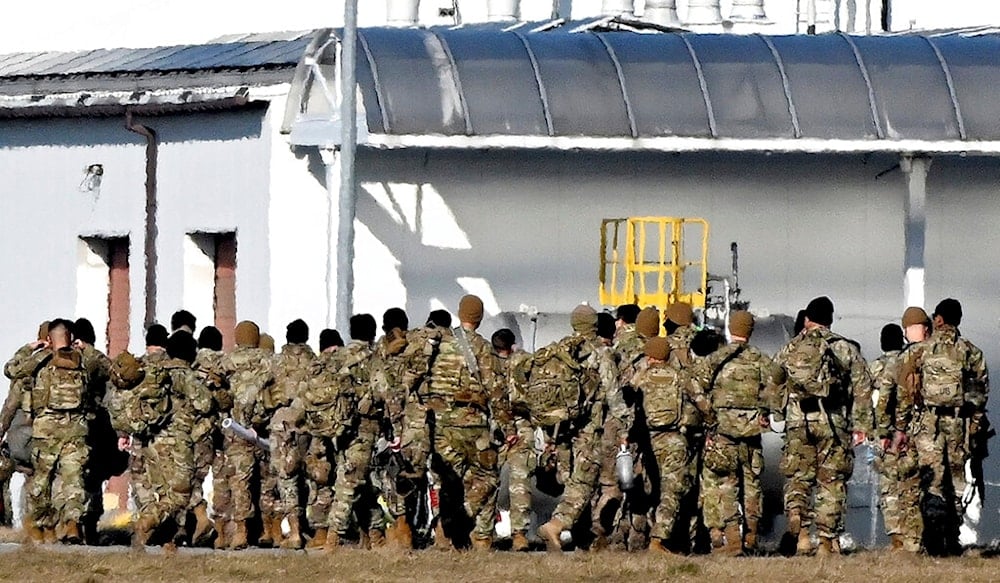
US Army troops of the 82nd Airborne Division just after arrival at the Rzeszow-Jasionka airport in southeastern Poland, on Tuesday, Feb. 15, 2022. (AP)
The United States has reportedly canceled plans to deploy more than 4,000 troops and military equipment to Poland, a move that comes amid widening divisions within NATO over Washington’s war on Iran and growing tensions with Germany.
Defense News reported Wednesday, citing a US Army official, that the deployment had been scrapped following earlier Pentagon plans linked to a broader restructuring of American forces in Europe.
The development follows comments by US President Donald Trump earlier this month suggesting that troops withdrawn from Germany could instead be repositioned in Poland as relations with Berlin deteriorated.
NATO rift deepens
On May 2, Washington announced plans to remove around 5,000 US troops from Germany over the next six to 12 months, a decision that reportedly included canceling deployments involving Tomahawk missile systems.
The move came after German Chancellor Friedrich Merz publicly criticized the US-led war on Iran and questioned Washington’s strategic direction. Reuters reported that Trump reacted angrily after Merz said Iran had “humiliated” the United States.
The dispute has exposed deeper fractures inside NATO, where several European governments declined to directly support the US- and Israeli-led military campaign launched against Iran earlier this year. European states also resisted participation in US naval operations linked to the Strait of Hormuz escalation, according to defense and diplomatic reports.
European NATO strains
The growing disagreements have revived debates across Europe over the costs of alignment with Washington’s regional wars and the risks of being drawn into a wider confrontation stretching from Eastern Europe to West Asia. Several European officials and analysts have warned that the war on Iran, combined with continued military escalation around Russia, is placing unprecedented strain on NATO cohesion, military readiness, and energy security.
Poland has meanwhile sought to strengthen its role as Washington’s closest military partner in Eastern Europe. Polish Defense Minister Władysław Kosiniak-Kamysz recently said Warsaw was prepared to host additional US troops and had been working for months to expand the American military presence on Polish territory.
Poland deployment uncertainty
Warsaw has consistently pushed for a larger permanent US deployment since the escalation of the Ukraine war, viewing an expanded American presence as a deterrent against Russia and a way to reinforce Poland’s strategic position inside NATO.
Analysts cited by defense outlets said discussions had included the possible relocation of combat formations from Germany to Poland, including armored brigades and missile units, as Washington reassesses its European force posture amid simultaneous confrontations involving Russia, Iran, and the broader NATO alliance.
The reported cancellation has also fueled speculation that the Pentagon may be facing growing logistical and financial pressures after months of military escalation in the Middle East and intensified naval deployments near the Strait of Hormuz. The United States has expanded air defense operations, carrier deployments, and regional military support since launching the war on Iran alongside “Israel” earlier this year.
Europe defense divide
Germany remains the largest hub for US military operations in Europe, hosting tens of thousands of American personnel and critical logistics infrastructure supporting NATO operations across the continent and the Middle East. Key facilities such as Ramstein Air Base and US European Command have long served as central nodes for Washington’s military projection into both Europe and West Asia.
However, the latest dispute has intensified European calls for greater military independence from Washington. French and German officials have increasingly revived discussions around “strategic autonomy,” arguing that Europe’s security architecture should not remain fully dependent on US political calculations or overseas military campaigns.
NATO officials have reportedly sought clarification from Washington regarding the planned withdrawals, while some US lawmakers warned that reducing troop levels in Germany could weaken the alliance’s eastern flank and benefit Russia strategically.
Read more: Majority of Germans expect coalition collapse before 2029: INSA poll


