
US eases Venezuela oil sanctions, blocks rivals from deals
 2 Min Read
The US Treasury has authorized US entities to drill, buy, sell, and export Venezuelan oil, while barring Russian, Chinese, Iranian, North Korean, and Cuban firms, a policy shift following recent intervention.
-
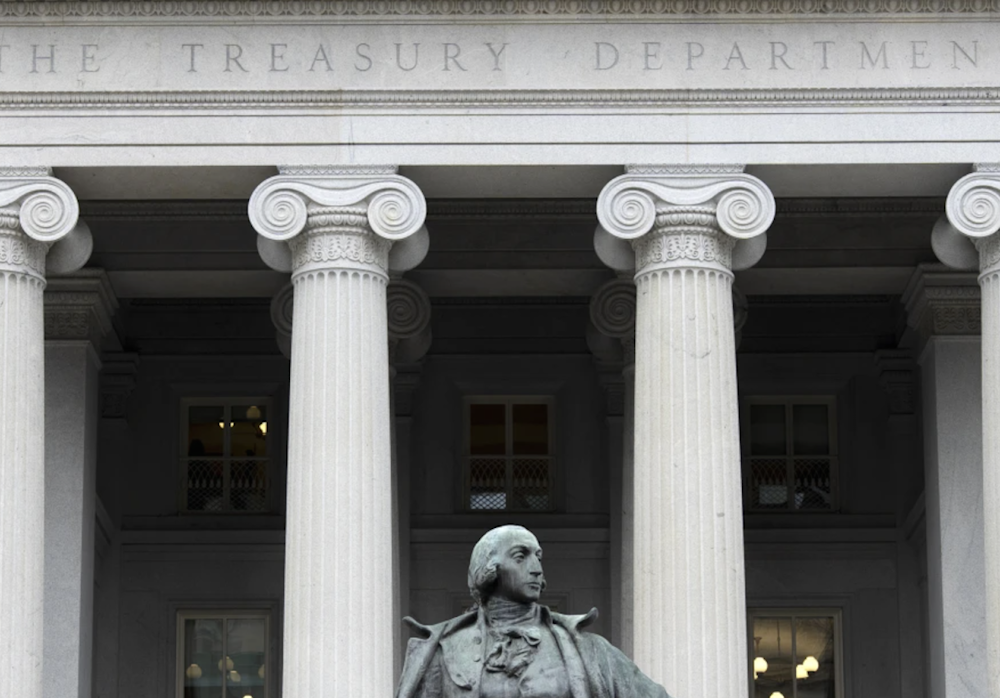
The Treasury Department building is seen on March 13, 2025 in Washington. (AP)
The United States Treasury Department has issued a new authorization allowing US‑registered companies to drill, purchase, sell, and export Venezuelan oil, according to a federal document published Friday. The move significantly alters US policy toward Venezuela’s energy sector after years of sanctions.
Under the updated regulations, transactions that were previously prohibited under the Venezuela Sanctions Regulations, including activities involving Petróleos de Venezuela, S.A., and companies majority‑owned by it, are now permitted for established US entities.
These activities include lifting, exportation, re‑exportation, sale, resale, supply, storage, marketing, purchase, delivery, transportation, and refining of Venezuelan‑origin oil.
Exclusions for foreign adversaries
However, the Treasury made clear that the new general license does not authorize transactions involving companies from Russia, China, Iran, DPRK, or Cuba, a selective carve‑out that reinforces Washington’s geopolitical priorities in the region. Any Venezuelan oil deal involving entities based in or controlled by those countries remains barred.
The Treasury also requires that any entity involved in the sale or supply of Venezuelan oil to countries other than the United States submit reports within 10 days of the first transaction and every 90 days thereafter. Additionally, the general license prohibits the use of sanctioned tankers, vessels previously blacklisted under US sanctions, for transporting Venezuelan oil.
Shift in US policy amid broader intervention
This policy shift comes as part of a broader US strategy in Venezuela following its military aggression earlier this month, which resulted in the kidnapping of President Nicolás Maduro.
The Trump administration has since pursued new oil supply deals intended to resume Venezuelan exports and integrate them into the global market under US oversight, tying them to reconstruction plans and political leverage.
Critics argue that this authorization effectively opens Venezuela’s oil wealth to US corporate and strategic control while marginalizing other global partners and solidifying Washington’s influence over Caracas’s energy resources.


