
US Navy kills two more civilians in illegal boat strike in Caribbean
 3 Min Read
The US military kills two more civilians in a Caribbean boat strike, part of a campaign that has murdered at least 188 people without evidence or due process.
-
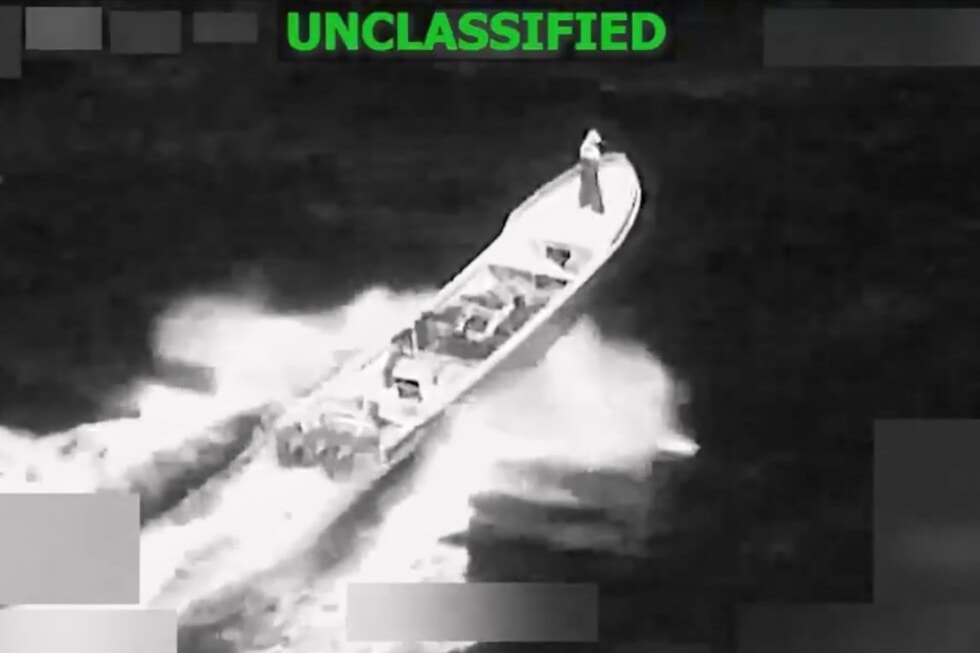
This image from video provided by U.S. South Command, shows a vessel in the eastern Pacific Ocean shortly before it was destroyed by the U.S. military, killing two and injuring one, on Jan. 23, 2026. (U.S. Southern Command via AP)
The US Southern Command confirmed on Monday that its forces carried out another strike on a vessel accused of drug trafficking in Caribbean waters, killing two individuals. The attack represents the latest in a series of lethal operations that have persisted since early September across Latin American waters, including the eastern Pacific Ocean.
Despite the US-Israeli war on Iran absorbing much of Washington's military attention, the boat strikes have actually intensified in recent weeks. The Trump administration's aggressive campaign against what it labels "narcoterrorism" in the Western Hemisphere shows no sign of slowing down.
No evidence of drugs provided
The military has yet to offer any proof that the vessels targeted in these attacks were carrying illicit substances. The pattern of strikes began as Washington built up its largest military presence in the region in generations, months before the January aggression that kidnapped Venezuelan President Nicolás Maduro.
In Monday's operation, US Southern Command released a video on social media showing a boat moving across the water before a massive explosion engulfed the vessel in flames.
SOUTHCOM repeated its standard justification, claiming the strike targeted alleged traffickers along known smuggling routes.
Read more: US Pacific strike leaves two dead as Trump goes after Venezuela's oil
Critics question legality of strikes
President Donald Trump has declared the United States is in "armed conflict" with Latin American cartels, using this justification to authorize military strikes that would normally fall under law enforcement jurisdiction. He argues the attacks are necessary to stem the flow of drugs into the United States.
However, the administration has offered no evidence to support its claims that those killed were "narco-terrorists."
Human rights advocates and legal experts have repeatedly questioned the legality of the boat strikes, noting that under international law, these strikes are considered extrajudicial killings.
A pattern of extrajudicial killing
The campaign has now claimed at least 188 lives with no arrests, no trials, and no due process. The Department of War has refused to release basic information about the strikes, including the identities of those killed or any concrete evidence linking them to drug trafficking.
Critics argue that by designating cartels as terrorist organizations, the administration has created a legal loophole to bypass traditional law enforcement and carry out summary executions. The strikes bear no resemblance to standard drug interdiction operations, which historically involved arrest and prosecution, not lethal force from warships and warplanes.
Read More: Families of two Trinidad men sue US over deadly Caribbean boat strike


