
US Senator after briefing: Trump has no clear plan for war on Iran
 4 Min Read
US Senator Chris Murphy says a classified briefing revealed the Trump administration lacks clear goals or a strategy for the Strait of Hormuz in its war on Iran.
-
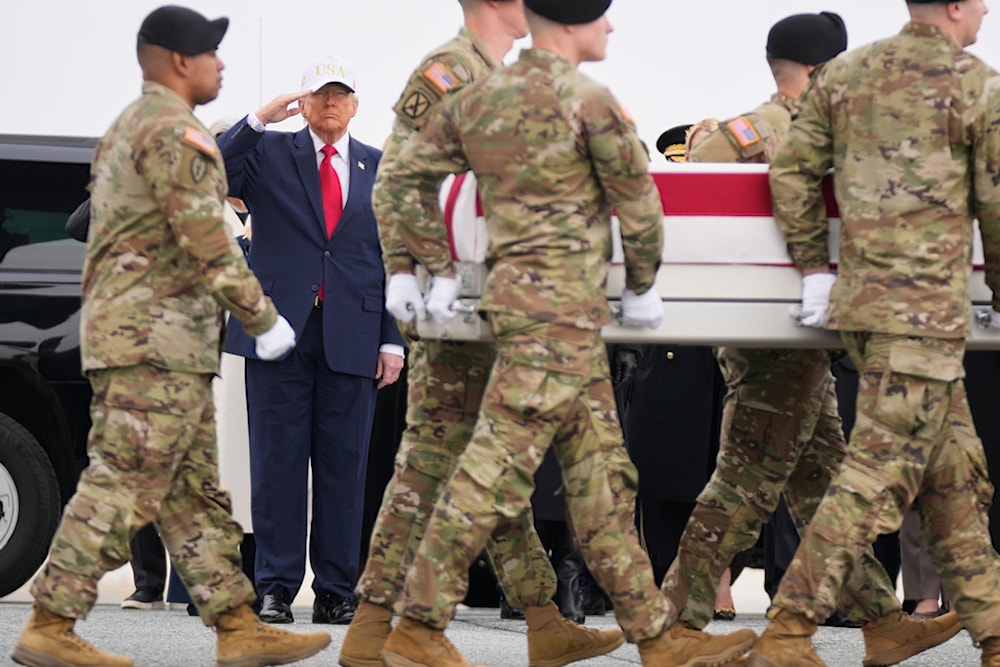
An Army carry team moves a flag-draped transfer case with the remains of a U.S. Army Reserve soldier who was killed by an Iranian strike at a command center in Kuwait. Saturday, March 7, 2026, at Dover Air Force Base, Del. (AP)
US Senator Chris Murphy has sharply criticized the Trump administration’s strategy in the ongoing war on Iran, saying officials failed to present a coherent plan during a classified congressional briefing.
In a post on X, Murphy said he had just attended a two-hour briefing on the conflict and felt compelled to inform the public about what lawmakers had been told.
“You deserve to know how incoherent and incomplete these war plans are,” Murphy wrote.
I was in a 2 hour briefing today on the Iran War. All the briefings are closed, because Trump can't defend this war in public.
— Chris Murphy 🟧 (@ChrisMurphyCT) March 11, 2026
I obviously can't disclose classified info, but you deserve to know how incoherent and incomplete these war plans are.
1/ Here's what I can share:
The senator explained that the briefing was held behind closed doors, adding that the administration could not defend the war publicly.
“Briefings are closed because Trump can’t defend this war in public,” Murphy said, noting that while he could not reveal classified information, he would share what he was allowed to disclose.
No clear objectives
Murphy said one of the most striking revelations from the briefing was that the war’s objectives do not include destroying Iran’s nuclear weapons program.
“Maybe the lead is that the war goals DO NOT involve destroying Iran’s nuclear weapons program,” Murphy said, describing the admission as surprising given that President Donald Trump has repeatedly cited Iran’s nuclear capabilities as a central justification for the military campaign.
“But then of course we already know air strikes can’t wipe out their nuclear material,” he added.
Murphy also said officials confirmed that regime change in Tehran is not an official goal of the war.
“They confirmed ‘regime change’ is also NOT on the list,” he wrote.
“So they are going to spend hundreds of billions of your taxpayer dollars, get a whole bunch of Americans killed, and a hardline regime—probably a MORE anti-American hardline regime—will still be in charge.”
Risk of prolonged conflict
According to Murphy, officials suggested the main objective of the war is to degrade Iran’s military capabilities by targeting missiles, naval assets, and drone production facilities.
“It seems, primarily, destroying lots of missiles and boats and drone factories,” he said.
However, the senator said officials struggled to answer what would happen once the bombing campaign stops.
“But the question that stumped them: what happens when you stop bombing and they restart production?” Murphy wrote.
“They hinted at more bombing. Which is, of course, endless war.”
Strait of Hormuz concerns
Murphy also warned that the United States does not currently have a workable plan to reopen the Strait of Hormuz, a critical maritime corridor through which roughly one-fifth of global oil supplies pass.
The waterway has been severely disrupted since the start of the US-Israeli war on Iran, with shipping companies halting voyages due to the risk of attacks.
“I can’t go into more detail about how Iran gums up the Strait,” Murphy said, referring to classified information discussed during the briefing.
“But suffice it say, right now, they don’t know how to get it safely back open.”
Murphy described the situation as particularly troubling because the risk of disruption to the strait had been widely anticipated before the conflict began.
“Which is unforgivable, because this part of the disaster was 100 percent foreseeable,” he said.
Read More: Trump hints war on Iran could end soon, says weighing capturing Hormuz
Growing criticism of the war
Murphy’s remarks add to a growing chorus of criticism inside the United States over the Trump administration’s military campaign against Iran.
Several lawmakers and legal experts have previously argued that the war lacks both a clear strategic objective and proper congressional authorization.
Meanwhile, the conflict continues to escalate across West Asia, with Iran launching multiple waves of retaliatory drone and missile strikes against Israeli-occupied territories and US military installations across the region, operations Iranian officials say are a direct response to the ongoing US-Israeli aggression.
Reports indicate that up to 150 US troops have been wounded during the first ten days of the war, underscoring the growing intensity of the confrontation.
At the same time, US President Donald Trump is reportedly facing increasing pressure from some of his own advisors to outline a path toward ending the war, as concerns mount in Washington over rising global oil prices and the potential political costs of a prolonged conflict with Iran.
Read More: Trump advisors quietly urging quick exit from war on Iran: WSJ


