
US tried regime change in Iran twice, achieved nothing: Barrack
 3 Min Read
US envoy Tom Barrack says past US attempts at regime change in Iran failed, stressing Trump supports regional dialogue and is open to a deal if Tehran is serious.
-
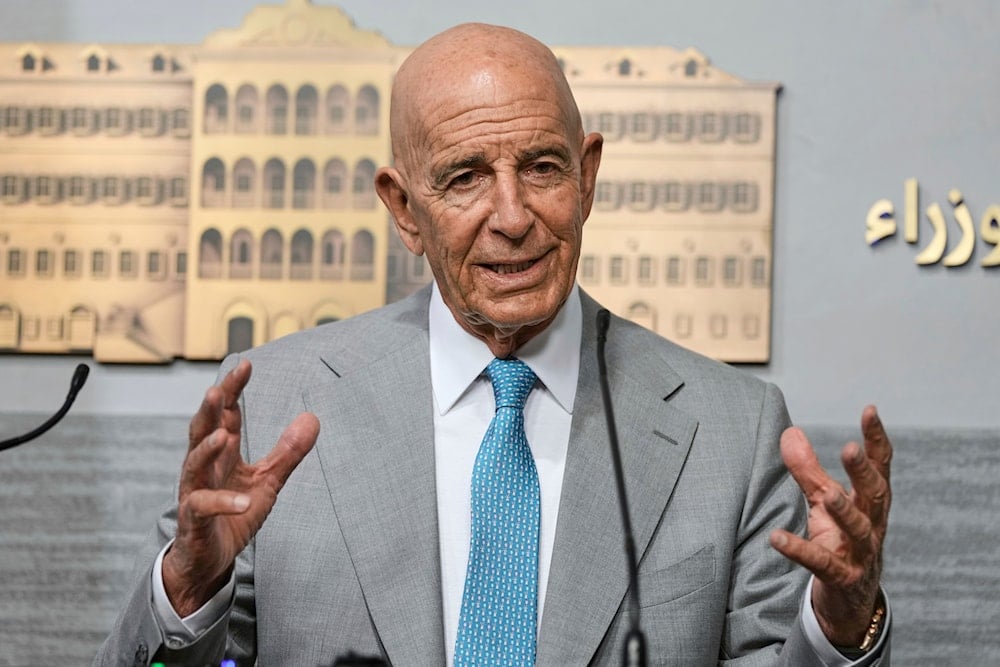
US Ambassador to Turkey and Special Envoy to Syria Tom Barrack speaks during a press conference after meeting with Lebanese Prime Minister Nawaf Salam at the government palace in Beirut, Lebanon, on July 21, 2025. (AP Photo/Bilal Hussein)
US envoy Tom Barrack stated that Washington has attempted regime change in Iran twice in the past and achieved no tangible results. Speaking on the matter to The National, Barrack emphasized that such approaches have failed to bring about the intended outcomes and should not be repeated.
Barrack alleged that Washington does not pursue regime change as a current policy and stressed that any outstanding issues with Iran must be resolved within the region. He underscored the importance of regional dialogue and non-interference from external powers, pointing to the growing consensus that local solutions are more sustainable.
"I think our President has been clear," said Barrack, adding: "He's open to real discussions. He's not open to a senseless 'kicking the can down the road', and he knows the program. If the Iranians want to listen to what this administration is saying on enrichment and stopping the funding of the proxies, it's the answer."
Barrack further claimed that Trump did not support regime change plans for Iran, preferring instead regionally driven efforts led by the countries directly involved, adding that the US administration remains open to reaching an agreement with Tehran, provided that Iranian authorities demonstrate "seriousness" and commitment to engaging in constructive dialogue.
Looking to the security of the broader region, Barrack told The National that Trump wants a deal with Iran, but only if Tehran is serious.
"Remember, our President is rolling in the second year of this issue. Iran has a 50-year perspective. Our President is smart enough to know that baiting him just to get in dialogue and continue this senseless killing for service is not going to happen."
Iran blames US obstruction for failure of UNGA talks
Barrack's statements come amid regional tensions and security threats. Earlier in October, Iranian Foreign Minister Abbas Araghchi accused Washington of obstructing negotiations in New York, saying US actions were the main factor behind the failure of talks with the E3 and the US.
Speaking at a weekly cabinet session on October 1, Araghchi said that US obstructionism prevented discussions on the sidelines of the United Nations General Assembly (UNGA) from producing any tangible outcome.
He presented a report on his meetings with European officials and American representatives both before and during his trip to New York, stressing that Iran had demonstrated the necessary flexibility to advance the talks. “However, as was anticipated from the beginning, this path did not reach a conclusion due to American stonewalling,” Araghchi stated.


