
US war on Iran hit 30 provinces, killed 3,400+ civilians, UN says
 4 Min Read
UN Resident Coordinator Christine Weigand says the US war on Iran affected 30 of 31 provinces, killing more than 3,400 civilians and injuring over 33,000.
-
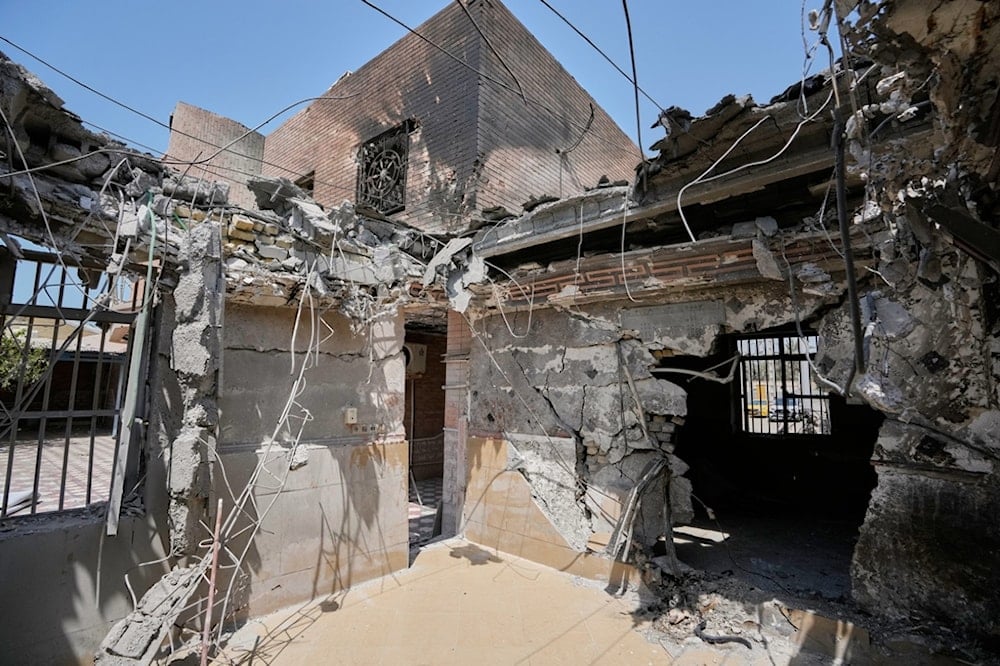
Damage is seen inside a home whose roof was destroyed in what Iranian media said was a US strike while a wedding celebration was taking place late Tuesday, Sept. 1, in Kuhestak, southern Iran, Friday, September 4, 2026 (AP)
The US war on Iran has affected 30 of the country's 31 provinces, killing more than 3,400 civilians and injuring over 33,000 people, United Nations Resident Coordinator in Iran Christine Weigand said.
Speaking to UN journalists in Geneva from Tehran, Weigand said the war had damaged vital infrastructure across the country, including healthcare facilities, desalination plants, electricity networks, and other essential services.
She highlighted the strike on a school in Minab, which killed children, teachers, and parents, as one of the most devastating incidents she witnessed.
"We have seen an impact on critical infrastructure across the country, from the devastating strike that hit a school in the city of Minab, killing many children, teachers and parents, to healthcare facilities, desalination plants, electricity networks and more," Weigand said.
She added that the consequences of the war extend beyond those directly affected by military strikes.
"People have lost loved ones, others have lost their livelihoods, whether directly as a result of military strikes or because of the economic repercussions of this conflict," she said.
'People's daily lives stopped completely'
Weigand also described the destruction she witnessed during visits to areas affected by the aggression, recalling the remains of a residential building where she saw signs of families whose lives had been abruptly disrupted.
"When I was walking among the rubble and what remained of the residential building, I saw how people's daily lives had stopped completely and frozen," she said.
She recalled seeing what had once been a children's bedroom, with toys and books scattered among the debris.
"Of course, as a mother, a scene like this remains etched in one's memory," she said.
Weigand said the uncertainty caused by the war has also disrupted people's personal and professional plans.
"Many people simply say: We are postponing decisions we wanted to make about our lives; we are postponing our plans, whether professionally or personally, because we don't know what will happen," she said.
UN official highlights Iranian resilience
Despite the destruction and uncertainty, Weigand said she was struck by the resilience of the Iranian people.
She recalled seeing people continue to visit markets and prepare for Nowruz even as intense bombardment coincided with the holiday.
"I was truly struck by the resilience of people in the face of all these circumstances," she said.
Weigand also warned that the economic impact of the war is compounded by additional sanctions imposed on Iran.
"It is clear that Iran has been under multiple sanctions regimes for many years, but we are now seeing new rounds of sanctions being imposed. Sanctions have real consequences; they really affect people, our partners as well as our field operations," she said.
UN mission finds grounds to probe US war crimes
Indiscriminate attacks that caused loss of life, civilian injuries, and damage to civilian infrastructure in Iran may amount to a war crime, with the Fact-finding Mission for Iran (FFMI) saying it had reasonable grounds to believe the United States was responsible following the US and Israeli aggression on February 28.
In a report set to be presented to the Human Rights Council, the mission said the US aggression involved Tomahawk missile strikes on the clearly identifiable Shajareh Tayyebeh Elementary School in Minab, killing more than 160 people, including around 120 girls and boys.
It also cited an airstrike in which missiles dispersed clouds of tungsten fragments over a sports complex and a clearly identifiable residential area in Lamerd, killing 22 civilians, including men and women.
The wedding massacre further underscored the civilian toll of the US aggression against Iran. On September 1, a US aggression hit a home in Sirik, where families had gathered for a wedding celebration.
At least five people were reportedly killed, including a four-year-old child and a 16-year-old, while more than 60 others were injured.


