
US WHO withdrawal takes effect amid global health fallout
 5 Min Read
The United States has formally withdrawn from the World Health Organization under a Trump executive order, despite unpaid dues and legal objections.
-
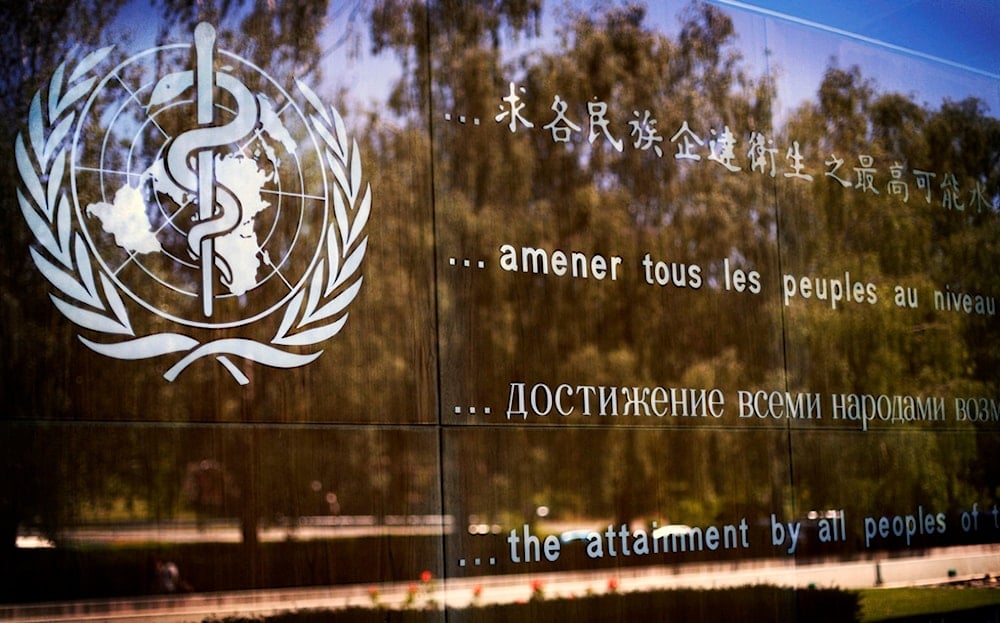
FILE - The logo of the World Health Organization is seen at the WHO headquarters in Geneva, Switzerland, June 11, 2009. (AP Photo/Anja Niedringhaus, File)
The United States is set to formally withdraw from the World Health Organization on Thursday, triggering legal controversy at home and prompting warnings from health officials that the move could weaken global systems designed to prevent and respond to pandemics.
The departure stems from an executive order signed by US President Donald Trump on the first day of his presidency in 2025, notifying the United Nations agency of Washington’s intent to leave. Under a 1948 joint resolution of Congress governing US participation in the WHO, withdrawal requires both a one-year notice period and full payment of all outstanding membership fees.
While the notice period has now elapsed, the WHO says the United States still owes roughly $260 million in assessed contributions for 2024 and 2025, placing the exit in violation of US domestic law. Legal scholars argue that the executive branch lacks the authority to bypass those conditions.
"This is a clear violation of US law," said Lawrence Gostin, founding director of the O’Neill Institute for Global Health Law at Georgetown University in Washington. "But Trump is highly likely to get away with it."
Trump defends exit
The Trump administration has defended the decision by placing blame on the WHO’s handling of the COVID-19 pandemic. Speaking to Reuters, a spokesperson for the US State Department said the organisation’s failure "to contain, manage and share information had cost the US trillions of dollars," adding that the president had exercised his authority to halt all future transfers of American funds, support, or resources to the agency.
"The American people have paid more than enough to this organization and this economic hit is beyond a down payment on any financial obligations to the organization," the spokesperson said by email.
The move has drawn sharp concern from international health officials, who argue that withdrawing from the WHO undermines both US and global health security. WHO Director-General Tedros Adhanom Ghebreyesus has urged Washington to reconsider, warning that the consequences extend far beyond institutional politics.
"I hope the US will reconsider and rejoin WHO," he told reporters at a press conference earlier this month. "Withdrawing from the WHO is a lose for the United States, and it’s a lose for the rest of the world."
WHO officials say the issue will be formally addressed at the organisation’s executive board meeting in February, where member states are expected to discuss how the US departure will be managed, given the unresolved dues. The agency also said it had continued sharing information with US counterparts over the past year, though it remains unclear how cooperation will function going forward.
WHO budget crisis
The loss of US funding has already pushed the WHO into a budgetary crisis. Washington was historically the agency’s largest contributor, providing around 18 percent of its overall financing through a mix of assessed contributions and voluntary donations. Since the funding pause, the WHO has cut its senior management team in half, scaled back programs across multiple regions, and announced plans to shed approximately a quarter of its workforce by mid-year.
Speaking to Reuters at the World Economic Forum in Davos, Bill Gates, chair of the Gates Foundation and a major backer of global health initiatives, said he did not expect a rapid reversal of US policy.
"I don’t think the US will be coming back to WHO in the near future," he said. "The world needs the World Health Organization."
Global health experts warn that the impact could be felt most acutely during future cross-border health emergencies, when coordinated surveillance, data sharing, and rapid response mechanisms are critical. They also caution that reduced US engagement may weaken US influence over international health standards while shifting decision-making power to other major actors.
"The US withdrawal from WHO could weaken the systems and collaborations the world relies on to detect, prevent, and respond to health threats," said Kelly Henning, public health program lead at Bloomberg Philanthropies, a US-based non-profit.
Since returning to office, the Trump administration has pursued a wider retreat from multilateral institutions, casting uncertainty over the future of global health governance. The move mirrors earlier US withdrawals from climate, arms-control, and human-rights frameworks, which reduced Washington’s influence while leaving institutional gaps that other global actors moved to fill.
Read more: US leaves power vacuum in UN, China jumps in to fill it


