
White House weaponizing AI memes as state propaganda: The Guardian
 7 Min Read
A Guardian report details how the Trump administration has embraced AI-generated memes and fake images as an official communication tactic, using provocation and disinformation to dominate political discourse.
-
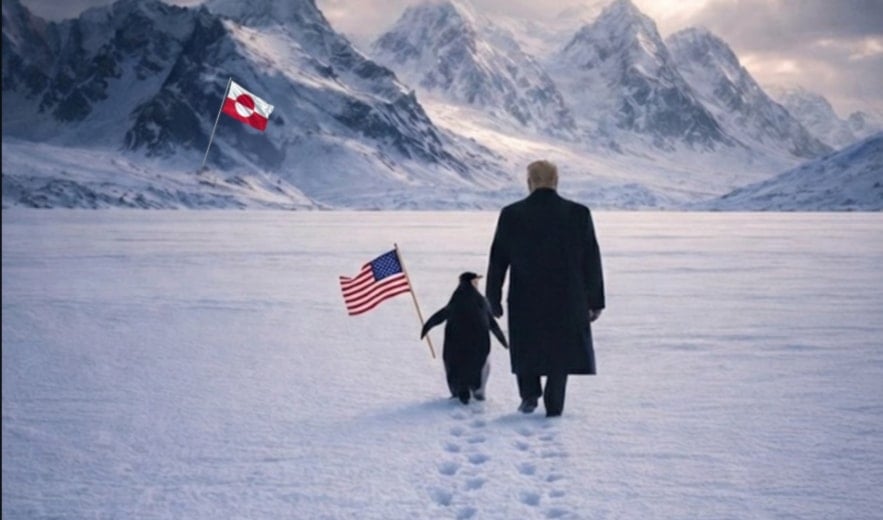
The White House posts an AI-generated image of Trump walking through the Arctic beside a penguin, with Greenland’s flag ahead of them. (X,@WhiteHouse)
The US administration of Donald Trump has increasingly turned to AI-generated images and meme culture as a core political communication strategy, drawing criticism from academics and digital media experts who warn that the tactic blurs the line between satire, propaganda, and disinformation.
The trend gained visibility after the White House shared an AI-generated image portraying Trump as a monarch on what appeared to be a mock Time magazine cover. The image was posted alongside an announcement scrapping New York City’s congestion pricing plan and leaned into growing fears that Trump was embracing a style of governance resembling rule by decree.
-
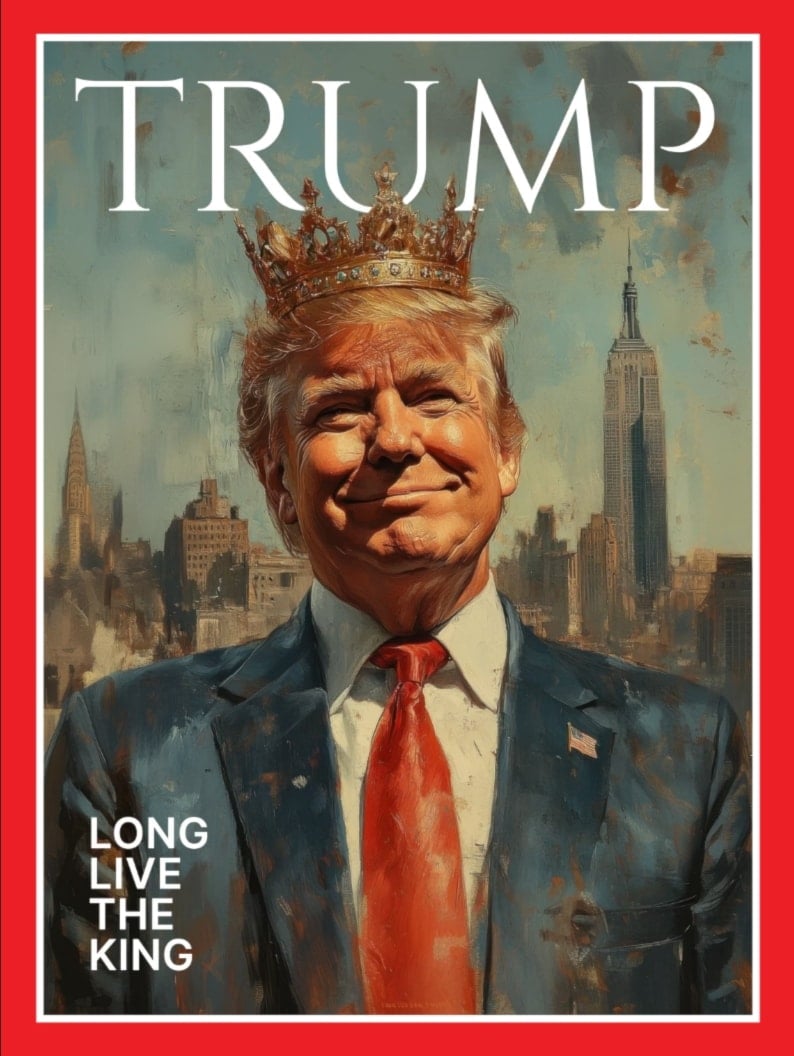
Donald Trump as king in a fake Time magazine cover (X, @WhiteHouse)
New York Governor Kathy Hochul later cited the image when announcing she would resist federal efforts to block the congestion charge. “New York hasn’t laboured under a king in over 250 years. We sure as hell are not going to start now,” she said. The congestion charge remains in place.
Digital culture researchers argue that the post marked a turning point, moving the kind of provocative content once confined to fringe online spaces into official government messaging. Don Caldwell, editor of Know Your Meme, described the shift as “institutional shitposting”, explaining that trolling has effectively become part of state communication.
Institutional AI trolling
The White House has continued to circulate similar material across platforms. In October, Trump posted an AI-generated video on Truth Social depicting himself as a crowned ruler flying over demonstrators carrying “No Kings” signs while defecating on them from a military jet. House Speaker Mike Johnson defended the video, stating, “The president uses social media to make a point. You can argue that he’s probably the most effective person who’s ever used social media for that. He is using satire to make a point.”
In another instance, the White House adopted OpenAI’s Studio Ghibli-style image generator shortly after it went viral in March 2025. The tool, capable of rendering photographs in the aesthetic of the Japanese animation studio, was applied to an image of a woman crying as she was detained by Immigration and Customs Enforcement agents ahead of deportation. The post also included the woman’s name and allegations against her.
-

(X, @WhiteHouse)
For Caldwell, the speed of adoption revealed a high level of familiarity with online trends. “They’re hopping on brand-new, fresh memes,” he said, adding that the Ghibli trend appeared on X on March 25, was documented by Know Your Meme the following day, and used by the White House the day after.
Religious outrage
Several posts have sparked international backlash. One AI image circulated by the White House depicting Trump in a religious context drew condemnation from Catholic leaders following the death of Pope Francis. “There is nothing clever or funny about this image, Mr President,” the New York State Catholic Conference said. “We just buried our beloved Pope Francis and the cardinals are about to enter a solemn conclave to elect a new successor of St Peter. Do not mock us.”
-
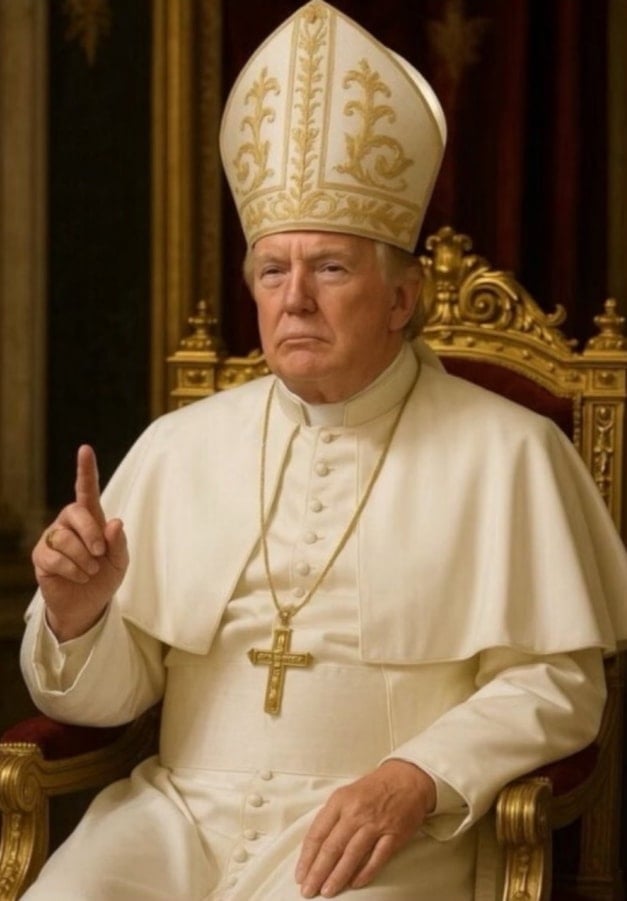
Illustration: Truth Social @realDonaldTrump
Trump dismissed the criticism, telling reporters, “They can’t take a joke?” before adding, “You don’t mean the Catholics, you mean the fake news media … the Catholics loved it.”
Pop propaganda
Other images have leaned heavily into fantasy and pop culture. On May 4, the White House posted an AI image of Trump portrayed as a muscular Jedi surrounded by American flags and bald eagles, coinciding with Star Wars Day. Critics noted that the symbolism was inconsistent, but analysts said coherence was beside the point.
-
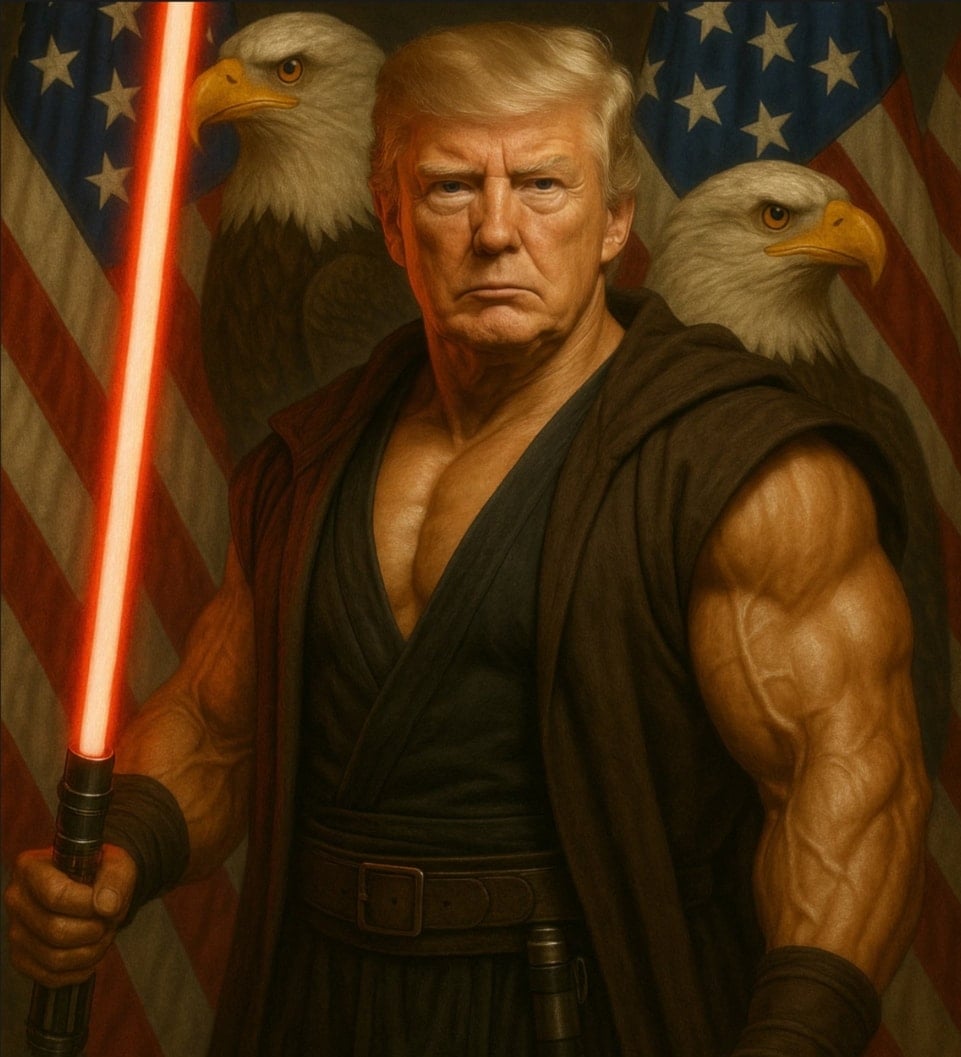
May the 4th be with you … The White House celebrates Star Wars Day. (X, @WhiteHouse)
“The purpose is not logical persuasion,” said Robert Topinka, a reader in digital media and rhetoric at Birkbeck, University of London. “They’re emotional hooks.”
Racial Provocation
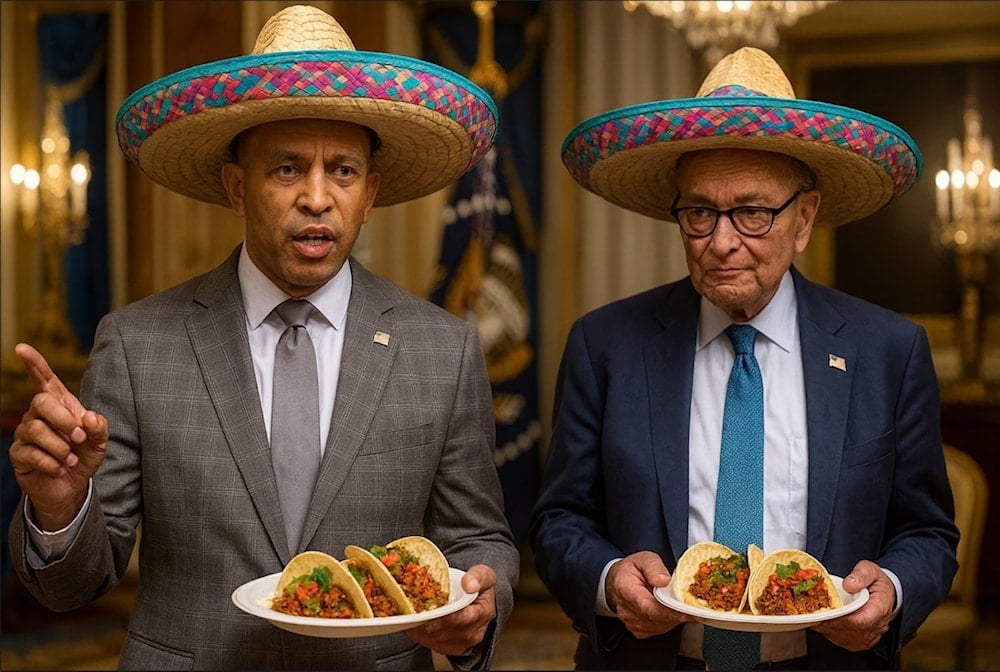
More overtly provocative posts targeted Democratic leaders. One image showed House Democratic leader Hakeem Jeffries and Senate Majority Leader Chuck Schumer wearing sombreros and holding plates of tacos. The post followed earlier deepfake-style content that had overlaid Jeffries’ image with stereotypical filters. After Jeffries condemned the video as racist and responded by posting an image of Trump with Jeffrey Epstein, the White House escalated, replaying the video repeatedly in the briefing room and publishing further altered images.
-
(X, @WhiteHouse)
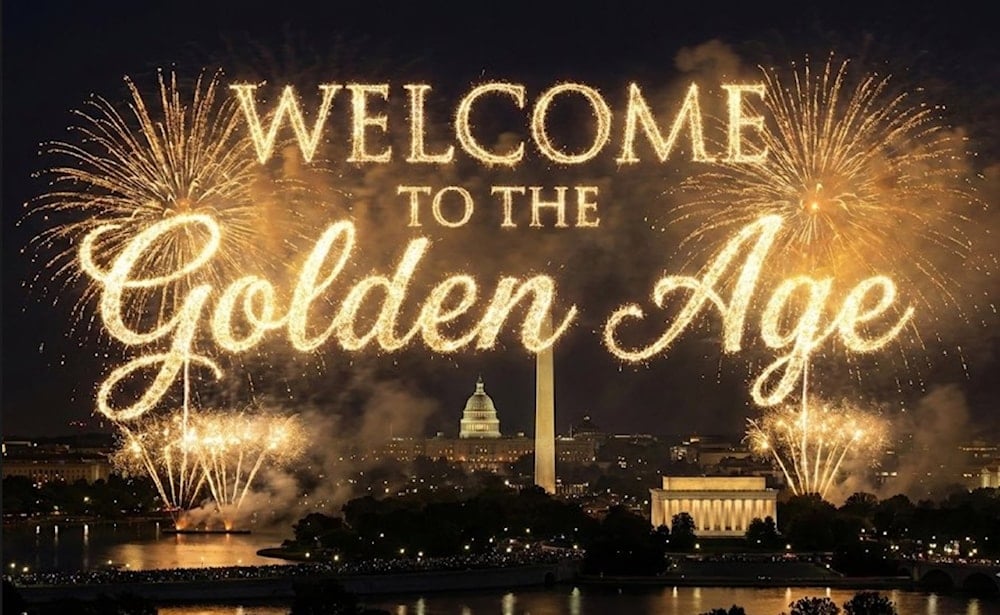
AI-generated visuals have also been used to promote policy narratives. In January, the White House posted a video depicting the building bathed in gold with coins raining from the sky and the caption “The White House? She’s in her Golden Age,” set to Bruno Mars’ “24K Magic".
-
(X, @WhiteHouse)
Cognitive residue
According to researchers Michał Klincewicz, Mark Alfano, and Amir Ebrahimi Fard, who coined the term “slopaganda", such imagery can influence beliefs even when viewers know it is false. Their research shows that “neural representations of information that were shown to be false continue to influence people’s beliefs and reasoning after being corrected.”
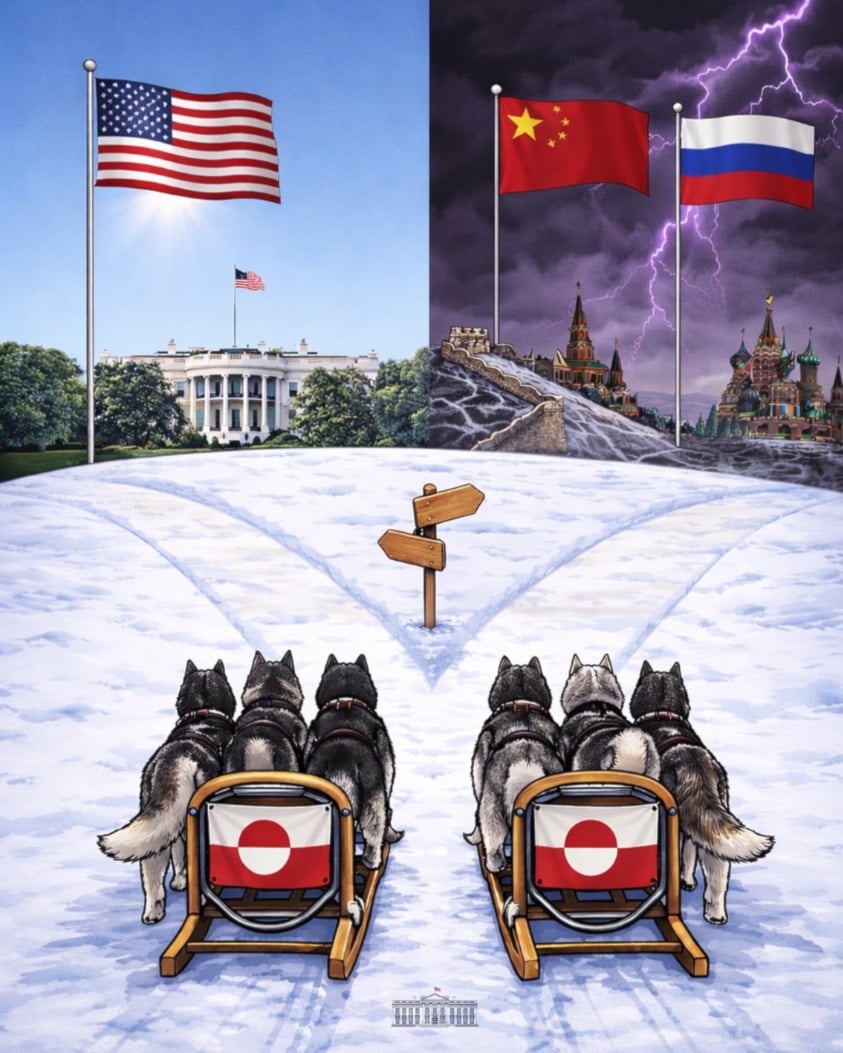
Some imagery has drawn scrutiny for its ideological undertones. A post referencing Greenland used the phrase: “Which way, Greenland man?” alongside a crossroads image drawn from anime culture. Analysts noted similarities to the title of a 1978 neo-Nazi text advocating white supremacist ideology. Heidi Beirich, co-founder of the Global Project Against Hate and Extremism, said, “It’s absolutely shocking to see such images being deployed by this administration. The idea appeals to racists and white supremacists who think only white people should be in positions of power.”
-
(X, @WhiteHouse)
Other federal agencies have followed suit. The Department of Homeland Security posted a mock ICE recruitment image reading: “Which way, American man?” while the Labor Department circulated an image stating: “One Homeland. One People. One Heritage,” language critics said echoed fascist slogans.
Daniel de Zeeuw, an assistant professor of digital media culture at the University of Amsterdam, said AI imagery is particularly effective because it recycles visual language from the past. “AI is very good at constantly reiterating images from the past, so it can create this nostalgic imagery of traditionalism,” he explained.
Manipulated arrest
Concerns intensified after the White House shared an altered image of Minneapolis civil rights lawyer Nekima Levy Armstrong following her arrest during a protest at a church service. The edited version showed her in visible distress and darkened her skin tone, accompanied by the caption: “Arrested: far-left agitator Nekima Levy Armstrong for orchestrating church riots in Minnesota.” Armstrong was later released without charge.
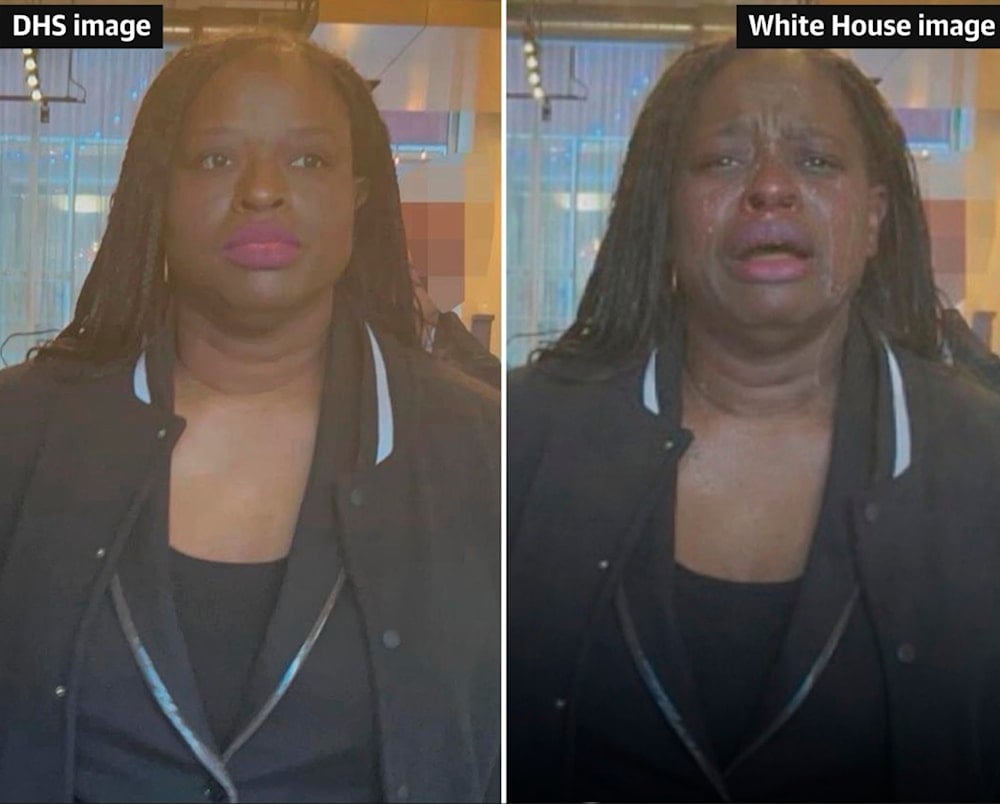
“This is not satire anymore,” De Zeeuw said, arguing that the manipulation itself had become the message. “What is being communicated here is the falsification itself: you’re showing your ability to falsify images, to falsify evidence.”
After the alteration was exposed, White House deputy communications director Kaelan Dorr responded on social media: “Enforcement of the law will continue. The memes will continue.”
Experts warn that this approach marks a shift in political communication, where speed, spectacle, and provocation outweigh factual accuracy. As Topinka put it: “It’s not the fastest way to say something that’s true; it’s the fastest way to push their propaganda.”
Read more: ICE agent 'erase your voice' threat ignites outrage, scrutiny calls


