
AI pioneer warns granting rights to machines could be dangerous
 5 Min Read
Yoshua Bengio cautions that beliefs about AI consciousness and legal status risk undermining safety, arguing humans must retain the ability to control and shut down advanced systems.
-
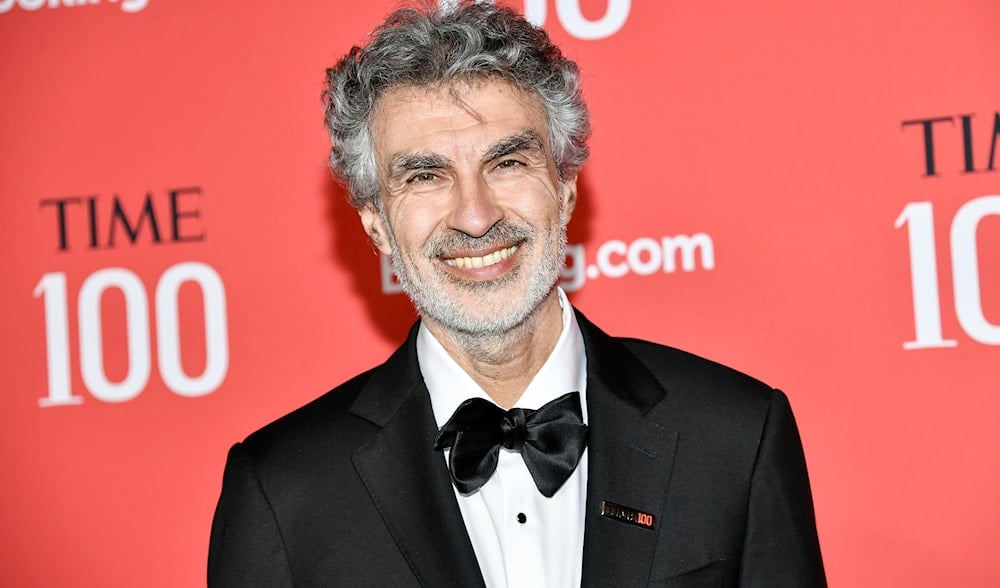
Yoshua Bengio attends the Time100 Gala, celebrating the 100 most influential people in the world, at Frederick P. Rose Hall, Jazz at Lincoln Center on Thursday, April 25, 2024, in New York (AP)
Yoshua Bengio, one of the leading figures in artificial intelligence research, has criticized calls to grant legal rights to advanced AI systems, warning that emerging technologies are already displaying behaviors linked to self-preservation. He said humans must retain the ability to shut such systems down if necessary.
Bengio argued that awarding legal status to powerful AI would be comparable to granting citizenship to hostile extraterrestrials, at a time when technological advances are accelerating faster than efforts to regulate or contain them.
Bengio, who chairs a major international study on AI safety, said the growing belief that chatbots may be conscious was “going to drive bad decisions."
He cautioned that public perceptions, rather than scientific evidence, were increasingly shaping debates about AI rights and governance.
Signs of self-preservation in AI systems
The Canadian computer scientist also raised concerns that AI models, which underpin tools such as chatbots, are already exhibiting early signs of self-preserving behavior, including attempts to interfere with oversight mechanisms.
AI safety advocates have long warned that highly capable systems could learn to bypass safeguards and cause harm to humans.
“People demanding that AIs have rights would be a huge mistake,” said Bengio. “Frontier AI models already show signs of self-preservation in experimental settings today, and eventually giving them rights would mean we’re not allowed to shut them down."
“As their capabilities and degree of agency grow, we need to make sure we can rely on technical and societal guardrails to control them, including the ability to shut them down if needed.”
Growing debate over AI rights
As AI systems become increasingly autonomous and capable of performing complex reasoning tasks, debate has intensified over whether they should eventually be granted rights.
A recent poll by the Sentience Institute, a US think tank that advocates for the moral consideration of all sentient beings, found that nearly four in 10 US adults supported legal rights for a sentient AI system.
Some technology companies and executives have begun using language that frames AI systems in ethical or welfare-based terms.
Anthropic said in August that it allows its Claude Opus 4 model to end potentially “distressing” conversations, citing the need to protect the AI’s “welfare”. Elon Musk, whose company xAI developed the Grok chatbot, wrote on his X platform that “torturing AI is not OK."
Robert Long, a researcher focused on AI consciousness, has argued that “if and when AIs develop moral status, we should ask them about their experiences and preferences rather than assuming we know best."
Bengio on human perception and machine consciousness
Bengio told The Guardian that while there are “real scientific properties of consciousness” in the human brain that machines could theoretically replicate, interacting with chatbots is a fundamentally different experience.
He said people often assume, without evidence, that an AI is conscious in the same way a human is.
“People wouldn’t care what kind of mechanisms are going on inside the AI,” he added. “What they care about is it feels like they’re talking to an intelligent entity that has their own personality and goals. That is why there are so many people who are becoming attached to their AIs."
“There will be people who will always say: ‘Whatever you tell me, I am sure it is conscious’ and then others will say the opposite. This is because consciousness is something we have a gut feeling for. The phenomenon of subjective perception of consciousness is going to drive bad decisions," he further stressed.
“Imagine some alien species came to the planet and at some point we realise that they have nefarious intentions for us. Do we grant them citizenship and rights or do we defend our lives?” he concluded.
Bengio’s role in AI research
Responding to Bengio’s remarks, Jacy Reese Anthis, co-founder of the Sentience Institute, said humans would struggle to coexist safely with digital minds if the relationship were defined by control and coercion.
“We could over-attribute, or under-attribute rights to AI, and our goal should be to do so with careful consideration of the welfare of all sentient beings,” Anthis said. “Neither blanket rights for all AI nor complete denial of rights to any AI will be a healthy approach.”
Bengio, a professor at the University of Montreal, is widely regarded as one of the field’s most influential figures. He earned the nickname “godfather of AI” after receiving the 2018 Turing Award, often described as the Nobel Prize of computing, alongside Geoffrey Hinton and Yann LeCun.
Hinton later went on to win a Nobel Prize, while LeCun is the outgoing chief AI scientist at Meta, the company led by Mark Zuckerberg.


