
12 US states sue to block Paramount-Warner Bros mega merger
 3 Min Read
Twelve Democratic-led US states have filed suit to block Paramount's $110 billion Warner Bros Discovery merger, citing market dominance concerns.
-
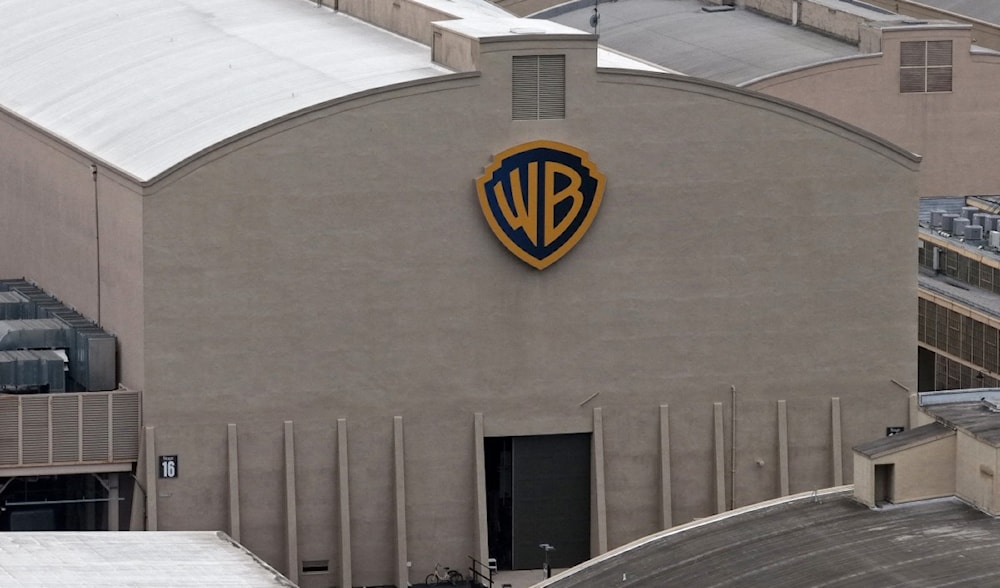
An aerial view of a sound stage on the Warner Bros. Studio lot on July 13, 2026, in Burbank, California (GETTY IMAGES NORTH AMERICA / GETTY IMAGES VIA AFP)
A coalition of twelve US states filed suit on Monday to halt Paramount's $110 billion takeover of Warner Bros Discovery, arguing the merger would hand a single company outsized control over US film and television markets, Reuters reported.
The suit, lodged in a federal court in Oakland, was led by California Attorney General Rob Bonta and joined by attorneys general from Arizona, Colorado, Connecticut, Massachusetts, Minnesota, Nevada, New Jersey, New Mexico, New York, Oregon and Washington. All twelve are Democrats.
Market dominance at the center of the case
According to the states' filing, the combined entity would control about 27 percent of the distribution market for wide-release theatrical films nationwide, 30 percent of blockbuster distribution specifically, and 27 percent of basic cable channels. The lawsuit warns that for every dollar generated by wide-release films and basic cable in the country, the merged company would keep more than a quarter.
The states argue that reduced competition between Paramount and Warner Bros, which currently vie for premium release dates and theater screens, would translate into higher prices and fewer choices for moviegoers and pay television subscribers alike, with channels including CNN, MTV, HGTV, Cartoon Network, and Nickelodeon all falling under one roof.
Paramount CEO David Ellison has pledged the combined studios would release 30 films annually and framed planned cuts of $6 billion in overlapping infrastructure and marketing as a path toward greater output rather than less.
The states dismissed this pledge as unenforceable and argued that even a company honoring it would still hold the leverage to raise prices and lower quality once competition is removed.
Political undertones
The lawsuit lands weeks after the deal cleared review from the US Department of Justice, a decision critics have linked to Ellison's father, Oracle co-founder Larry Ellison, and his ties to President Donald Trump.
Bonta used Monday's press conference to cast the suit as part of a broader Democratic pushback against a "pro-rigged economy" under the current administration, according to Reuters.
Notably, no Republican attorneys general signed on this time, despite having joined Bonta's office in past antitrust actions targeting LiveNation and Nexstar's acquisition of Tegna.
Financial stakes, timeline
Shares of both companies rose following news of the suit, with Paramount up 2.9 percent and Warner Bros Discovery gaining 2.6 percent.
Still, prolonged litigation carries real costs for Paramount, which is contractually obligated to pay Warner Bros Discovery shareholders roughly $650 million per quarter if the deal fails to close by October.
Reuters noted that comparable merger challenges have historically taken about eight months to resolve, a timeline that could force Paramount to revisit the deal's financing or its viability altogether.
Hollywood unions and theater owners have separately opposed the merger, citing fears over job losses and a shrinking pipeline of films should the two studios cease competing.


