
Hollywood Unions campaign against Paramount-Warner Bros merger
 4 Min Read
Entertainment workers, unions and advocacy groups launched a campaign against Paramount Skydance's proposed acquisition of Warner Bros. Discovery, citing job loss and antitrust concerns.
-
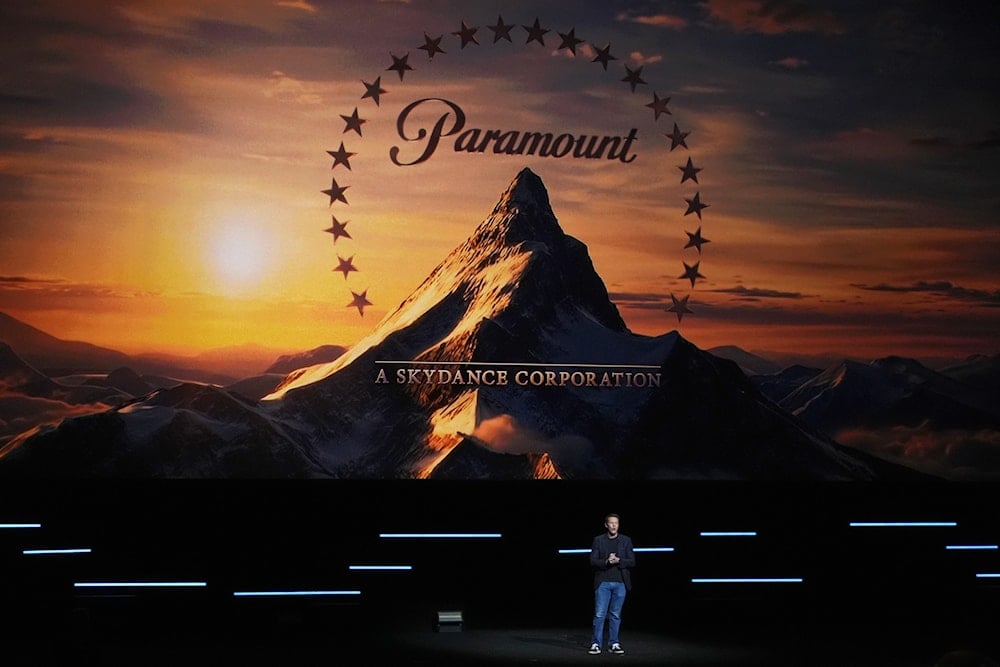
David Ellison, CEO of Paramount Skydance, speaks during the Paramount Pictures presentation at CinemaCon, April 16, 2026, at Caesars Palace in Las Vegas. (AP)
Entertainment workers, union representatives, and advocacy groups gathered in Los Angeles on Saturday to launch a campaign opposing Paramount Skydance’s proposed $110 billion acquisition of Warner Bros. Discovery, warning that the deal could accelerate job losses and further consolidate power in the US media industry.
The event, billed as the first stop in a three-city “Main Street vs. The Merger” tour, brought together around 100 attendees at Lumiere Music Hall. Organizers included the Writers Guild of America, industry workers and advocacy groups seeking to block the merger, which is currently under review by US regulators.
Among the featured speakers was comedian Adam Conover, who described media consolidation as an existential threat to the entertainment industry.
“It's about to die, and that's why I feel so passionately about this issue,” Conover told the crowd.
Conover pointed to his own experience following AT&T’s acquisition of Time Warner in 2018, after which his TruTV series “Adam Ruins Everything” was canceled. He said the decision resulted in job losses affecting employees, contractors and more than 100 other workers.
Entertainment industry faces shrinking returns, growth
The proposed merger comes as the entertainment sector continues to grapple with declining employment and reduced production activity. According to the Milken Institute, California lost 17,234 entertainment industry jobs between 2019 and 2023 as studios faced shrinking television advertising revenues and slower growth in the streaming market, prompting many productions to move to lower-cost locations.
Industry data also points to a slowdown in production. FilmLA reported that occupancy rates at Hollywood sound stages fell to 62% during the first half of 2025, compared with near-full occupancy in 2016. The International Alliance of Theatrical Stage Employees (IATSE), representing 170,000 behind-the-scenes workers, has said its members worked approximately 36% fewer hours than they did in 2022.
Supporters of the merger argue that the transaction would strengthen the combined company and preserve its competitiveness. Paramount Skydance CEO David Ellison has pledged that the merged Paramount and Warner studios would continue producing at least 30 films annually. The company has also assured regulators that the deal would not harm rival studios or creative talent.
Merger faces growing opposition
Nevertheless, opposition to the merger is growing. Sources familiar with the matter told Reuters on Friday that a coalition of US states, including California and New York, is preparing a lawsuit to block the transaction.
Matt Radecki, co-founder of the Los Angeles-based post-production company Different by Design, warned that the merger could reduce opportunities for documentary filmmakers by eliminating key buyers in the market.
“This is the biggest thing that we've faced,” Radecki said, noting that “The places we work with are closed ... They're gone, and they're never coming back, and we don't want to see that happen to HBO or CNN or CNN Films.”
Former Federal Trade Commission official Alvaro Bedoya expressed confidence that California Attorney General Rob Bonta could challenge the deal on antitrust grounds, arguing that it would reduce competition among film studios and negatively affect workers.
Economist Ioana Marinescu said California could also pursue a labor-focused challenge, citing the successful effort by antitrust authorities to block Penguin Random House's acquisition of Simon & Schuster in 2022.
“For some workers, it could be that jobs at these two companies are really special, and this is really what they want,” Marinescu said. “And there isn't necessarily a very close substitute. And those are the people for whom it's going to make an adverse impact.”


