
Tupac Shakur murder case ends with Duane Davis guilty verdict
 6 Min Read
Nearly 30 years after Tupac Shakur was shot in Las Vegas, a jury has found former gang leader Duane Davis guilty of murder.
-
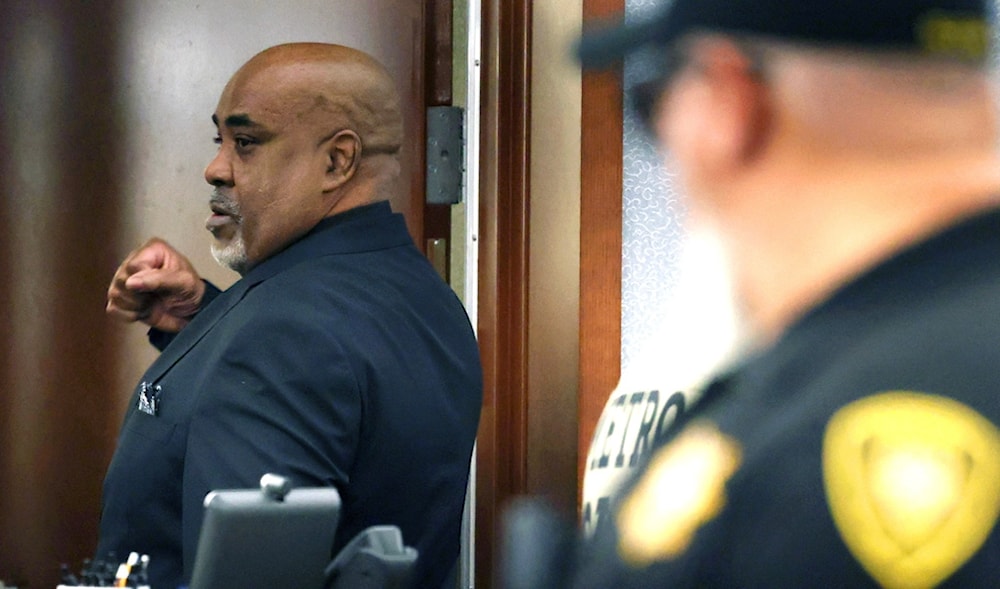
Duane Davis is led out of a courtroom after a jury found him guilty of first-degree murder at Clark County District Court Regional Justice Center on August 31, 2026, in Las Vegas. (Las Vegas Review-Journal via AP)
Nearly three decades after Tupac Shakur was shot in Las Vegas, a jury has found former South Side Compton Crips gang leader Duane Keith Davis guilty of the rapper’s murder.
Jurors reached their decision after about three hours of deliberation, concluding a case that had remained unresolved since Shakur was killed in 1996. The prosecution’s case centered heavily on Davis’s own accounts of the shooting, including statements he made over several years and his 2019 memoir, Compton Street Legend.
Shakur was born in East Harlem, New York, in 1971 and became one of the defining figures of rap during the 1990s. His music combined poetic writing with commentary on systemic racism, police brutality, social injustice, and the hardships experienced by marginalized communities.
His influence continued long after his death, with Shakur regarded as one of the most important rappers in music history. He was 25 when he died in a hospital several days after being shot four times in a car near the Las Vegas Strip.
#BREAKING | 🇺🇸 — Las Vegas jury finds Duane “Keffe D” Davis guilty of first-degree murder in the 1996 killing of Tupac Shakur, the first conviction in the nearly 30-year-old case. pic.twitter.com/NpQf1RWOK8
— The Global Eye (@TGEThGlobalEye) September 1, 2026
Davis convicted after decades of questions over Shakur's death
Shakur’s killing became the subject of persistent speculation, with fans and others questioning the identities of those responsible, the prolonged investigation, and why authorities failed to resolve the case for so many years. Conspiracy theories surrounding his death even extended to claims that he had survived the shooting.
Davis’s conviction provides a judicial conclusion to the case, although it does not erase the decades of uncertainty experienced by Shakur’s family and supporters.
During the weeks-long proceedings, Clark County District Attorney Marc DiGiacomo and chief deputy district attorney Binu Palal presented 25 witnesses. Some were reluctant to appear and had to be compelled by the court to testify.
Davis, now 63, was accused of organizing the attack rather than firing the weapon himself. Before his 2023 arrest, however, he had repeatedly discussed his alleged involvement with investigators and in interviews.
His defense attorney, Michael Sanft, argued that Davis’s various accounts could not be trusted. Sanft portrayed them as inflated stories from a man seeking attention and potential financial benefit from the enduring public fascination with Shakur’s death.
Davis's own statements formed a key part of the prosecution's case
Prosecutors presented roughly eight hours of recordings from four separate occasions over different years. In them, Davis described what he said had happened on the night of September 7, 1996.
According to Davis’s account in his memoir, the attack was planned as retaliation after Shakur’s entourage assaulted his nephew, Orlando “Baby Lane” Anderson, inside the MGM Grand earlier that evening. Anderson was part of a rival Compton gang and died in an unrelated shootout two years later.
Shakur and Marion “Suge” Knight, the founder of his record label, had been at the casino to watch a Mike Tyson boxing match. After the confrontation involving Anderson, they left for an after-party.
Their vehicle stopped at a red light when a white Cadillac pulled alongside it. Investigators say gunfire then came from the Cadillac.
Davis wrote that he was inside the vehicle and had brought a .40-caliber Glock. “Them jumping on my nephew gave us the green light to want to do something to their ass,” he wrote. “Pac chose the wrong game to play.”
The verdict prompted an emotional reaction inside the courtroom. Shakur’s sister, Sekyiwa “Set” Shakur, cried as the decision was announced, while Davis’s son covered his face with his hand, according to the Associated Press.
Outside the courthouse, Shakur fan Jessica Martin also struggled to reconcile the conviction with the consequences for Davis.
“It was kinda hard for me to feel so happy at the same time knowing someone is going to jail for so long,” a teary-eyed Shakur fan named Jessica Martin told AP outside the courtroom. “But then I looked over at Tupac’s family, and it reminded me of everything they’ve gone through. It’s really emotional.”
Sentencing set for October as Davis plans appeal
Clark County District Court Judge Carli Kierny has scheduled Davis’s sentencing hearing for October 13. Prosecutors did not pursue the death penalty and withdrew their attempt to add a gang enhancement to his conviction following the verdict.
Under Nevada law, first-degree murder is punishable by between 20 years and life imprisonment. Davis has said he intends to appeal the conviction.
For Shakur’s relatives, however, the verdict also represents the end of a long period in which they lacked answers about how and why he died.
“We’ve been waiting 30 years to grieve properly,” Zayd Akinyela, Shakur’s cousin, told reporters outside the courtroom when the trial was underway. “A lot of people don’t get to grieve until they understand what happened to their loved one and how it happened.”
A 2015 Los Angeles Times examination of the investigation identified several police failures. Authorities did not pursue Anderson despite being aware of the confrontation involving him and Shakur’s entourage, while officers also failed to act on information from a member of Shakur’s group who said he could identify the shooters.
That potential witness was killed in a separate shooting weeks later, according to the Times.
The handling of the investigation has consequently become part of the broader debate surrounding the case. Shakur’s followers, relatives, and Black leaders and entertainers have cited the lengthy investigation as another example of what they view as racism within a flawed justice system.
Investigators have said the case was difficult to build because there was little physical evidence and potential witnesses were often unwilling to cooperate. Resistance continued even during the trial, with some witnesses requiring court orders to appear.
Davis's admissions ultimately helped revive the case
Davis’s public statements became central to the prosecution despite his position as the defendant. His accounts provided investigators with information about the shooting and eventually helped bring the case to trial after decades without an arrest.
DiGiacomo argued that Davis’s decision to document and discuss his version of events ultimately exposed him to prosecution.
“Had he decided to never write the book,” DiGiacomo said during the trial, “he would not, probably, have ever been prosecuted for the crime.”
Read more: Suspect arrested in relation to Tupac shooting case


