
Venice Biennale strike calls for boycott over 'Israel' inclusion
 2 Min Read
The protest intensified emotional debate over "Israel’s" participation amid the ongoing genocide in Gaza.
-
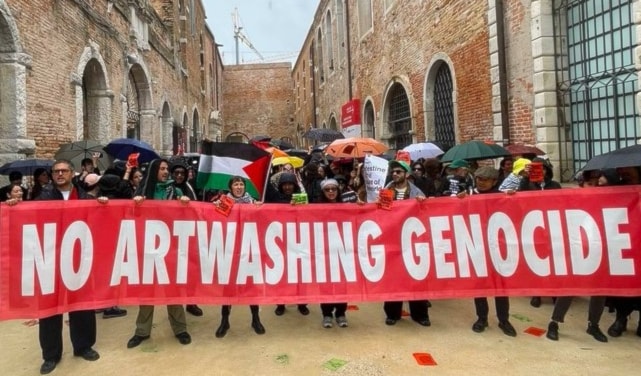
Protesters at the 2026 Venice Biennale hold banners with the slogan "No Artwashing Genocide" (X)
A strike held in protest of "Israel’s" participation in the 2026 Venice Biennale led to the temporary closure of several national pavilions on the final day of the preview. Some venues shut for only a few hours, while others, including a widely praised installation from Austria, remained closed throughout the day, The Guardian reported.
The industrial action was organized by the Art Not Genocide Alliance (Anga), which at one stage stressed that more than 20 pavilions would shut in support of its demand that "Israel" be excluded from the event due to the ongoing genocide in Gaza.
On Friday, around a dozen pavilions took part in the action, with some closing only intermittently. Among those affected, the Belgian, Dutch, Austrian, Japanese, Macedonian, and Korean pavilions were closed for the entire day. Meanwhile, the British, Spanish, French, Egyptian, Finnish, and Luxembourg pavilions either shut and later reopened or operated for part of the day before closing early, many around mid-afternoon.
Political messages and solidarity actions
Several participating artists in the main exhibition, In Minor Keys, expressed support for the protest by incorporating references to Palestine in their work.
Artist Tabita Rezaire, among others, displayed Palestinian flags, while multiple pavilion entrances featured posters stating: “Palestine is the future of the world” and: “We stand with Palestine.”
Venice Biennale: Demonstration Against Israel's Pavilion#FromTheRiverToTheSea 🇵🇸 pic.twitter.com/NXMlQVZUJx
— 𝕃𝕦𝕔𝕚𝕒𝕟𝕠 𝕃𝕦𝕝𝕫 (@altrella_l) May 8, 2026
The Israeli pavilion was also closed in the morning; however, organizers claimed that this was due to a private event rather than the strike.
The strike highlights a significant shift in global attitudes toward "Israel", spurred by global pro-Palestine campaigns advocating for boycotts. Israelis are discovering that they are no longer welcome at numerous European events, including in scientific collaborations, and that their involvement in cultural institutions and defense trade shows is increasingly being deemed taboo.


