
Dutch broadcaster AVROTROS extends Eurovision boycott into 2027
 3 Min Read
Responsibility for whether a Dutch broadcaster returns to Eurovision now sits with NPO, the umbrella body overseeing Dutch public media.
-
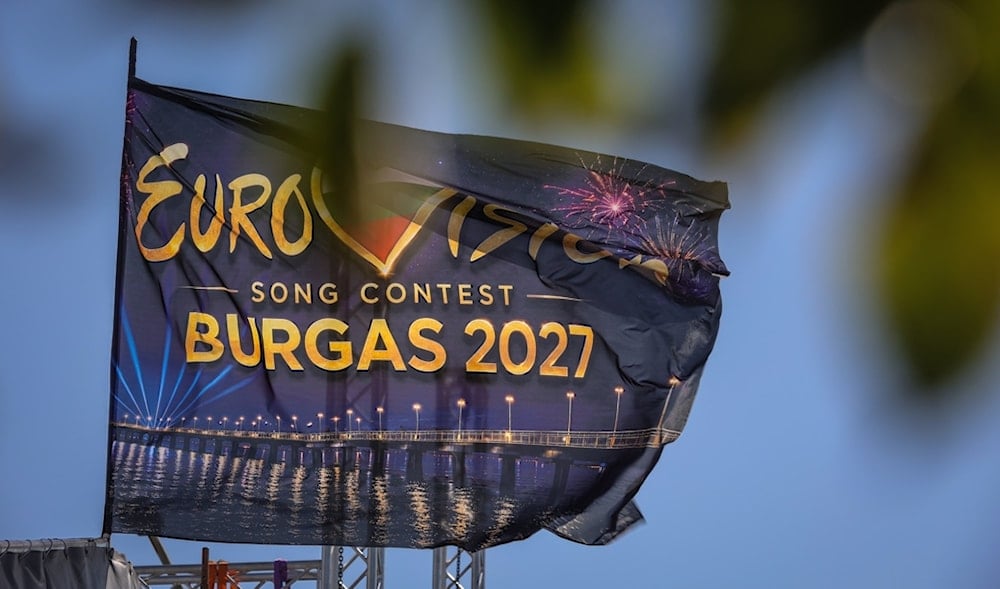
An Eurovision flag flies at the port of Burgas, on Bulgaria's Black Sea coast, which will host the 71st Eurovision Song Contest in 2027, Friday, Aug. 14, 2026. (AP Photo/Valentina Petrova)
Dutch public broadcaster AVROTROS confirmed Monday it will sit out the Eurovision Song Contest for a second consecutive year, refusing to send a Dutch act to the 2027 edition in Sofia, Bulgaria.
The broadcaster said "Israel's" continued participation in the contest, despite its ongoing war on Gaza, has made the event impossible to justify. "AVROTROS will not participate in the Eurovision Song Contest in 2027 because the event can no longer be considered neutral, with a participating country still involved in a large-scale military conflict," the broadcaster said in its statement.
AVROTROS director-general Taco Zimmerman further described Eurovision as having "become a platform for division" rather than the unifying event it was meant to be. He pointed to the growing weight of international wars on the contest and said they have stripped it of any claim to neutrality.
The broadcaster has spent the past year pressing the European Broadcasting Union to draw up clear rules barring countries waging military campaigns from competing. It said the changes the EBU has announced so far fall short and do nothing to restore confidence in the contest's independence.
AVROTROS also cited the scale of death and starvation the Israeli regime has inflicted on Gaza's population, alongside its continued blocking of international journalists from entering the strip, as reasons the boycott stands.
NPO, EBU respond
Responsibility for whether a Dutch broadcaster returns to Eurovision now sits with NPO, the umbrella body overseeing Dutch public media. NPO said it understands the toll the decision has taken on AVROTROS and is still weighing its next move.
Eurovision director Martin Green said the EBU regrets AVROTROS's decision but will respect it, and that the organization is in talks with NPO about another Dutch broadcaster stepping in for 2027.
AVROTROS is so far the only one of last year's five boycotting broadcasters, alongside Iceland's RÚV, Ireland's RTÉ, Slovenia's RTVSLO and Spain's RTVE, to confirm it is staying out in 2027.
Three of those broadcasters, RTÉ, RTVSLO, and RTVE, refused to air the 2026 contest entirely.
The 2026 boycott already cost Eurovision its audience
The 2026 boycott already cost Eurovision a significant share of its audience.
The contest drew 131 million viewers this year, down 35 million from 2025's 166 million, a drop of roughly 20 percent. Viewing share fell from 47.7 percent to 42.6 percent.
The BBC's broadcast in Britain fell from 6.7 million to 5.2 million viewers, its smallest UK audience in over 15 years, while France's audience dropped by more than 1.3 million.
The 15 to 24 age group, long Eurovision's strongest demographic, also shrank, from a record 60.4 percent audience share to 54.8 percent.


