
Explosive Media ban ‘suppressing truth’ on Iran narrative: Baghaei
 3 Min Read
Iran has criticized the removal of a popular animated channel from YouTube, arguing that the decision reflects broader concerns over content moderation.
-
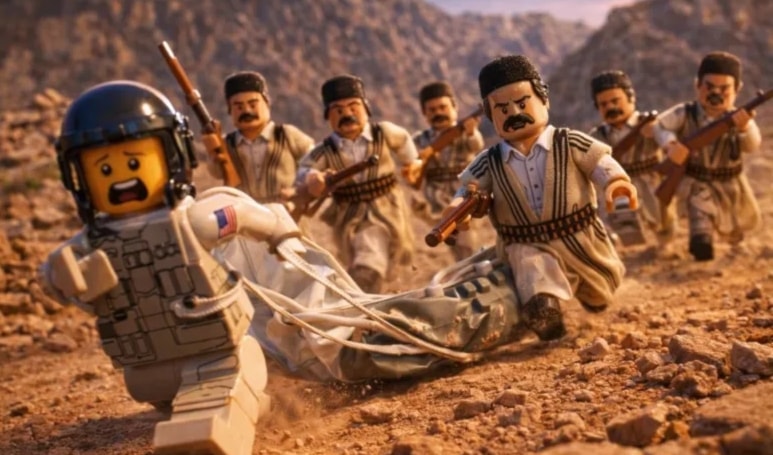
A screengrab from one clip, which shows Iranians capturing a downed US fighter jet pilot (Explosive Media)
Iran has criticized the video-sharing platform YouTube after it removed a channel known for publishing Lego-style animated videos satirizing the United States and its allies.
The account, Explosive Media, had attracted widespread attention for animated content portraying US-Israeli aggression involving Iran in a satirical format. The channel had reportedly gained a large online following worldwide before being taken down.
The ban was announced by the group on Friday, with YouTube citing alleged "violent content". The suspension came hours after the group's latest video, a rap animation linking Trump to the Epstein files, went viral, garnering millions of views.
Yes. https://t.co/T5i2ipViAu pic.twitter.com/V3oI0Q1hHo
— Explosive Media (@ExplosiveMediaa) April 14, 2026
Iranian Foreign Ministry spokesperson Esmaeil Baghaei condemned the decision, stressing that the move was politically motivated. In remarks posted on X, he referenced major US-based animation studios, including Pixar Animation Studios, DreamWorks Animation, and The Walt Disney Company, contrasting them with the removal of an independent animated YouTube channel.
Baghaei said the channel had “organically grown” an audience by depicting US “aggression and warmongering” and affirmed that it attracted millions of viewers prior to its removal.
He argued that the decision was intended “to suppress the truth” about US actions toward Iran and to “shield the American administration’s false narrative.”
In a land that proudly hosts Pixar, DreamWorks Animation, and The Walt Disney Company, an independent animated YouTube channel — which had organically grown by depicting U.S. aggression & warmongering, and garnered millions of viewers — was abruptly shut down!!
— Esmaeil Baqaei (@IRIMFA_SPOX) April 13, 2026
Why?!
Simply to… pic.twitter.com/uCznwWgeNr
Viral Lego videos
The overarching message in the videos is that Iran is resisting an overwhelming global oppressor: the United States.
In one video, US President Donald Trump is shown falling through a whirlwind of “Epstein file” documents as rap lyrics declare: “The secrets are leaking, the pressure is rising”.
In 48 hours,
— Explosive Media (@ExplosiveMediaa) April 6, 202
You learned the truth:
Everything for Epstein’s pleasure
Soldiers thrown in the trash.
𝐁𝐥𝐚𝐜𝐤 𝐅𝐫𝐢𝐝𝐚𝐲! pic.twitter.com/KNUJ5RIBOi
In another clip, George Floyd appears under a police officer’s boot while narration states that Iran is “standing here for everyone your system ever wronged."
These videos have accumulated hundreds of millions of views during the course of the US-Israeli aggression on Iran.
In one clip, Iranians are shown capturing a downed US fighter jet pilot.
Explosive Media videos first emerged in early 2025, but their reach has expanded significantly following the US-Israeli aggression on Iran.
The Lego-style productions have also become more detailed over time, depicting specific Gulf region locations, such as power plants, airports, and industrial facilities, being destroyed by Iranian missile strikes.
The videos are often produced in near real time, appearing shortly after major developments in the course of the war.
Despite the ban, Explosive Media's videos remain widely available on other platforms such as TikTok, Instagram, and X.
What the ban reveals
The creators deny any official ties to the Iranian government. Their videos show a strong grasp of American culture and internet trends, helping them reach audiences in the US.
What the ban reveals, however, is not Iranian state interference but a deeper reality: American social media users are increasingly engaging with and agreeing with pro-Iran content. The US-Israeli war on Iran remains deeply unpopular, and many Americans see Iran's response as justified retaliation against unprovoked aggression that began on February 28, 2026.
Rather than manufactured propaganda, the resonance of these videos reflects a genuine shift in public sentiment, one that Western platforms appear eager to suppress.
Read more: Discontent spreads in US military; war on Iran drives troops to leave


