
Gen Z is falling in love with the big screen: The Guardian
 4 Min Read
As cinema grapples with competition from streaming platforms and shifting audience habits, industry voices ask whether a new generation of cinephiles can revive the magic of the big screen.
-
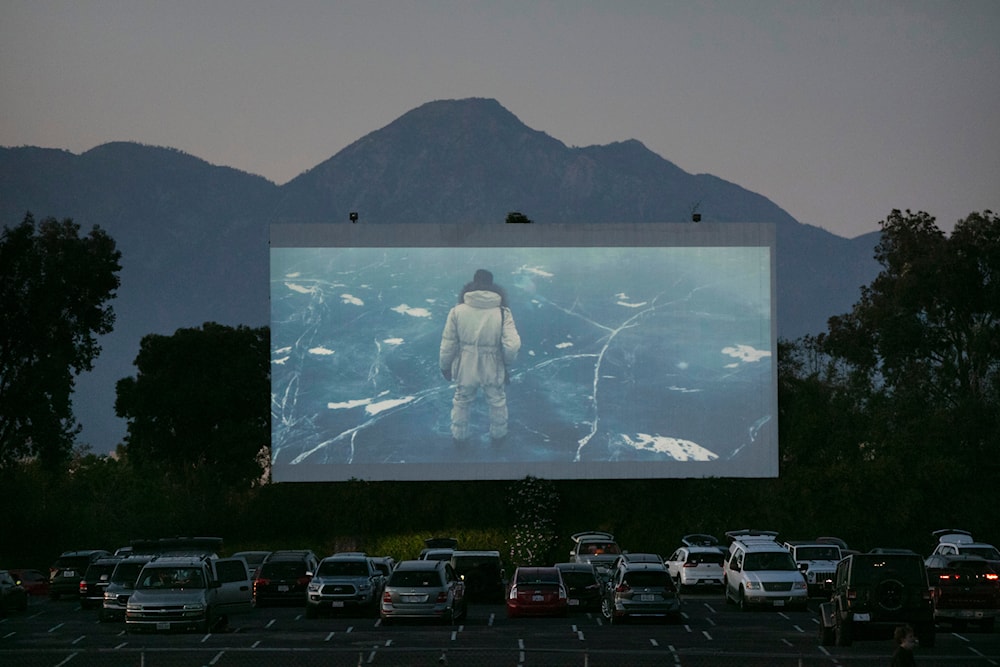
Moviegoers watch a movie preview at Mission Tiki drive-in theater in Montclair, California, on May 28, 2020. (AP)
In a recent editorial, The Guardian explored the mounting pressures facing cinema in the age of streaming, shortened attention spans, and shifting audience habits. As streaming platforms dominate and theatrical releases struggle, the future of cinema may rest in the hands of a new generation of film lovers.
"It was from a weekly visit to the cinema that you learned (or tried to learn) how to walk, to smoke, to kiss, to fight, to grieve,” wrote Susan Sontag in her 1995 essay The Decay of Cinema. The Guardian recalls her warning that cinema’s decline began with the rise of television. Today, the new existential threat is streaming.
The future of cinema is increasingly fragile. As the industry recovers from pandemic closures and the 2023 Hollywood writers’ and actors’ strikes, even major players are scrambling. Netflix is reportedly bidding to acquire Warner Bros., a move emblematic of the streaming era’s takeover.
Leonardo DiCaprio, star of One Battle After Another, a film that received 13 Oscar nominations but failed to break even, recently questioned whether cinema still holds mass appeal. Are theaters becoming cultural silos, "like jazz bars?" Matt Damon criticized the simplification of films for modern audiences, while Mary Sweeney, a longtime collaborator of David Lynch, noted that today’s fragmented attention spans would make it hard for Lynch to thrive in today’s industry.
Industry voices raise alarm over audience habits
Clare Binns, creative director of Picturehouse Cinemas and this year’s recipient of the BAFTA award for outstanding British contribution to cinema, addressed one growing trend hurting cinemas: excessively long films. The Brutalist (2024) runs three hours and 35 minutes and requires an intermission; Avatar: Fire and Ash clocks in at three hours and 17 minutes.
Long runtimes limit how many screenings cinemas can host per day, especially damaging for independent theaters already struggling to stay open. The Guardian notes that nearly a third of UK cinemas could face closure within five years without significant investment.
Read next: Putting the Art in Art-ificial Intelligence
Beyond economics, lengthy films test the limits of modern attention spans. In a digital world where entertainment is consumed quickly and often passively, extended narratives demand a focus that many audiences are losing. The tension between art and accessibility grows sharper as streaming habits reshape expectations.
Signs of hope from Gen Z and social media
But not all is lost. According to The Guardian, a British Council survey shows that Gen Z sees film and television as nearly twice as influential on culture as digital creators. In the US, cinema attendance among young people rose 25% in 2025, while box office revenue in the UK and Ireland reached a post-pandemic high of £1.07 billion.
Paradoxically, social media is helping reignite interest in cinema. Viral films like Saltburn and platforms like Letterboxd are engaging a younger, more vocal audience. When London’s Prince Charles Cinema was threatened with closure, public outcry revealed how deeply many still value the communal magic of moviegoing.
"Give cinema some respect," Martin Scorsese urged while defending his 3-hour-and-26-minute epic Killers of the Flower Moon. He warned that bingeing algorithmic content at home risks creating what he once called "ultra-processed movies", formulaic entertainment stripped of depth and artistry.
Sontag predicted that cinema could only be revived through "the birth of a new kind of cine-love." As The Guardian concludes, that revival may depend on a generation of cinephiles willing to get off the sofa and back into the theater, protecting a sacred space where storytelling is not just watched, but experienced.


