
'Greenwashing': Norway under fire over offshore oil, gas production
 4 Min Read
Norway is expanding offshore oil and gas production, reopening key gas fields, and strengthening its role in European energy security amid a looming energy crisis.
-
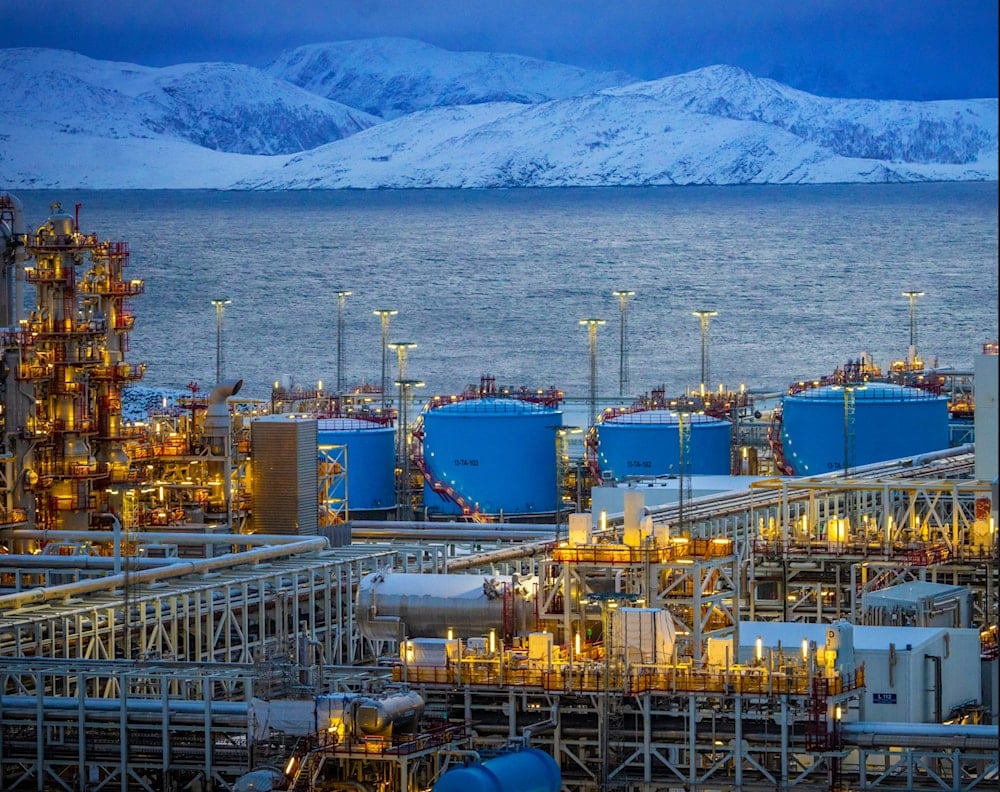
Oil and gas generate vast wealth for Norway, undated (AFP/Getty Images)
Norway is reaffirming its commitment to maintaining and expanding offshore energy activity, despite mounting environmental criticism and wider European debates over fossil fuel dependency, The Guardian reported.
Commenting on Norway’s commitment to sustain and expand its oil and gas production, Energy Minister Terje Aasland offered a clear message on Saturday, "We will develop, not dismantle, activity on our continental shelf."
This week, Aasland announced that three gas fields off Norway’s southern coast will reopen by the end of 2028, nearly three decades after their closure. The move aims to address supply shortfalls caused by the war in Ukraine and disruptions affecting energy flows from West Asia, as a result of the US-Israeli war on Iran.
Norway currently operates 97 offshore oil fields, with three new fields beginning production last year. The Norwegian Offshore Directorate expects the number to surpass 100 within the next two years while maintaining production at approximately 2 million barrels of oil per day. The fields scheduled for reopening are Albuskjell, Vest Ekofisk, and Tommeliten Gamma in the North Sea, all of which were shut down in 1998.
According to the government, reopening these assets supports both European energy security and Norway’s long-term position as a reliable supplier. “Norwegian offshore production plays an important role in ensuring energy security in Europe,” Aasland said.
"The world, and Europe, will have a need for oil and gas for decades to come, and it is crucial that Norway continues to develop its continental shelf to remain a reliable and long-term supplier … and (with) a high level of exploration activity".
Barents Sea becomes Norway’s next energy frontier
The Barents Sea is emerging as Norway’s next major offshore development zone.
Authorities are also assessing the longer-term possibility of seabed mineral extraction between northern Norway and Greenland. Initial surveys conducted by the Norwegian Offshore Directorate identified mineral potential, though commercial development remains a more distant prospect.
This expansion aligns with broader Norwegian energy policy focused on prolonging offshore production well into the 2030s. State-backed energy company Equinor, formerly Statoil, is pursuing an aggressive investment strategy to sustain production.
The Norwegian state owns 67% of Equinor, and the company says it is making a major effort to maintain its 2020 production benchmark of 1.2 million barrels per day through 2035. "It’s very important for the market value of the company to keep production higher now than in 2001, yes, we had a lower production then than now," said Equinor spokesperson Ola Morten Aanestad.
To offset natural decline rates, Equinor plans to invest $6 billion annually through 2035.
Environmental groups criticize expansion plans
The decision to reopen aging offshore fields has drawn criticism from environmental groups and opposition politicians. The move contradicts recommendations from Norway’s environment agency, while the Socialist Left party accused the government of “greenwashing”.
Lars Haltbrekken, deputy leader and environmental spokesperson for the party, criticized the decision sharply. “It shows that the government is once again blatantly ignoring environmental advice from its own experts. All the talk about responsible oil extraction is nothing but nonsense. It’s greenwashing through and through, with vulnerable and important natural areas being put at risk with full awareness.”
Norway diverges from UK North Sea policy
It is worth mentioning that Norway’s strategy contrasts sharply with the UK, which has ruled out issuing new oil and gas exploration licenses in the North Sea.
Terje Sørenes, chief economist at the Norwegian Offshore Directorate, said Norway’s objective is to extend offshore production for as long as possible while maintaining or increasing output.
Norway currently supplies roughly one-third of Europe’s gas consumption, reinforcing its position as a central actor in European energy security. For now, Norway appears committed to further drilling, continued offshore development, and preserving Norway's oil and gas production well beyond the current decade.
Norway’s latest energy decisions are not an isolated policy choice; they are a response to a rapidly tightening global energy landscape shaped by war, sanctions, and supply disruption. As the US war on Iran further destabilizes energy flows from West Asia, and the Ukraine war continues to strain traditional supply routes, Norway is moving decisively to secure both its own economic position and Europe’s energy lifeline.


