
IEA warns of 'severe' triple energy crisis amid US-Israeli war on Iran
 4 Min Read
IEA warns the global energy crisis caused by the war on Iran is “very severe,” as it considers releasing more oil reserves to stabilize markets.
-
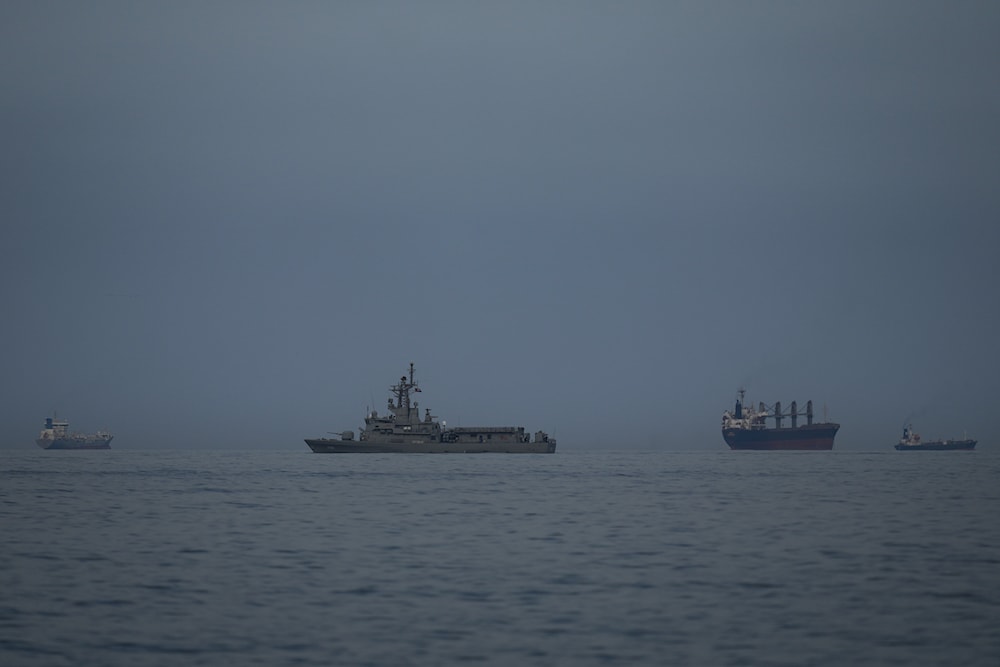
A UAE navy vessel patrols next to cargo ships and oil tankers in the Strait of Hormuz as seen from Khor Fakkan, United Arab Emirates, on March 11, 2026. (AP Photo/Altaf Qadri)
International Energy Agency (IEA) Executive Director Fatih Birol has warned that the world could face its most severe energy crisis yet, as the US-Israeli war on Iran continues to disrupt global energy markets.
Speaking at the National Press Club in Canberra, Birol said the agency is in talks with governments across Asia and Europe over the possible release of additional oil from strategic reserves “if necessary,” and is closely monitoring market conditions and coordinating with member countries before taking further action.
“If it is necessary, of course, we will do it,” he said, adding that decisions would depend on evolving supply and demand dynamics.
Earlier this month, IEA member nations agreed to release 400 million barrels of oil from strategic reserves in an effort to stabilize prices amid the escalating crisis. Birol emphasized that there is no fixed oil price threshold that would automatically trigger another coordinated release, noting that decisions will be guided by market conditions.
Europe faces triple energy crash
The IEA chief cautioned that the situation in West Asia is “very severe,” warning that its impact rivals, and in some cases exceeds, previous global energy shocks. He compared the current disruption to the oil crises of the 1970s and the energy fallout from the conflict in Ukraine.
“At that time, in each [oil] crisis, the world has lost about 5 million barrels per day… And today we lost 11 million barrels – so more than two major oil shocks put together,” Birol said.
He added that, following Russia’s special military operation in Ukraine, gas markets, particularly in Europe, lost about 75 billion cubic meters, whereas the current war has already led to a loss of about 140 billion cubic meters. “So the situation is, if we want to put it in context, this crisis as it stands now, two oil crises and one gas crash put all together.”
Birol said the disruptions are also affecting other “vital arteries of the global economy,” including petrochemicals and fertilisers, with potentially long-term consequences. “The world is facing a very serious situation,” he warned.
The most effective way to stabilize global energy markets, he stressed, would be to ensure the continued flow of oil through the Strait of Hormuz, a key global shipping route. “The single most important solution to this problem is opening the Hormuz Strait,” he said.
Saudi Aramco cuts oil supply to Asia
In a related context, Saudi Aramco, the world’s leading oil exporter, has reduced its crude supply to Asian buyers for April, according to two sources familiar with the matter, cited by Reuters on Monday. The move comes as disruptions to trade routes have affected shipping flows in the region.
The company is reportedly supplying only Arab Light crude exported from the Yanbu port to its term customers during this period, the sources said.
The reduction in supply follows disruptions linked to heightened tensions involving the US-Israeli war on Iran and the latter's retaliation, which impacted maritime trade through the Strait of Hormuz.
The Strait of Hormuz is a critical chokepoint for global oil shipments, and any instability in the area can have significant implications for energy flows, particularly for countries in Asia that rely heavily on imports from the Gulf.
Read more: IRGC warns it will retaliate in kind if US targets power sites


