
Strait under strain: A short history of the Hormuz Strait
 5 Min Read
The Strait of Hormuz remains a critical global chokepoint, where geopolitical tensions, oil transport, and US-Iran relations intersect with global energy security.
-
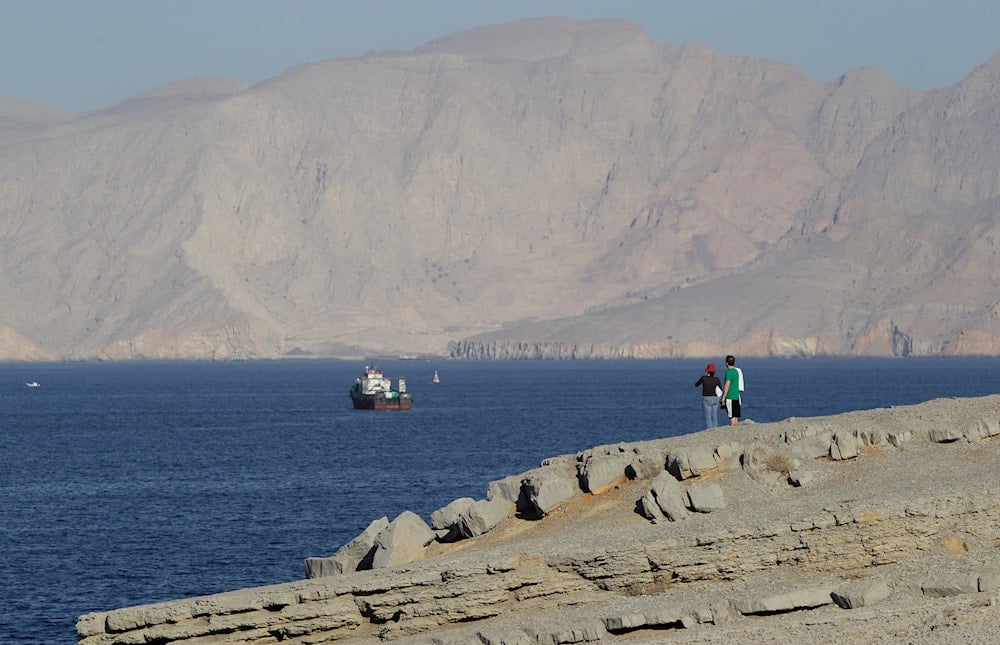
In this Jan. 18, 2012 photo, a tourist couple watches the mountains in south of the Strait of Hormuz as the trading dhows and ships are docked on the Gulf waters near the town of Khasab, in Oman. (AP)
The narrow geography of the Strait of Hormuz, where shipping lanes measure just two miles across, continues to give Iran outsized influence over global energy flows, according to a Wall Street Journal report. The waterway serves as the only maritime link between some of the world’s largest oil and gas reserves and international markets, placing it at the center of the US-Israeli war on Iran.
The strategic importance of the strait has long been recognized by American policymakers. Years before entering office, President Donald Trump spoke of the need for the United States to "demonstrate resolve" in exerting its influence on the Gulf, highlighting concerns over Iran’s location by the vital shipping corridor.
Historically, the Strait of Hormuz has been a focal point of global competition. Since ancient Persia, major powers including the Greeks, Ottomans, and Portuguese sought control over the passage, which once facilitated the movement of valuable goods such as spices, silk, and jewels from India to markets in Baghdad and Europe. Prominent explorers, including Zheng He and Marco Polo, documented the risks and rewards associated with navigating the route.
In more recent decades, the strait has played a defining role in shaping US foreign policy, often serving as a test of Washington’s willingness to project military power. Analysts now assess that Iran is leveraging its geographic advantage to exert pressure amid rising energy prices, in what is seen as an effort to influence the course of the ongoing conflict.
Following the attacks on Iran on February 28, Tehran began targeting oil tankers, cargo vessels, and port infrastructure with gunfire and drones, in a move aimed at deterring maritime traffic through the strait. Observers note that such tactics are rooted in longstanding strategic thinking tied to control of critical trade chokepoints.
“Long before the tankers arrived, Hormuz mattered for the same deeper structural reason that it matters today,” historian Bianca Nobilo said on her podcast History Uncensored. “It is a narrow maritime gate between resources, riches and the wider world.”
Historical and modern stakes of the Strait of Hormuz
Control over the Strait of Hormuz has long been contested. The Portuguese and Ottomans vied for dominance, and by the 19th century, European traders referred to the southern rim of the strait, modern-day United Arab Emirates, as the Pirate Coast due to frequent attacks on cargo ships by marauders.
The region’s strategic significance surged in the 1930s after major oil discoveries in Saudi Arabia, and Bahrain reshaped global energy calculations. For decades, the United States largely played a secondary role, relying on the British and later the US-aligned Shah of Iran to maintain security in the Gulf.
The 1979 Islamic Revolution in Iran dramatically altered the balance of power. Months before Iranians seized the US embassy, which came to be known as the Den of Spies for its intelligence gathering against Iran and the revolutionaries, the Central Intelligence Agency had already highlighted vulnerabilities in a report titled The Strait of Hormuz: A Vulnerable Lifeline, signaling the risks that the revolution would pose to global maritime trade.
The history of the US and the Strait of Hormuz
The now-declassified CIA report warned of multiple threats to crude-oil shipments through the Strait of Hormuz, ranging from sea mines to attacks by small wooden dhows. “There are many options for imaginative, resourceful terrorists contemplating an attack on shipping in the Strait,” the agency noted.
In response, President Jimmy Carter outlined a more proactive American stance in his 1980 State of the Union address. “An attempt by any outside force to gain control of the Persian Gulf region will be regarded as an assault on the vital interests of the United States of America,” he declared, signaling a new era of US involvement.
Subsequent presidents continued to address concerns over Gulf shipping, with President Ronald Reagan facing a scenario similar to today’s tensions during the late-1980s “tanker war,” when Iran and Iraq both targeted oil infrastructure and the US Navy provided protective escorts.
During that period, a young Donald Trump, then a 41-year-old property developer, publicly expressed interest in the region. In a 1987 full-page newspaper letter, he urged the US to demonstrate “backbone” while suggesting that allies like Japan and Saudi Arabia should bear the costs of protecting Gulf oil shipments, which he described as “an area of only marginal significance to the United States for its oil supplies.”
The United States’ insistence on maintaining influence over the Strait of Hormuz demonstrates a broader policy to exert its control over vital global energy routes and to project power in the Gulf, interests that would clash with Iran’s and the region's assertion of sovereignty and decision-making over the Gulf, outside of foreign intervention.


