
Iran tells IMO Hormuz open except for US, 'Israel'-linked vessels
 3 Min Read
Iran has told the IMO it is open to maritime cooperation while maintaining controlled access to the Strait of Hormuz, allowing transit for non-hostile states and restricting vessels linked to the US and "Israel".
-
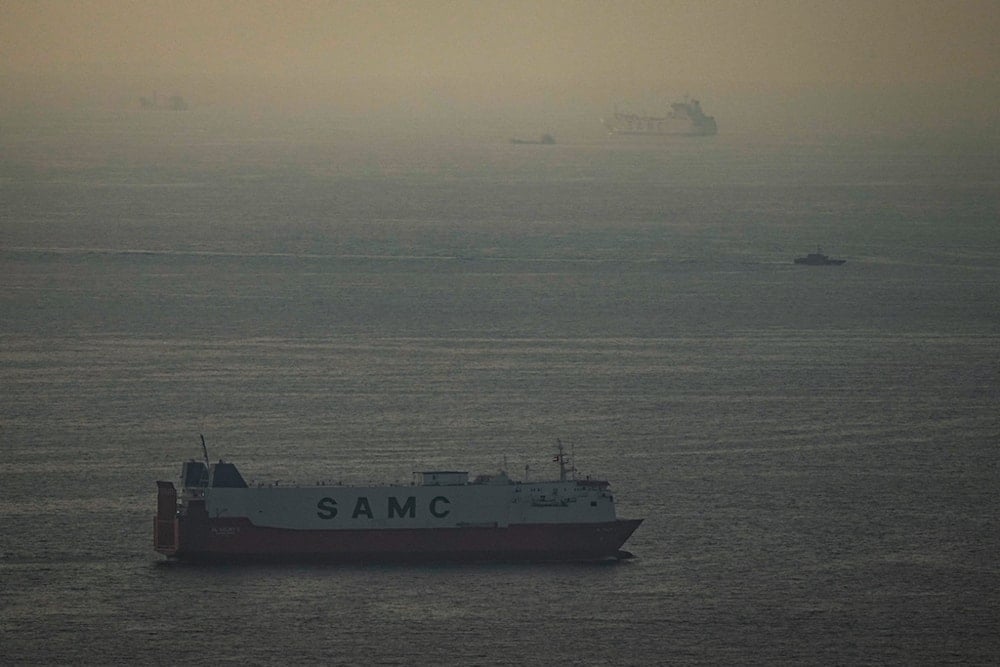
Cargo ships sail in the Arabian Gulf towards Strait of Hormuz in the United Arab Emirates, Thursday, March 19, 2026. (AP)
Iran has signaled readiness to work with the International Maritime Organization (IMO) to ensure the safety of navigation in the Gulf, while maintaining firm restrictions on vessels linked to states involved in ongoing aggression.
Addressing the UN maritime body, Iran’s representative Ali Mousavi stated that Tehran remains open to international cooperation aimed at protecting seafarers and stabilizing shipping conditions. “Diplomacy remains Iran's priority,” he said. “However, a complete cessation of aggression as well as mutual trust and confidence are more important.”
Mousavi made clear that access to the Strait of Hormuz is not universally denied, but rather regulated in line with security conditions imposed by the conflict. “The Strait of Hormuz remains open to all shipping except vessels linked to 'Iran's enemies'.”
Tehran asserts control
The current maritime crisis is the result of the US and Israeli war on Iran, which began in late February.
Mousavi directly attributed the instability in the waterway to these actions, describing them as “the root of the current situation.”
Iran’s response has since reshaped conditions in one of the world’s most critical energy corridors, through which roughly 20 percent of global oil flows. Rather than imposing a blanket shutdown, Tehran has adopted a selective approach, allowing transit for non-hostile states while denying access to adversarial actors.
Conditional access
Iranian authorities have introduced a coordinated transit mechanism requiring vessels to communicate directly with Tehran before entering the strait. “Everything should be communicated to the Iranian relevant authorities,” Mousavi said, noting that such coordination is essential to ensure the safety of ships and crews.
Under this framework, ships from countries maintaining neutral or cooperative relations with Iran have continued to pass, while those tied to hostile states remain excluded.
Mousavi reiterated that Iran is prepared to facilitate navigation under these conditions, adding that Tehran welcomes “any initiatives, any suggestions for more secure international shipping.”
Lawful defense
Mousavi stressed that recent attacks on Iranian territory and infrastructure represent a serious escalation, warning that they are “crossing another red line.” He added that Iran would respond accordingly, treating hostile assets as legitimate targets.
At the same time, he called on the international community to address violations of sovereignty and to prevent further escalation.
Read more: Iran warns of retaliation as Trump issues Strait of Hormuz ultimatum


