
Iran offers conditional Hormuz access to Japan
 5 Min Read
Iran has signaled a conditional easing of restrictions in the Strait of Hormuz for Japan, positioning the move as a targeted response that maintains pressure on states involved in the war while allowing limited energy flows to non-hostile countries.
-
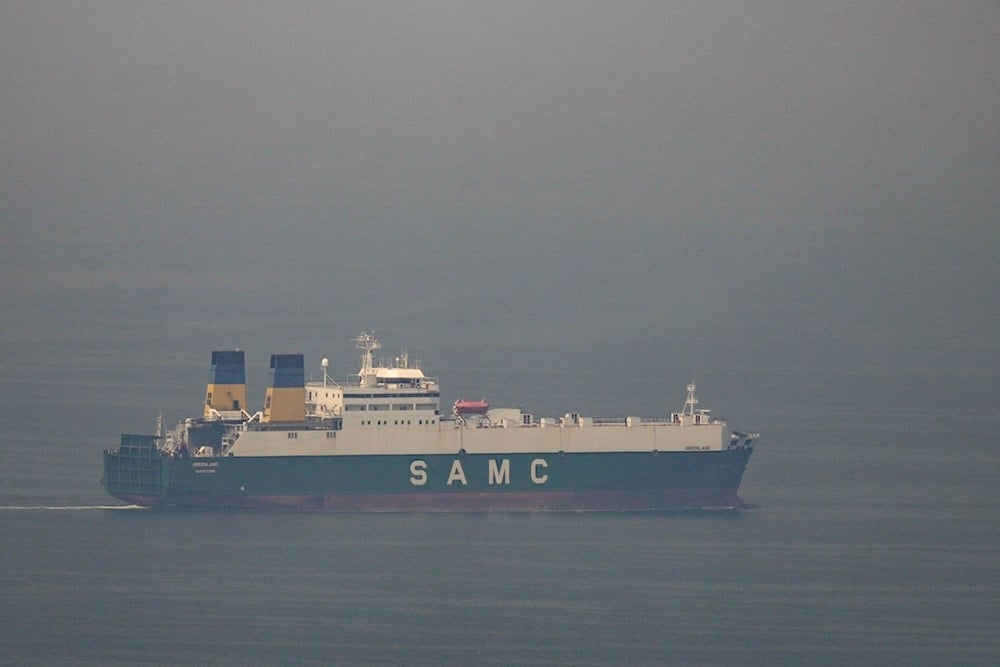
A cargo ship sails in the Arabian Gulf towards Strait of Hormuz in United Arab Emirates, Sunday, March 15, 2026. (AP Photo/Altaf Qadri)
Iran has signaled it may allow Japanese-linked vessels to pass through the Strait of Hormuz, in what appears to be a calibrated move aimed at maintaining essential energy flows for non-hostile states while continuing to impose pressure on countries involved in the ongoing aggression against it.
Foreign Minister Abbas Araghchi said in a phone interview with Kyodo news that Tehran is prepared to facilitate transit for Japanese ships, with discussions already underway with Tokyo. The development comes as maritime traffic through the strategic waterway remains severely limited following weeks of US-Israeli attacks on Iran, which triggered a broader regional confrontation and prompted Tehran to impose restrictions on shipping.
Iran has maintained that the Strait of Hormuz has not been universally closed, but rather restricted in response to an unprovoked war. Araghchi stressed this distinction, stating: “We have not closed the strait. It is open.”
He further clarified that limitations have primarily targeted vessels linked to states participating in the attacks, while countries maintaining neutral or diplomatic positions could be granted passage through coordination with Tehran. This approach reflects Iran’s effort to assert control over the waterway without fully halting global energy flows.
Hormuz disruption hits Japan
The crisis in the strait began after US and Israeli strikes on February 28, which triggered Iranian retaliation and led to a near-total collapse in tanker traffic, at one point reducing shipments by up to 70 percent and effectively halting transit altogether. The disruption has affected roughly one-fifth of global oil supply, sending prices sharply higher and exposing the vulnerability of global energy markets to geopolitical escalation.
Araghchi stressed during the interview that Iran is seeking "not a cease-fire, but a complete, comprehensive and lasting end to the war."
"This was an illegal, unprovoked act of aggression," he said, explaining that Iran is practicing self-defense and will continue to do so "for as long as it takes."
Japan has emerged as one of the most affected economies, relying on the Strait of Hormuz for 90% of its oil imports. The disruption has already pushed Tokyo to consider emergency measures, including the use of strategic reserves, as it seeks to stabilize supply chains.
At the same time, the crisis is unfolding alongside a major expansion of US-Japan energy cooperation, including tens of billions of dollars in investments in nuclear reactors, gas infrastructure, and critical mineral supply chains. The agreement forms part of a broader strategic framework aimed at restructuring energy dependencies over the long term and reducing reliance on external chokepoints such as the Strait of Hormuz.
However, the immediate reality remains unchanged: Japan continues to depend heavily on Gulf energy flows, leaving it exposed to disruptions in the waterway. In this context, Iran’s willingness to facilitate Japanese shipping underscores a calculated effort to exploit the gap between long-term energy realignment and present-day dependence.
Iran signals flexibility
In a phone call with Araghchi, a former ambassador to Japan, Foreign Minister Toshimitsu Motegi urged Tehran to “take appropriate measures to ensure the safety of all the vessels in the Strait of Hormuz, including those of Japan and other Asian countries,” reflecting growing concern over the number of ships stranded or at risk in the Gulf.
Iran’s reported willingness to accommodate Japanese vessels underscores a broader diplomatic signal: Tehran is differentiating between states aligned with the war against it and those seeking to remain outside the aggression. Officials have repeatedly framed the restrictions as a defensive measure tied directly to ongoing attacks on Iranian territory and infrastructure.
At the same time, Araghchi made clear that Iran’s objective extends beyond temporary arrangements, stressing that Tehran is seeking a definitive end to the war rather than a short-term pause. He has described the conflict as unjustified and reiterated that Iran will continue its response as long as hostilities persist.
US pressures allies
Washington, however, has pushed in the opposite direction, urging allies to join a military effort to reopen the strait by force. US President Donald Trump has called on major energy-importing nations to contribute naval assets, arguing that securing the waterway is primarily their responsibility.
"It's relatively safe, but you need a lot of help, in the sense of you need help, you need volume. NATO could help us, but they, so far, haven't had the courage to do so, and others could help us," Trump said.
"You know, we don't use the strait. … We don't need it. Europe needs it. (South) Korea, Japan, China, a lot of other people (need it). So, they'll have to get involved a little bit on that."
Despite US pressure, Japan has so far resisted direct military involvement. Prime Minister Sanae Takaichi has pointed to constitutional constraints and reiterated Tokyo’s preference for diplomatic engagement, stressing the need “for an early de-escalation of the situation” and a negotiated resolution.
This divergence has exposed growing fractures among US allies, many of whom have declined to send naval forces despite repeated calls from Washington. Instead, several countries have issued joint statements calling for an end to attacks on civilian infrastructure and expressing readiness to support safe navigation through non-military means.
Read more: Iran oversees new shipping routes for select ships through Hormuz


