
'Iranians have real leverage': US rushing to fix Hormuz Strait crisis
 3 Min Read
US officials are trying to avoid a prolonged closure of the Strait of Hormuz, as intelligence indicates that Iran could block the key waterway for up to six months.
-
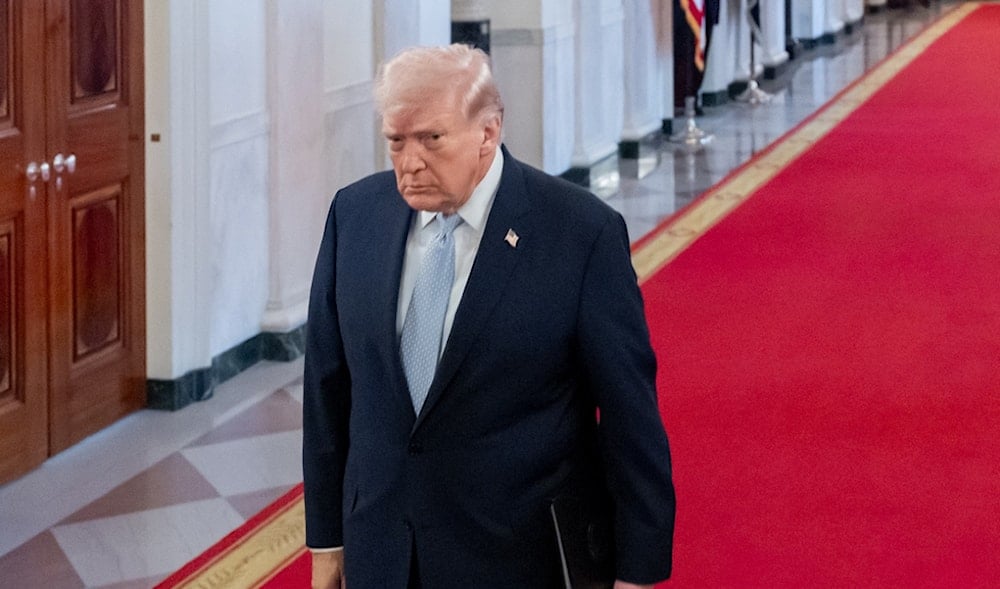
President Donald Trump arrives for the Commander-in-Chief's Trophy presentation with the Navy Midshipmen football team in the East Room of the White House, Friday, March 20, 2026, in Washington. (AP)
The United States has been working intensively to prevent the closure of the Strait of Hormuz for several months, as reopening the key maritime passage remains a complex challenge with no clear solution.
According to multiple administration and intelligence officials speaking to CNN, the outcome may partly depend on how far President Donald Trump is willing to go in pressuring Iran to change its position.
“One of the core conundrums of this conflict is that the Iranians have real leverage with this, and there’s not an obvious fix for it,” one intelligence official said.
Four sources familiar with the matter told CNN that a recent internal assessment by the Defense Intelligence Agency, circulated within the Pentagon in recent weeks, concluded that Iran could potentially keep the strait closed for a period ranging from one to six months.
However, officials in both the White House and the Pentagon have insisted that this assessment, particularly the longer timeframe, which some consider a worst-case scenario, has not been taken seriously.
A senior White House official stated that War Secretary Pete Hegseth was not briefed on the assessment, nor was Trump, and that it did not factor into policy decisions.
US 'desperate' for Hormuz resolution
For now, Donald Trump has urged NATO allies and US adversaries to help secure the Hormuz Strait, in vain. According to Bloomberg, Europe has largely resisted pressure to deploy warships to the Strait of Hormuz, focusing instead on post-war coordination.
France, Greece, Germany, Japan, and Australia have already ruled out sending warships to the region. He also called on China, which is both a strategic rival of the United States and maintains close relations with Iran, to reopen the strategic waterway.
In a move labeled as "desperate" by experts, the US is now considering lifting sanctions on Iranian oil currently stranded aboard tankers in a move aimed at boosting global supply and lowering prices, Treasury Secretary Scott Bessent said on Thursday.
After weeks of attacks and efforts to tighten restrictions on Tehran, Washington’s consideration of releasing up to 140 million barrels into global markets reflects growing concern over surging oil prices and supply disruptions.
New shipping routes, controlled by Iran, emerge
Meanwhile, Iran has allowed some friendly countries, including China, India, Pakistan, Malaysia, and Iraq, to secure safe passage of their ships through the Strait of Hormuz, one of the world's most critical maritime routes.
At least nine ships have left the strait through a corridor that takes them through Iranian waters around Larak Island, where authorities can monitor vessel movement, Lloyd’s List reported. Among these were vessels from India and Pakistan, pointing to a growing pattern in navigation through the area.
“There is a clear and discernible pattern of some ships passing through,” Richard Meade, editor-in-chief of Lloyd’s List, said in an interview.
Windward, a maritime intelligence agency, also reported on vessels leaving the Gulf through Iranian territorial waters, “sailing along the coastline rather than standard international navigation channels.” That is a new route emerging.
Read more: Hormuz disruption exposes hidden strain on US military supply chains


