
'Not NATO's war': Germany rejects Trump's Hormuz coalition
 3 Min Read
Berlin refuses to join Trump's military coalition to reopen the Strait of Hormuz, openly questioning whether the US has any coherent plan to end the war it helped ignite.
-
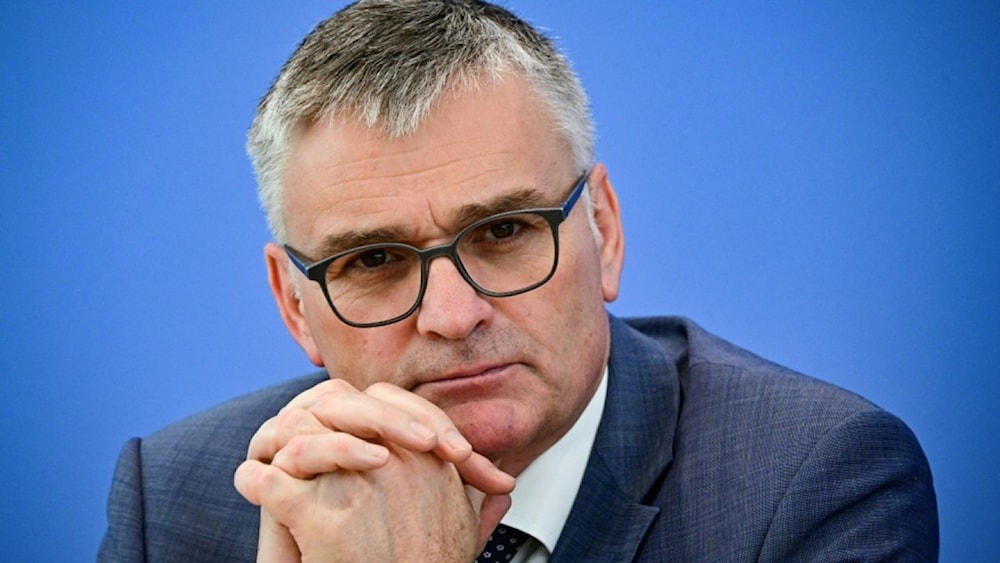
German government spokesperson Stefan Kornelius attends a press conference with German Chancellor Friedrich Merz (not in image), addressing home and foreign policy in Berlin on July 18, 2025 (AFP)
Germany's government on Monday rejected US President Donald Trump's demand that NATO allies contribute militarily to reopening the Strait of Hormuz, with a spokesperson for Chancellor Friedrich Merz declaring unambiguously that the alliance has no role to play in a war of Washington's making.
"This war has nothing to do with NATO. It's not NATO's war," Stefan Kornelius, spokesperson for the German government, told reporters in Berlin, adding that NATO is "a defensive alliance, an alliance for the defense of its territory."
Kornelius went further, reminding Washington of the circumstances under which the war began, saying, "The US and Israel did not consult us before the war, and Washington explicitly stated at the start of the war that European assistance was neither necessary nor desired."
Germany, he said, would not participate in any military effort to keep the strait open "as long as this war continues," and stressed that no formal US request to do so had even been received.
Trump's coalition unravelling
The German rebuff comes as Trump's weekend push to assemble a multinational naval coalition to force open the strait meets resistance on multiple fronts. Trump has reportedly been working to secure political commitments from seven countries, some of which have already declined, with an announcement expected later this week.
Japan and Australia have already ruled out sending warships to the region. The United Kingdom, despite Trump publicly pressuring London to contribute vessels, has deployed only eight Royal Navy sailors to Bahrain as part of a minehunting unit.
Trump, speaking aboard Air Force One on Sunday, told reporters he "demands" that NATO members and major oil importers join the effort, warning that allies who refuse face a "very bad future." He framed the mission as modest, given what he alleged was Iran's diminished military capabilities, and said discussions with allies were ongoing.
Merz's reversal
Earlier in the war, Merz traveled to Washington and told Trump he was on the "same page" regarding the goal of regime change in Iran, a stance that placed him at odds with French President Emmanuel Macron and other EU leaders who condemned the US-Israeli aggression on Iran as illegal.
But as the war's economic and security toll on Europe's largest economy becomes increasingly difficult to ignore, Berlin has grown visibly more critical. Merz has publicly expressed concern that Trump has no exit strategy.
"Germany's position has always been that we agree in principle with the goal," Kornelius said Monday, adding, "However... we increasingly have questions about the correct path to achieving this goal."


