
UK sends minimal forces as Trump pushes NATO for Hormuz operation
 3 Min Read
The UK plans to deploy just eight sailors to the Strait of Hormuz, signaling limited support amid rising Gulf tensions, following US President Donald Trump’s call for NATO to help reopen the vital waterway.
-
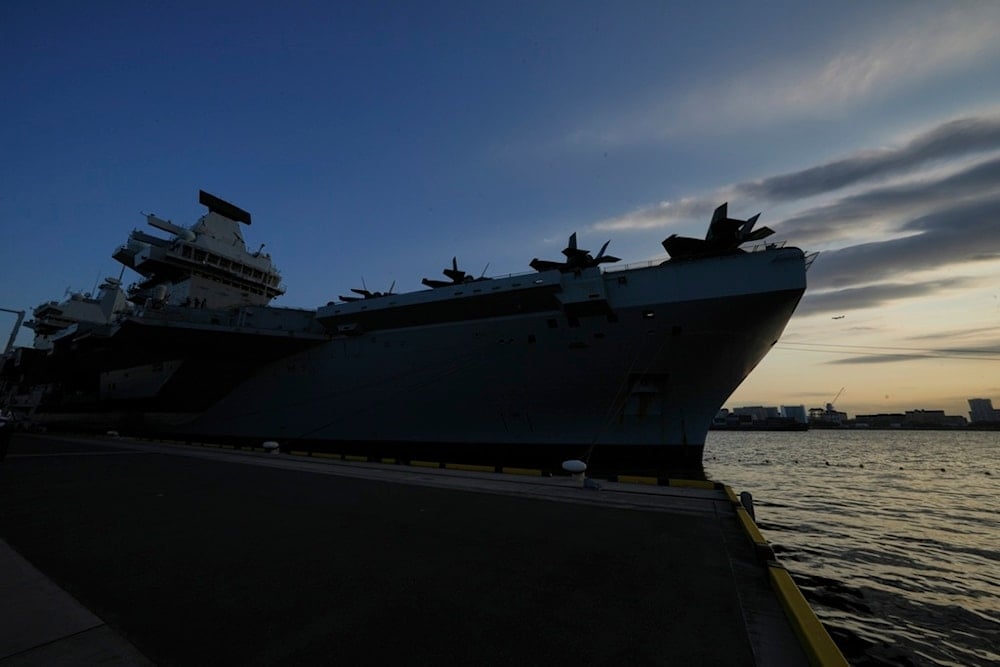
The Royal Navy aircraft carrier HMS Prince of Wales is seen during its port call in Tokyo on August 28, 2025. (AP)
In response to US President Donald Trump’s urgent call for NATO and allied forces to reopen the Strait of Hormuz, the UK has sent only eight sailors to the region, a move that signals London’s reluctance to engage fully in a war sparked by Washington.
The small team from the Royal Navy’s mine and threat exploitation group (MTXG) deployed from Portsmouth to Bahrain last month, just days before the US-Israeli strikes on Iran. While armed with autonomous minehunting technology, the squadron has never been tested in wartime conditions, raising questions about its effectiveness.
Trump had publicly urged Britain to send ships, tweeting that nations “affected by this artificial constraint” should join a global flotilla. Britain’s measured response, however, has fallen far short of the US president’s demands.
UK fleet limitations and strategic caution
Once a dominant naval power in the Gulf, the Royal Navy now has limited options. While HMS Dragon protects Cyprus and RFA Lyme Bay trains for potential evacuation duties, only a few ships could realistically reach the Gulf, and any deployment would take weeks.
Potential reinforcements like HMS Somerset, HMS Duncan, or HMS Anson are tied up with maintenance, training, or other strategic duties, leaving London with no immediate heavy assets to meet Trump’s expectations.
One defense source told The Telegraph that even the deployed X-Ray Squadron team was “a far cry" from what Britain used to provide in the Gulf, and it remains unclear what action they could take against Iranian threats.
According to the report, the UK has invested in autonomous minehunting technology, including unmanned drones under the SWEEP program and SeaFox underwater vehicles. These systems allow for remote detection and neutralization of mines, reducing risks to personnel, but they are not a substitute for a full naval presence.
Vice-Admiral Steve Moorhouse, the Royal Navy’s fleet commander, confirmed the UK’s technology is world-leading, but admitted operational readiness for a high-threat environment remains uncertain.
Trump’s pressure meets diplomatic resistance
Trump’s calls for NATO and British involvement were largely symbolic, aimed at creating the appearance of a global coalition against Iran. US sources acknowledged that London’s minimal deployment reflected both resource constraints and political caution, signaling that the UK would not escalate the war at Washington’s behest.
Energy Secretary Ed Miliband confirmed that the government is considering sending a ship to the Gulf, but no commitments have been made, underscoring Britain’s reluctance to participate in Trump’s aggression.
A source close to the White House told The Telegraph that the US could no longer depend on Britain for military support. “The British showed during the Iran conflict they can’t be depended upon, they don’t have the resources, and they’re not really committed to any assets,” the official said.
The UK’s restrained approach highlights growing tensions between Washington and its allies, as European nations weigh the risks of following the US into a war in West Asia that could have far-reaching economic and strategic consequences.


