
Trump faces political pressure two weeks into war on Iran
 3 Min Read
An AP analysis by Will Weissert examines how two weeks of war with Iran have put President Trump under political pressure amid oil market turmoil and criticism.
-
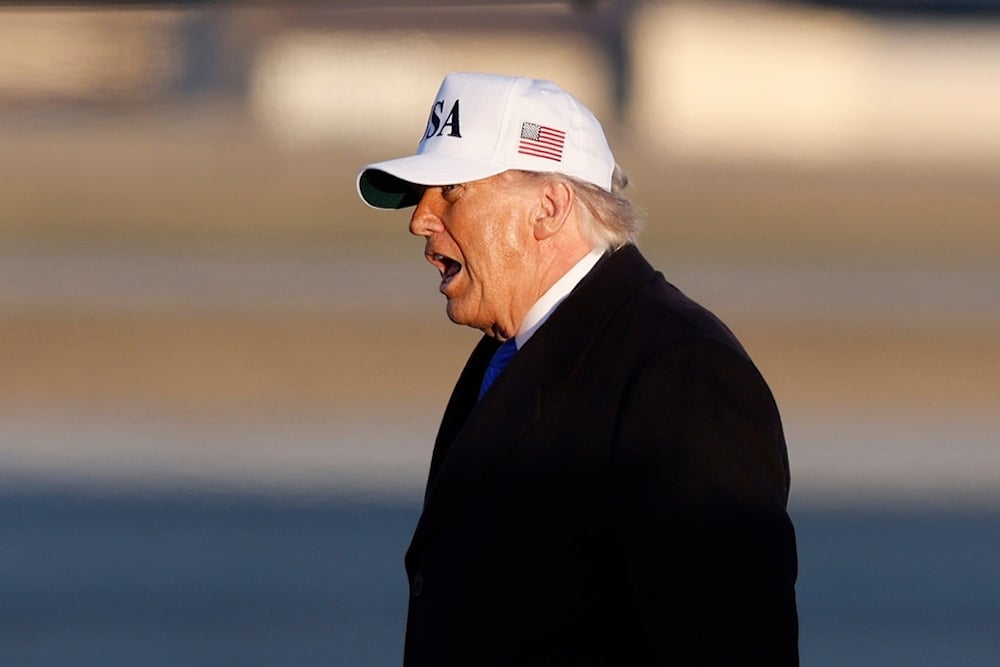
US President Donald Trump prepares to board Air Force One after speaking to reporters at Joint Base Andrews, Md., Friday, March 13, 2026 (AP)
US President Donald Trump has been “knocked on his political heels” two weeks after the United States and “Israel” launched a joint aggression on Iran, journalist Will Weissert writes for the Associated Press in an analysis piece.
Weissert notes that the administration has struggled to explain to the public why the war started and how it will end, at a time when American casualties, rising oil prices, and market instability are fueling concern. Even some of Trump’s supporters are reportedly questioning his strategy, while his poll numbers show early signs of decline.
The AP analysis highlights Trump’s frustration with media coverage. On social media, he claimed the “media actually want us to lose the War,” signaling tensions between the administration and the press as the war drags on.
Read more: Oil markets jittery over Strait of Hormuz amid war on Iran disruptions
Strait of Hormuz raises strategic and political questions
According to Weissert, one area of growing concern is the Strait of Hormuz, a vital corridor for global oil shipments.
Trump suggested over the weekend that the US would rely on international partners to help secure tanker traffic: “Many Countries, especially those who are affected by Iran’s attempted closure of the Hormuz Strait, will be sending War Ships, in conjunction with the United States of America, to keep the Strait open and safe.”
Weissert notes that the plan appears tentative, with key countries responding cautiously. Officials in South Korea said they would “closely coordinate and carefully review” the proposal, while Japan and the UK Ministry of Defense indicated monitoring and consultation with allies.
The US Energy Information Administration reports that roughly 20% of global petroleum liquids pass through the Strait of Hormuz, making disruptions there a major concern.
Read more: 'I don't want to go to prison': Vance on Trump Iran no-war advice
Oil prices and Russian sanctions add pressure
Weissert’s analysis also highlights the broader economic fallout. The US Department of the Treasury recently issued a 30-day waiver on Russian oil sanctions to ease supply disruptions exacerbated by the war on Iran.
Some international leaders criticized the move. Volodymyr Zelensky stated that easing sanctions “certainly does not help peace” and strengthens Russia economically. Russia’s reliance on energy revenue to fund its military operations is documented by the International Energy Agency.
Weissert writes that the political turbulence is already shaping discussions around the US midterm elections. Rising energy costs and inflation are expected to influence voter sentiment.
Democratic strategist Brad Bannon commented, saying, “Democrats just have to keep reminding people that he made a promise to bring prices down, and they’re still going up.”
Republican concerns are also rising. Senator Rand Paul warned that sustained high gas prices could harm GOP prospects in the midterms.
Meanwhile, divisions within Trump’s MAGA base have emerged, with some supporters backing military action and others criticizing the war, given Trump’s campaign promises to reduce US involvement abroad.


