
Oil markets jittery over Strait of Hormuz amid war on Iran disruptions
 2 Min Read
Oil prices dip but remain set for weekly gains as Gulf disruptions linked to the US-Israeli war on Iran fuel market concerns over shipments through the Strait of Hormuz.
-
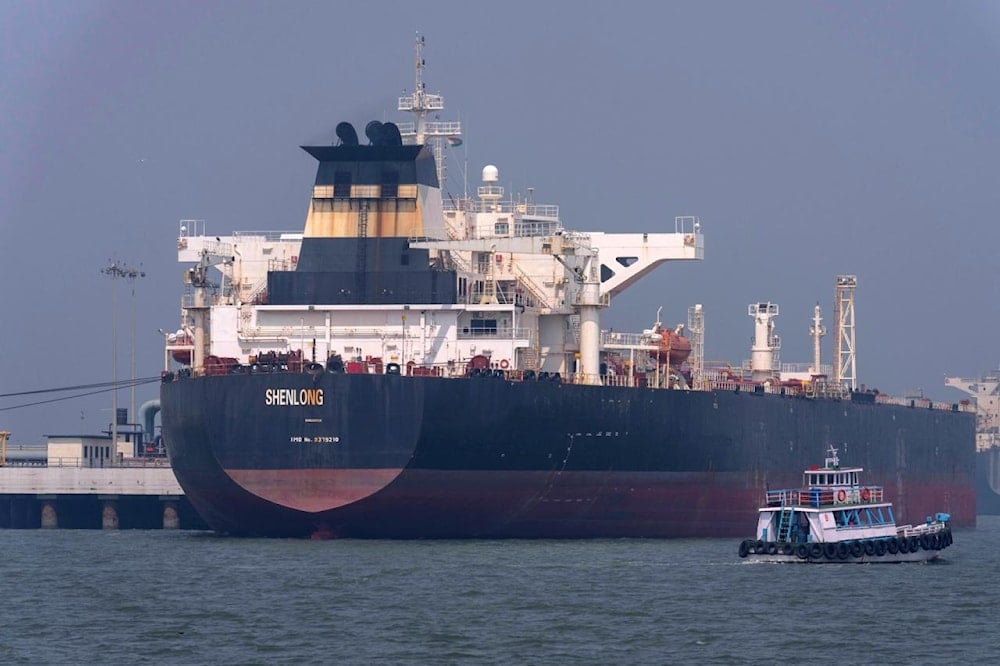
The Liberia-flagged tanker Shenlong Suezmax, carrying crude oil from Saudi Arabia, is seen at the Mumbai Port in Mumbai, India, on March 12, 2026 (AP)
Global oil prices fell on Friday but remained on course for weekly gains as disruptions linked to the ongoing war on Iran overshadowed efforts by the United States and international energy bodies to calm supply concerns.
Futures for Brent crude for May delivery declined by $1.22, or 1.2%, to $99.24 per barrel at 10:53 am GMT. Despite the drop, the benchmark was still heading for a weekly gain of around 7.5%.
Meanwhile, West Texas Intermediate crude for April delivery fell by $1.81, or 1.9%, to $93.92 per barrel, though it remained on track for a nearly 4% increase over the week.
The weekly gains come as markets continue to price in the geopolitical risk stemming from the US-Israeli war on Iran, which entered its second week on Friday, causing disruptions to global energy supplies.
Read more: Rising oil prices threaten inflation and growth: NYT
Supply risks through Strait of Hormuz
Analysts say uncertainty surrounding shipments through the Strait of Hormuz, a key maritime chokepoint that carries more than one-fifth of the world’s oil supply, has been a central driver of recent price volatility.
Traders remain cautious about the possibility of supply interruptions affecting tankers transiting the strategic waterway connecting the Persian Gulf to global markets.
Major financial institutions, including Goldman Sachs and Bank of America, have already revised their average oil price forecasts for 2026 upward.
Meanwhile, attempts by Washington and the International Energy Agency to ease market concerns have so far had limited impact on prices, with traders continuing to prioritize developments in the Gulf.
Energy markets remain highly sensitive to any escalation that could affect oil exports from major producers in the region or disrupt shipping routes critical to global energy flows.
Read more: Rising oil prices are devastating US families: Araghchi


