
Aramco warns of 'catastrophic' oil market fallout from Hormuz crisis
 5 Min Read
Saudi Aramco warns that disruptions to shipping in the Strait of Hormuz could trigger severe instability in global oil markets and broader economic repercussions.
-
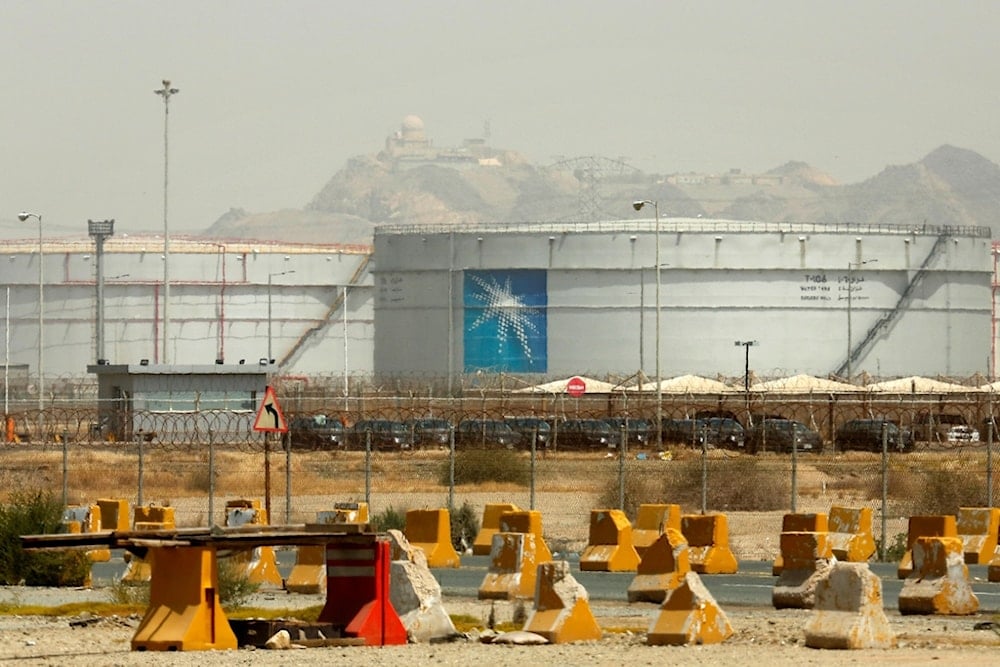
Storage tanks are seen at the North Jeddah bulk plant, an Aramco oil facility, in Jeddah, Saudi Arabia, on March 21, 2021 (AP, File)
Saudi Arabia warned on Tuesday that prolonged disruption to maritime traffic in the Gulf could trigger severe turmoil in global energy markets, as fighting linked to the US-Israeli war on Iran continues to affect shipping through the strategic Strait of Hormuz.
The warning came from Amin Nasser, the chief executive of Saudi Aramco, who said the war has created the most serious challenge the region’s oil and gas sector has encountered.
“There would be catastrophic consequences for the world's oil markets and the longer the disruption goes on ... the more drastic the consequences for the global economy,” Nasser told reporters during an earnings call.
The remarks follow mounting tensions surrounding tanker traffic in the Gulf after Iran warned that oil exports from the region could be halted if military attacks continue. Iran’s Islamic Revolution Guard Corps said earlier that it would not allow “one litre of oil” to leave the Middle East under current conditions.
Unprecedented crisis
The Strait of Hormuz is one of the world’s most critical energy corridors, with roughly a fifth of global oil shipments normally passing through the narrow waterway each day. Current disruptions have already forced companies to reconsider routes and loading operations.
Nasser described the crisis as unprecedented for the industry. “While we have faced disruptions in the past, this one by far is the biggest crisis the region's oil and gas industry has faced.”
The instability is also affecting sectors beyond oil production, he added, noting that transportation, insurance, aviation, agriculture, and automotive industries could all experience knock-on effects if the disruption continues.
Oil markets jolt
Energy markets have already reacted to the developments. The global benchmark Brent crude surged to nearly $120 per barrel earlier in the week before easing to around $92 on Tuesday after Trump suggested that the war might conclude soon. Despite that, Trump also warned Washington could escalate military pressure on Iran if oil exports from the region are obstructed.
The US president said naval escorts could be deployed to protect tankers traveling through the Gulf. However, questions remain about whether the United States Navy has sufficient capacity to secure the large number of vessels that normally cross the route while also conducting military operations in the region.
Asked about the proposal, Nasser pointed to the scale of shipments that would need protection and said buyers of Saudi crude generally assume responsibility for transportation risks.
“Of course, we would support any actions or measures that would help to deliver our products to our customers, to the global market,” he said.
Ending war only option
However, a senior Gulf energy industry official said ending the war remains the only viable way to restore exports through the waterway.
Speaking to Reuters on condition of anonymity due to the sensitivity of the matter, the official said stopping the war was the only option to resume oil and gas flows through the Strait of Hormuz.
Gulf oil exports halted
At present, Aramco is unable to ship crude directly from Gulf terminals because tankers cannot safely load cargoes there. Nasser said the company is temporarily meeting most contractual obligations by drawing on global inventories.
“Now, that cannot be used, that inventory, for an extended period of time, but for the time being, we are capitalising on it,” he said.
Saudi Arabia is also redirecting crude supplies using the kingdom’s East-West pipeline, which transports oil across the country to the Red Sea port of Yanbu. The pipeline’s capacity is expected to reach 7 million barrels per day within days as customers shift routes to bypass the Gulf.
Even with those alternative arrangements, Nasser warned that disruptions could remove massive volumes of oil from the market.
“Even with our ability to export through the western region, you're talking about close to 350 million barrels of disruptions that will come off the market,” he said.
He added that part of the pipeline’s capacity is also directed to domestic refineries in western Saudi Arabia, which process crude into petroleum products that are later exported.
Meanwhile, Nasser said a small fire that erupted after an attack last week on Aramco’s Ras Tanura refinery, the company’s largest refining facility in the kingdom, was quickly contained and operations were being restored.
Aramco reported a 12% decline in annual profits on Tuesday, attributing the drop primarily to lower crude prices. The company also announced plans to repurchase up to $3 billion in shares as part of its first-ever buyback program.
Read more: Aramco diverts oil shipments to Red Sea amid Hormuz standoff


