
Drone strike shuts Saudi Aramco's Ras Tanura refinery
 3 Min Read
A drone strike forced Saudi Aramco to shut its Ras Tanura refinery on Monday as the region enters the third day of the US-Israeli aggression on Iran and its allies.
-
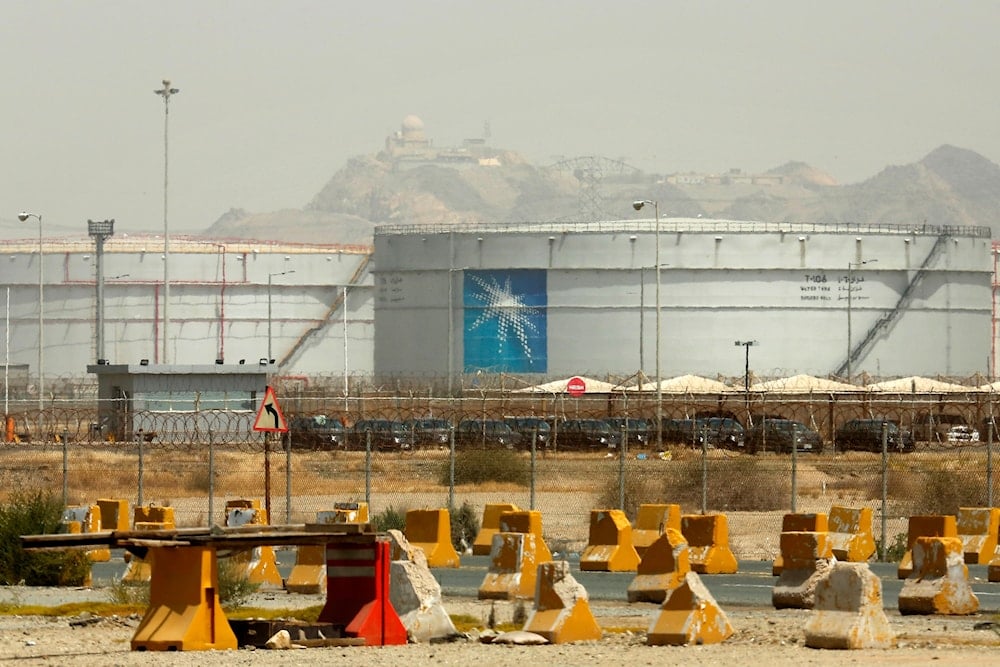
Storage tanks are seen at the North Jeddah bulk plant, an Aramco oil facility, in Jeddah, Saudi Arabia, on March 21, 2021 (AP)
A drone strike forced Saudi Arabia's state oil giant Aramco to shut its Ras Tanura refinery on Monday, an industry source told Reuters, in the third day of Iran's retaliatory campaign against US and Israeli targets across the region.
The Saudi defense ministry confirmed that two drones were intercepted at the facility, with debris causing a limited fire. There were no injuries, and the source said the shutdown was enacted as a precautionary measure with the situation under control.
The Ras Tanura complex, situated on the kingdom's Gulf coast, houses one of West Asia's largest refineries with a capacity of 550,000 barrels per day and serves as a critical export terminal for Saudi crude, making it one of the most strategically sensitive energy installations in the world.
Markets rattle
The shutdown added to supply anxieties already roiling global energy markets since the aggression started. Brent crude futures surged roughly 10% on Monday amid fears of prolonged disruption to Gulf energy flows, compounded by a near-halt in shipping through the Strait of Hormuz, the chokepoint through which around a fifth of global oil consumption flows, after vessels were attacked in the area on Sunday.
The IRGC previously announced that three US- and UK-affiliated oil tankers in the Gulf and the Strait of Hormuz were struck by missiles, resulting in fires onboard. Most oil production in the Kurdistan region of Iraq, which exported around 200,000 barrels per day in February to Turkey, was also shut down over the weekend as a precaution.
"The attack on Saudi Arabia's Ras Tanura refinery marks a significant escalation, with Gulf energy infrastructure now squarely in Iran's sights," Torbjorn Soltvedt, Principal Middle East Analyst at risk intelligence firm Verisk Maplecroft, told Reuters.
He added that the strike "is also likely to move Saudi Arabia and neighbouring Gulf states closer to joining US and Israeli military operations against Iran."
In September 2019, Ansar Allah launched drone and missile strikes on Saudi Arabia's Abqaiq and Khurais plants, temporarily knocking out more than half of the kingdom's crude production. Ras Tanura itself was also previously targeted by Yemen's Ansar Allah in 2021.
GCC threatens retaliation
Monday's strike comes as the Gulf Cooperation Council held an emergency meeting of foreign ministers, issuing a joint statement threatening collective retaliation. "The Gulf countries are ready to take all necessary measures to preserve their sovereignty, security, and stability in response to Iran's attacks," the statement read.
The bloc also called for an immediate halt to Iranian strikes, warning of broader consequences for global stability and stressing the need to protect maritime navigation, air travel, supply chains, and energy market stability.
Iran's retaliatory campaign, dubbed Operation True Promise 4, has targeted US military bases across Kuwait, Bahrain, Qatar, the UAE, and Saudi Arabia since February 28, when the US and Israel launched coordinated strikes on Iran that killed Supreme Leader Ali Khamenei.


