Oil prices surge as Hormuz shipping halted after strikes
 5 Min Read
Oil prices surged and global markets fell after US-Israeli strikes on Iran raised fears of major disruptions to shipping and energy supplies through the Strait of Hormuz.
-
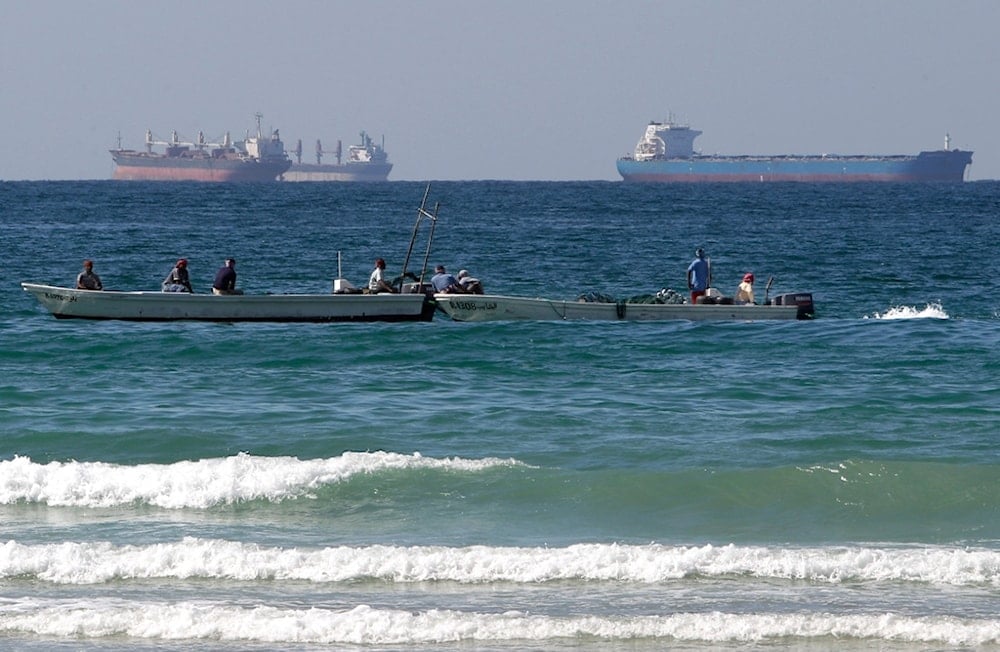
FILE - Fishermen work in front of oil tankers south of the Strait of Hormuz Jan. 19, 2012, offshore the town of Ras Al Khaimah in United Arab Emirates. (AP Photo/Kamran Jebreili, File)
Global financial markets began the week under pressure after US-Israeli aggression against Iran sent oil prices sharply higher and rattled trading floors worldwide, reinforcing fears that a regional military escalation could spill over into a broader economic shock.
In early Asian trading, Brent crude surged, at one point climbing roughly 10–13% to between $80 and $82 per barrel, as investors weighed the risk that sustained hostilities could disrupt flows through the Strait of Hormuz, a strategic corridor essential to global energy supplies. Oil benchmarks had already been hovering near multi-month highs amid tightening inventories and escalating geopolitical tensions in West Asia, magnifying the market’s sensitivity to any supply threat.
The narrow passage, which carries about one-fifth of globally traded oil and roughly 20% of global liquefied natural gas shipments, quickly became the epicenter of market anxiety. Nearly all LNG exports from Qatar and the United Arab Emirates transit through the strait, leaving limited alternative routes should passage become restricted. Reports that Iranian forces warned tankers to avoid transiting the Strait of Hormuz heightened concerns that commercial shipping could be deterred from entering the chokepoint, tightening an already fragile market.
While Iran has not formally declared the waterway closed, insurers and major shipping firms have scaled back operations, increasing war-risk premiums and creating what analysts describe as a de facto disruption of traffic.
Maritime tensions escalate
Two vessels were reportedly attacked near Oman and the United Arab Emirates, according to the United Kingdom Maritime Trade Operations (UKMTO), further intensifying concerns over maritime security in the region. Maritime intelligence data showed dozens of vessels clustering outside the strait as operators reassessed risk exposure and awaited clearer security guarantees.
The International Maritime Organization urged caution. Arsenio Dominguez, the secretary-general, said reports of injured crew members were deeply troubling, stating that: “I urge all shipping companies to exercise maximum caution... Where possible, vessels should avoid transiting the affected region until conditions improve.”
Major shipping companies began adjusting routes in response. Maersk announced it would suspend transit through both the Strait of Hormuz and the Suez Canal, citing safety considerations, a move that underscored how rapidly regional escalation can affect critical global trade arteries and potentially disrupt containerized goods flows beyond energy markets.
Limited buffer capacity
The strain on shipping comes at a time when spare production capacity within OPEC+ is limited and heavily concentrated in Saudi Arabia and the United Arab Emirates, reducing the alliance’s flexibility in the event of prolonged disruption. Although emergency reserves exist among International Energy Agency member states, coordinated releases typically require sustained supply losses rather than precautionary market fears.
Markets responded swiftly. Asian equity indices fell in early trading, while gold, widely regarded as a safe-haven asset during periods of geopolitical uncertainty, rose nearly 3%. Bond yields dipped as investors rotated into defensive positions, reflecting broader concern that sustained oil price increases could reignite inflationary pressures just as several major economies attempt to stabilize growth.
US President Donald Trump indicated that military operations could extend for several weeks, stating that campaigns would continue until American objectives were achieved. The prospect of sustained pressure on Iran has increased concern that the standoff could evolve into a longer conflict with cascading effects on freight costs, insurance premiums, aviation fuel prices, and consumer inflation.
Iran supply risks intensify
Iran, which accounts for approximately 4.5% of global oil output, remains a significant producer within OPEC+. Any disruption to its exports, or to broader Gulf shipping lanes, would compound tightening supply dynamics. Although the alliance agreed to raise production modestly by 206,000 barrels per day in April, analysts caution that additional supply offers limited reassurance if export routes become unstable or if buyers hesitate to load cargoes in a militarized environment.
Energy analysts stressed the central importance of the Strait of Hormuz. Jorge León, head of geopolitical analysis at Rystad Energy, told The Guardian: “The most immediate and tangible development affecting oil markets is the effective halt of traffic through the Strait of Hormuz, preventing 15m barrels per day of crude oil from reaching markets.” He added: “Unless de-escalation signals emerge swiftly, we expect a significant upward repricing of oil.”
Beyond the immediate price reaction, analysts warn that if shipping delays persist for more than several days, markets could shift from pricing a temporary risk premium to factoring in structural supply constraints, a transition that would make higher oil levels more durable and deepen the global macroeconomic impact.
Read more: Iran launches massive missile barrage on 'Israel'; fatalities reported