
US issues temporary license for Russian oil as prices surpass $100
 4 Min Read
Oil prices climbed above $100 per barrel as the US issued a temporary license allowing limited purchases of Russian oil already in transit.
-
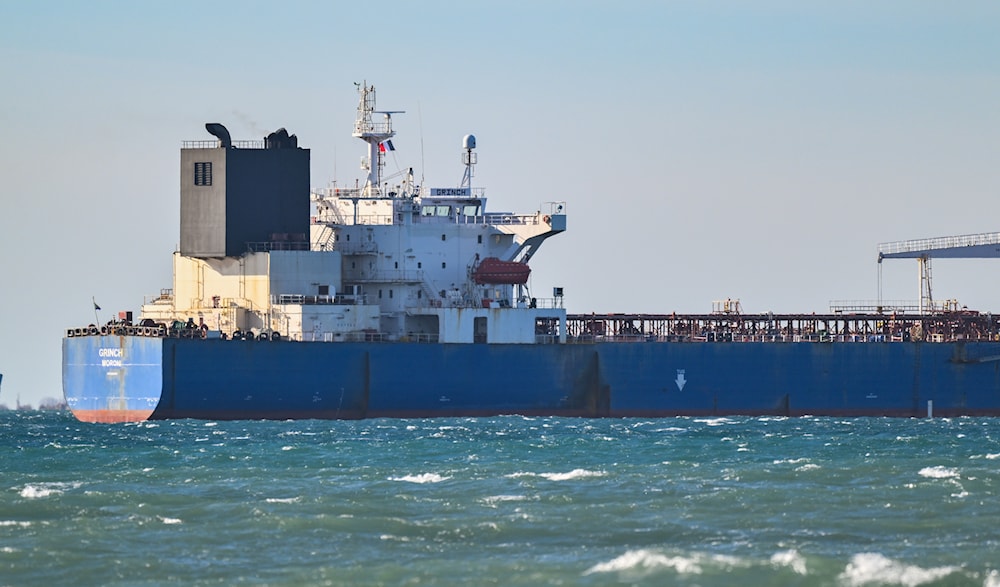
A seized alleged Russian oil tanker by the French navy is photographed in the Mediterranean Sea in Fos-sur-Mer, southern France, Monday, Jan. 26, 2026. (AP)
The Trump administration issued a new license on Thursday, allowing countries to temporarily purchase certain Russian oil products, the same day global crude prices surged above $100 per barrel for the first time since August 2022 as the US-Israeli war on Iran continues to drive market volatility, CNN reported.
Temporarily easing restrictions on oil from Russia, one of the world’s major energy exporters, comes despite earlier pressure from United States authorities on Russian oil companies, as part of broader efforts to curb revenues funding Moscow’s war in Ukraine.
“To increase the global reach of existing supply, @USTreasury is providing a temporary authorization to permit countries to purchase Russian oil currently stranded at sea,” Treasury Secretary Scott Bessent wrote on social media.
.@POTUS is taking decisive steps to promote stability in global energy markets and working to keep prices low as we address the threat and instability posed by the terrorist Iranian regime.
— Treasury Secretary Scott Bessent (@SecScottBessent) March 12, 2026
To increase the global reach of existing supply, @USTreasury is providing a temporary…
'Tailored' to serve US interests
Bessent added that “this narrowly tailored, short-term measure applies only to oil already in transit and will not provide significant financial benefit to the Russian government, which derives the majority of its energy revenue from taxes assessed at the point of extraction.”
According to the license published by the US Department of the Treasury, the authorization applies only to Russian crude oil or petroleum products that were loaded onto vessels as of March 12. The measure permits those shipments to proceed through April 11.
Navy not ready to escort ships through Hormuz Strait: US energy secretary
On March 12, Chris Wright, the US Secretary of Energy, said the United States Navy is currently unable to escort oil tankers through the Strait of Hormuz, noting that such operations may only become possible later this month.
Speaking in an interview for CNBC, Wright said the Pentagon is working on the issue but acknowledged that the US military is not yet prepared to secure tanker passage through the strategic waterway.
“It’s going to happen relatively soon, but it cannot happen now. We are simply not prepared,” Wright said, noting that US military assets are currently focused on targeting Iran’s offensive capabilities and the industrial infrastructure supporting them.
Wright’s remarks contradict statements by Donald Trump, who said on March 3 that the US Navy would begin escorting tankers through the Strait of Hormuz “as soon as possible.”
IRGC cautions against crossing Strait of Hormuz
The commander of the Iranian Islamic Revolution Guard Corps Navy, Adm. Alireza Tangsiri, affirmed on Tuesday that no vessel linked to parties attacking Iran will be allowed to pass through the Strait of Hormuz, reiterating a position Tehran has maintained since the start of the war.
“If you have the slightest doubt, come closer and try,” Tangsiri warned.
The warning came a day after the secretary of the Supreme National Security Council, Ali Larijani, ruled out the possibility of any security in the Strait of Hormuz “amid the flames of war ignited by the United States and ‘Israel’ in the region.”
Additionally, a senior commander of the IRGC Navy warned last week that the world must now recognize and follow rules set by Iran, asserting that no warship should dare approach within 800 miles of the country.
Responding to claims by US President Donald Trump about plans to escort commercial ships through the Strait of Hormuz, the commander challenged him directly, “Now is the time to escort ships, so come and escort them.”
In an interview for Mizan News Agency, he also mocked the US president, saying, “Trump cannot send his fleet to rescue those stranded in the Gulf or to open the Strait of Hormuz,” stressing that “the equation at sea is now clear.”


