
US Navy unable to escort ships through Strait of Hormuz: Report
 4 Min Read
The US Navy has told shipping companies it cannot currently escort tankers through the Strait of Hormuz due to the high risk of attacks amid the ongoing US-Israel war on Iran.
-
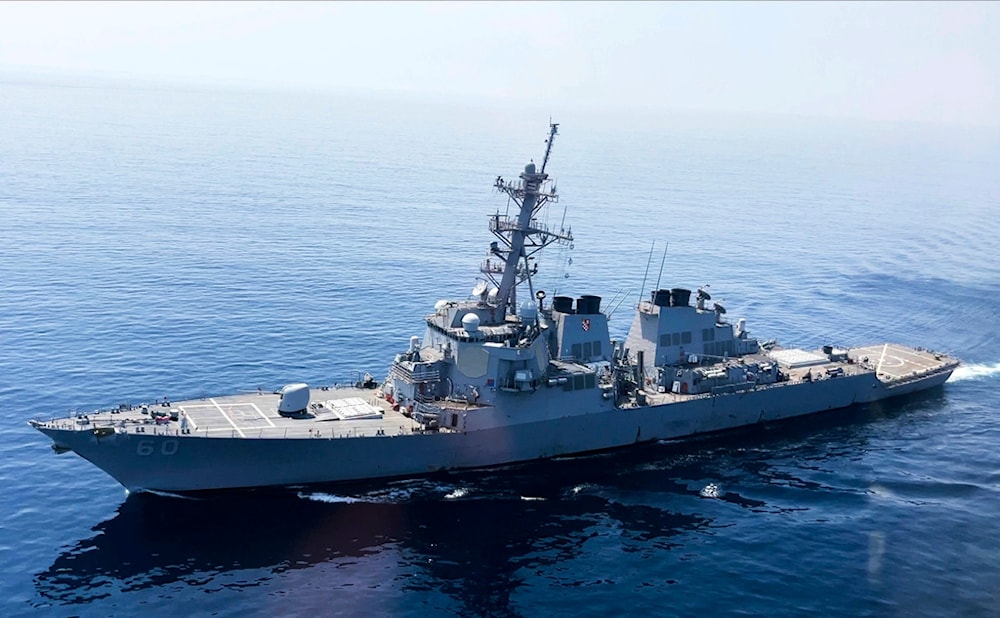
The USS Paul Hamilton is seen after passing through the Strait of Hormuz, May 19, 2023. (AP)
The United States Navy has informed the shipping industry that it is currently unable to provide military escorts for commercial vessels passing through the Strait of Hormuz, citing the high risk of attacks as the US-Israeli aggression on Iran continues to escalate.
According to sources familiar with the discussions who spoke to Reuters, shipping companies have made near-daily requests for naval escorts since the war began, but US officials say the security situation remains too dangerous to guarantee safe passage.
The assessments highlight the growing disruption to global energy markets, as traffic through the strategic waterway has slowed dramatically since the outbreak of hostilities.
Global oil supplies under pressure
The Strait of Hormuz is one of the world’s most critical maritime chokepoints, carrying roughly one-fifth of global oil supplies. Since the start of the US-Israeli aggression against Iran more than a week ago, shipping activity in the narrow passage has largely halted, with hundreds of vessels reportedly anchored while awaiting security guarantees.
The disruption has driven energy prices higher, with Brent crude nearing $90 per barrel, levels not seen since 2022.
Iranian media previously cited officials from the Islamic Revolution Guard Corps (IRGC) as saying that the strait was effectively closed and warning that any vessel attempting to pass could be targeted. Several ships have already reportedly been struck since the escalation began.
Despite the growing pressure from the shipping and energy sectors following the US-Israeli aggression on Iran, US naval officials told industry representatives during regular briefings that escorts would only be possible once the risk of attacks decreases.
Contradiction with Washington’s public statements
The Pentagon’s position appears to contrast with statements by US President Donald Trump, who has repeatedly said that the United States is prepared to escort oil tankers through the strait if necessary.
“When the time comes, the US Navy and its partners will escort tankers through the strait,” Trump said during a recent press conference.
However, US military officials say such operations remain under review. General Dan Caine, chairman of the Joint Chiefs of Staff, told reporters that the Pentagon is considering several options but has not yet launched escort missions.
US officials confirmed that no commercial vessels have been escorted through the strait so far.
Security challenges in the Gulf
Maritime security analysts warn that safeguarding the Strait of Hormuz would be extremely difficult even with a multinational naval coalition, given Iran’s geographic position and military capabilities.
Iran maintains extensive coastal defenses along the Persian Gulf and possesses the ability to deploy naval mines, explosive boats, drones, and swarms of fast attack craft.
“Neither France, the United States, an international coalition, nor anybody else is in a position to secure the Strait of Hormuz,” said Adel Bakawan, director of the European Institute for Studies on the Middle East and North Africa.
Energy giant Saudi Aramco also warned that prolonged disruption to shipping routes could have “catastrophic consequences” for global oil markets.
Regional escalation and economic fallout
The crisis in the Strait of Hormuz comes amid the broader escalation following the US-Israeli military campaign against Iran and Tehran’s retaliatory operations across the region.
Iran has launched multiple waves of missile and drone strikes targeting Israeli-occupied territories as well as US military installations in several countries hosting American forces. The operations, carried out under Operation True Promise 4, are described by Iranian officials as a response to the ongoing aggression against Iranian territory.
The conflict has already begun to ripple through global markets, raising fears of prolonged energy supply disruptions and intensifying economic pressure worldwide as the war in West Asia continues to unfold.
Read more: Iranian official to Al Mayadeen: Security for all or security for none


