
Epstein was strangled, forensic expert says after file review: BBC
 4 Min Read
Professor Michael Freeman tells BBC Newsnight that the New York medical examiner’s file points to homicide by strangulation, contradicting the official suicide ruling.
-
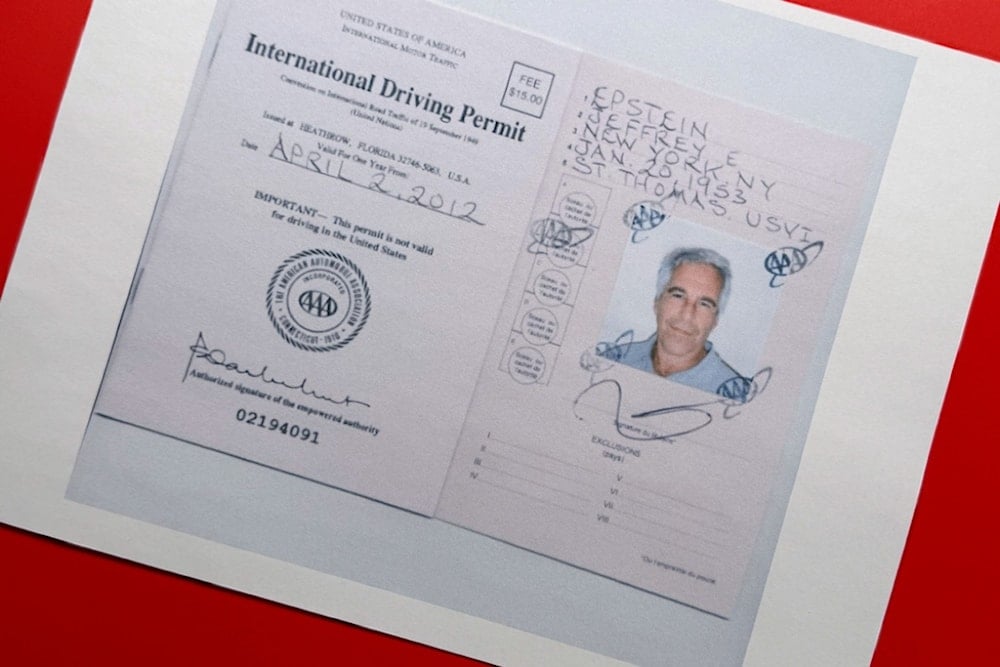
A document that was included in the US Department of Justice release of the Jeffrey Epstein files, photographed Wednesday, Feb. 4, 2026, shows an April 2012 International Driving Permit for Epstein (AP)
Jeffrey Epstein was most likely strangled from behind, and his death in a New York jail cell was a homicide, forensic expert Professor Michael Freeman told BBC Newsnight after reviewing the New York City medical examiner’s file on the case.
Freeman presented his findings in London on Monday and published his research alongside the medical examiner’s files.
He is editor-in-chief of the Journal of Forensic and Legal Medicine and has served as a cause-of-death expert for US attorneys general in police custody cases, including that of George Floyd in Minnesota.
What the files show
Freeman pointed to a deep hemorrhage in Epstein’s left shoulder and to facial injuries consistent with being struck, which he reads as signs of an assault before death. In his assessment, the evidence best fits strangulation with a ligature, with the same ligature probably used afterward to suspend the body from the bunk bed.
He also noted what appear to be fingernail marks above the ligature mark on the neck. Such marks fit strangulation, particularly from behind, and an attempt by the victim to pull the ligature away, he said.
“The injuries and the way the body was found don’t match up,” Freeman said, adding that homicide is the only explanation left.
He stressed that investigators of a custodial hanging would normally photograph the body before taking it down. His review found that no photographs of the body at the scene exist and that the ligature was never preserved or examined, CBS News reported.
The medical examiner’s position
The medical examiner who carried out the 2019 autopsy told the Justice Department’s Office of the Inspector General that Epstein’s injuries were more consistent with suicide by hanging than with strangulation and that defensive wounds typical of strangulation victims were absent.
Dr. Barbara Sampson, chief medical examiner at the time, who ruled the death a suicide, said she stands firmly behind that determination.
Limits of the review
Freeman did not see Epstein’s body. He worked from files and photographs provided by Mark Epstein, Jeffrey’s brother, who has always maintained that Jeffrey was murdered.
Freeman said his analysis is independent and that Mark Epstein did not pay him. The research has not been peer-reviewed.
Freeman said he has no idea who might have killed Epstein, noting that this lies outside his investigation. He invited anyone who believes he is wrong to show where, saying he welcomes informed challenge.
Questions that have followed the official account
Doubts over the suicide ruling date back to August 2019, when Epstein was found dead at the Metropolitan Correctional Center in Manhattan while awaiting trial on sex trafficking charges. He had been briefly placed on suicide watch a month earlier, the Justice Department report said. The guard who found him called for a colleague, lowered him to the floor, and attempted to resuscitate him.
Pathologist Michael Baden, hired by Mark Epstein to observe the autopsy, said in 2019 that fractures in the neck pointed more toward strangulation than hanging. A redacted version of the autopsy report later released by the Justice Department lists the manner of death as pending, with the suicide and homicide boxes left blank.
The inspector general’s 2023 report documented a string of failures at the jail. Nearly all the cameras near Epstein’s cell had not been recording properly for days, and guards skipped required checks from about 10:40 pm until he was found, then falsified records to suggest they had carried them out.
No new cellmate was assigned after officials were told repeatedly that his roommate would be moved. The inspector general said it found no evidence of foul play, though the missing footage and falsified logs leave the final hours of Epstein’s life thinly documented.
Epstein was convicted in 2008 of soliciting prostitution from a minor and registered as a sex offender, but a plea deal spared him a heavy sentence. Eleven years later, he was charged with running a sex trafficking operation involving underage girls.
Read more: The Epstein File: The complete story from start to 'Israel'


