
Iran denies allowing Hormuz passage for Indian tankers
 4 Min Read
Iran denied reports it allowed Indian-flagged tankers through the Strait of Hormuz, as conflicting claims deepened uncertainty over oil shipping.
-
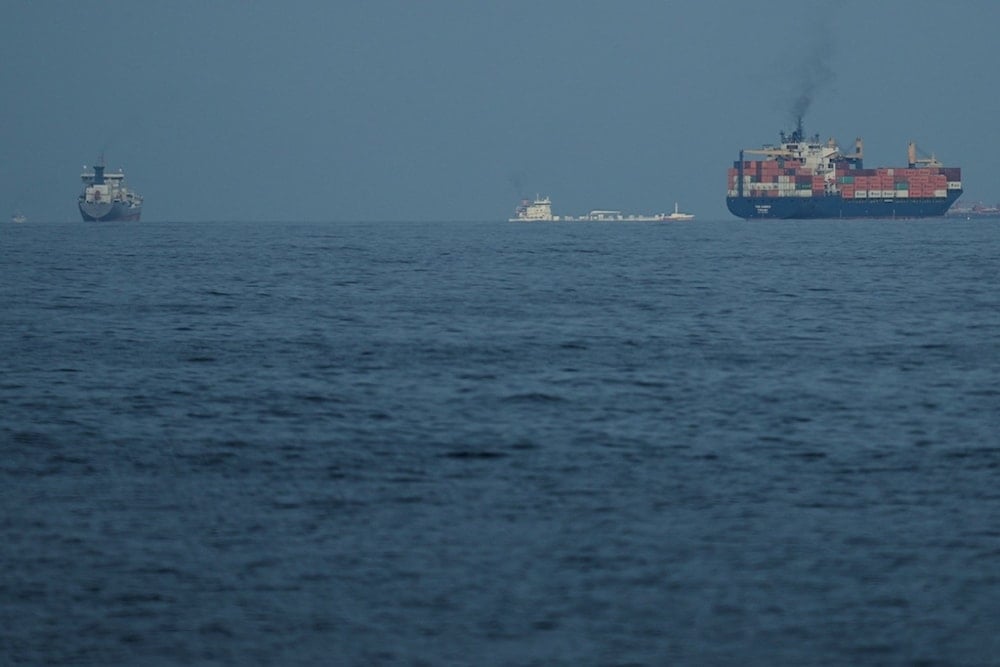
Ships line up in the Strait of Hormuz as seen from Khor Fakkan, United Arab Emirates, Wednesday, March 11, 2026. (AP)
Iran has denied reports that it granted Indian-flagged oil tankers special permission to pass through the Strait of Hormuz, contradicting claims circulated by Indian media as maritime traffic remains heavily disrupted by the US-led war on Iran.
Reuters, citing an Iranian source, reported on Thursday that no final agreement had been reached on allowing Indian-flagged tankers through the strategic waterway.
The denial came after Indian media reports claimed Tehran had allowed Indian-flagged tankers to transit the strait following talks between Indian Foreign Minister Subrahmanyam Jaishankar and Iranian Foreign Minister Abbas Araghchi. Those reports said at least two Indian tankers had already crossed safely, even as vessels linked to the US, Europe, and the Israeli occupation continued to face restrictions.
According to Reuters, an Indian source said India had secured permission for its tankers to pass through Hormuz, but the Iranian source disputed that account, underscoring the uncertainty surrounding navigation in one of the world’s most critical energy chokepoints. Neither India’s Foreign Ministry nor the Iranian embassy in New Delhi immediately issued official confirmation.
US-Israeli-triggered closure
Shipping through the Strait of Hormuz has been severely disrupted since the US and the Israeli regime launched attacks on Iran on February 28, triggering a wider regional confrontation. Reuters reported a day earlier that Iran had laid naval mines in the strait, effectively halting much of the oil and liquefied natural gas traffic moving through the corridor.
The Strait of Hormuz remains vital to global energy markets. US Energy Information Administration data shows that about 20 million barrels per day of oil flowed through the strait in 2024, equal to roughly 20% of global petroleum liquids consumption, while nearly 20% of global LNG trade also transited the route.
For India in particular, the waterway is a major lifeline. Reuters reported that roughly 40% of India’s crude oil imports move through the Strait of Hormuz, making any disruption there a serious risk to the country’s energy security and import flows.
No ships crossing Strait of Hormuz
A senior Iranian security source told Al Mayadeen on Wednesday that Washington has been waging psychological warfare for the second consecutive night over the Strait of Hormuz, seeking to manipulate energy markets. The source affirmed that not a single vessel has transited the strait under US military protection.
"Either there is full and comprehensive security in the Strait of Hormuz, or the strait will face permanent instability," the source said. He added that ensuring such security is a shared responsibility for all parties, affirming Iran's readiness to achieve it, while warning of equal readiness to push the regional war into a broader and more dangerous phase if necessary.
These remarks were reinforced by the spokesperson for Iran's Khatam al-Anbiya Central Headquarters, who confirmed on Wednesday that Iranian armed forces currently hold full operational initiative in the strait, noting that closing it remains an option of last resort rather than an opening move. He attributed the current state of affairs to the ongoing US-Israeli aggression on Iran.
Oil exports halted for hostile parties
Another senior Iranian military official told Al Mayadeen that not "a single liter of oil" destined for hostile parties or their partners would be permitted to leave the region until further notice, stressing that wartime management of the strait would be governed by strict security and military regulations.
This comes as Reuters reported, citing sources, that the US Navy has been rejecting near-daily requests from the shipping sector for military escorts through the strait since the war on Iran began, deeming the risk of attack too high.
On Tuesday, Ali Larijani, secretary of Iran's Supreme National Security Council, remarked that the Strait of Hormuz must either remain a passage of relief for all, or it will become a chokepoint for those who dream of war.
On Wednesday evening, Major General Yahya Rahim Safavi, advisor to the commander-in-chief of Iran's armed forces, stated that Iranian forces maintain robust intelligence oversight over adversary systems and movements, backed by cooperation with foreign states whose satellites are also tracking developments.


