
Iran: Strait of Hormuz fully secure under Iran's control
 5 Min Read
Iranian officials say security in the Strait of Hormuz remains stable and under full Iranian control, dismissing US claims about military escorts as psychological warfare.
-
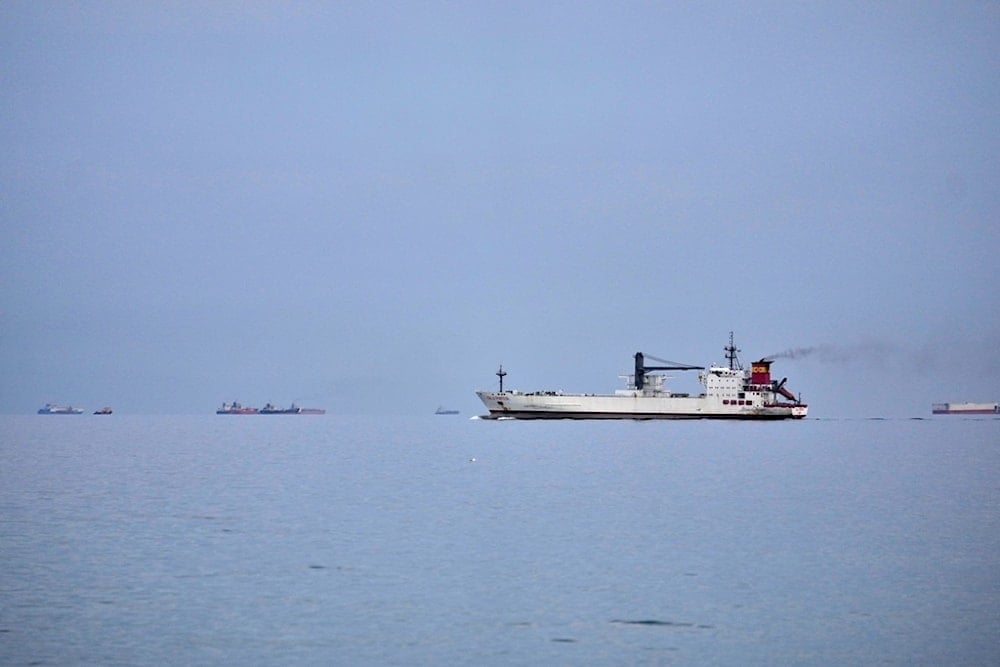
Ships wait offshore in the Strait of Hormuz off Khor Fakkan, United Arab Emirates, Wednesday, March 11, 2026. (AP)
The spokesperson for the Iranian Parliament’s National Security and Foreign Policy Committee, Ebrahim Rezaei, confirmed that security conditions along Iran’s southern coasts remain fully stable despite the ongoing regional conflict.
Rezaei said customs operations in Hormozgan Province and at Shahid Rajaee Port, Iran’s largest commercial port located near the Strait of Hormuz, are continuing normally.
According to the Iranian official, no disruptions have been reported in port or customs activity, indicating that maritime trade operations remain functional.
Rezaei also emphasized that the Iranian Navy maintains full control over the Persian Gulf and the Strait of Hormuz, a key global energy shipping route.
Iran dismisses US claims about naval escorts
Earlier, a senior Iranian security source told Al Mayadeen that Washington has been engaging in psychological warfare regarding the Strait of Hormuz, accusing the United States of attempting to influence global energy markets through exaggerated claims about maritime threats.
The source stressed that not a single vessel has crossed the Strait of Hormuz under US military protection, contradicting narratives suggesting that American forces are actively escorting commercial shipping through the strategic waterway.
“Either there is full and comprehensive security in the Strait of Hormuz, or the strait will face permanent instability,” the source said, stressing that maintaining stability in the area is a shared regional responsibility.
At the same time, the official warned that Iran remains prepared to escalate the conflict further if necessary, should the war expand.
Strait closure remains a last-resort option
Iranian military officials have also reiterated that closing the Strait of Hormuz remains a last-resort measure, rather than an initial step in response to the ongoing war.
The spokesperson for Iran’s Khatam al-Anbiya Central Headquarters confirmed that Iranian forces currently hold full operational initiative in the strait, linking the heightened tensions to what Tehran describes as the ongoing US-Israeli aggression against Iran.
Another senior Iranian military official told Al Mayadeen that no oil shipments destined for hostile actors or their partners would be permitted to leave the region, warning that wartime management of the strait would be governed by strict security and military regulations.
Meanwhile, Ali Larijani, secretary of Iran’s Supreme National Security Council, warned that the waterway must remain open to all or risk becoming a chokepoint for those seeking confrontation.
“The Strait of Hormuz must either remain a passage of relief for all, or it will become a chokepoint for those who dream of war,” Larijani said.
Iran claims full intelligence monitoring of US forces
Iranian officials have also asserted that the country maintains extensive intelligence monitoring of US military activity in the region.
Major General Yahya Rahim Safavi, advisor to the commander-in-chief of Iran’s armed forces, said Iranian forces track the movements of US naval fleets across multiple theaters, including the US Sixth Fleet in the Mediterranean and the Fifth Fleet operating in the Indian Ocean and the Sea of Oman.
Safavi said Iran also tracks aircraft departing from US mainland bases, Diego Garcia, and European military facilities, claiming that Iranian forces have detailed real-time information about US military movements.
He further asserted that many of the Iranian military sites targeted by US and Israeli strikes had already been evacuated and dispersed before the attacks took place.
US-Israeli war continues to escalate
The statements come as tensions across West Asia continue to intensify following the US-Israeli aggression on Iran launched on February 28.
Since the beginning of the aggression, Iran has launched multiple waves of retaliatory drone and missile strikes targeting US military bases and Israeli-occupied territories, describing the attacks as responses to the ongoing aggression against the country.
The war has also heightened global concerns about the security of the Strait of Hormuz, through which roughly one-fifth of the world’s oil supply normally passes.
Shipping companies have reportedly sought US naval escorts through the strait, but according to reports cited by Iranian officials, the US Navy has rejected near-daily escort requests due to the high risk of attack.
Iranian military officials have also signaled that the conflict could enter new phases, with commanders warning of advanced weapons systems and further retaliatory operations if hostilities continue to escalate.
Analysts warn that the situation around the Strait of Hormuz remains one of the most critical flashpoints in the expanding regional confrontation, with the potential to disrupt global energy markets and international shipping routes.
Read More: No ship crossed Hormuz under US military protection: Exclusive


